


Navigating Vehicle Charging Installations in Condominiums
Owning an electric vehicle provides incredible convenience when you have a private driveway and total control over your own garage. However, the situation becomes incredibly complicated for drivers who live in condominiums, townhouses, or properties governed by strict Homeowner Associations. When you share walls, common areas, and parking structures with dozens of other residents, you cannot simply bolt a high-voltage machine to a concrete pillar and start drawing heavy current. The legal, structural, and financial barriers associated with shared property require a highly diplomatic and heavily engineered approach to secure your personal charging infrastructure.
The greatest obstacle condo owners face is the fact that the parking areas and the main electrical rooms are typically classified as common elements. This means the individual resident does not legally own the space where the equipment must be installed, nor do they own the main distribution board where the power originates. Approaching a property management board with a request to alter these shared spaces frequently results in immediate rejection. Boards are naturally terrified of anything that might increase the building's liability, overload the shared utility grid, or create disputes among neighbours regarding who pays for the electricity consumed.
To successfully navigate this administrative blockade, residents must present a completely airtight engineering plan that addresses every single concern the board might raise. You cannot ask for permission first and figure out the technical details later; you must arrive at the meeting with a fully drafted proposal. This proposal must clearly prove that the new equipment will not tap into the building's shared electricity budget. It must demonstrate exactly how the heavy-gauge copper wiring will be safely routed from your specific residential meter down into the parking structure without damaging the aesthetics or structural integrity of the common areas.
Furthermore, older multi-family buildings often operate incredibly close to their maximum electrical capacity. If several residents all decide to buy electric cars and plug them in at six o'clock in the evening, the combined draw could easily overwhelm the main transformers serving the entire complex. A successful proposal must include load-managing technology. These intelligent stations communicate with the building's power supply in real-time, automatically throttling down the vehicle charge when the overall building demand is high, and ramping up the power overnight when the neighbours are sleeping. This guarantees the building never experiences a dangerous thermal overload.
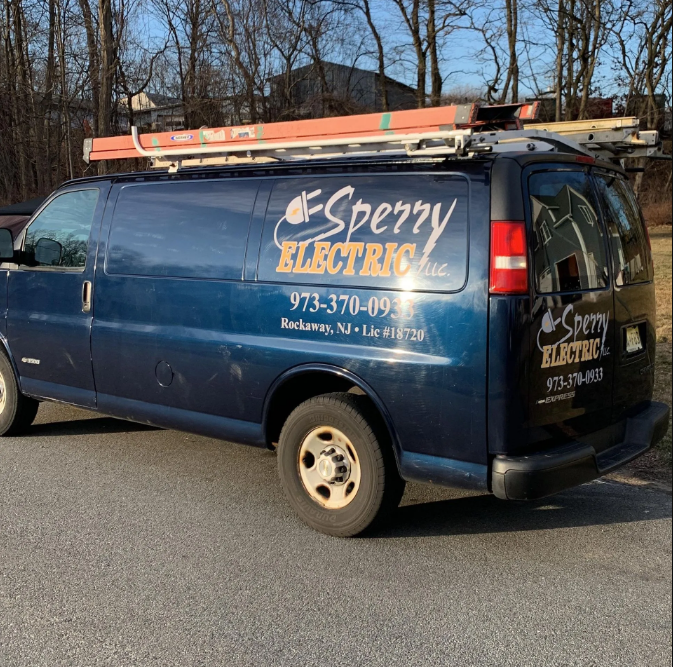
Executing a fully approved EV Charger Installation in New Jersey within a condominium complex requires contractors who specialize in commercial-grade environments. Professional installers understand how to safely core-drill through heavily reinforced concrete floors to route the necessary conduit. They know how to install sub-meters that accurately track the exact kilowatt-hour usage of the station, ensuring the association can bill the vehicle owner precisely for the energy consumed. They also guarantee full compliance with highly strict regional fire codes concerning high-capacity batteries parked in enclosed underground structures. Furthermore, they carry the massive commercial liability insurance policies that strict management boards demand before allowing any contractor onto the shared property.
Taking this highly structured, professional approach completely changes the dynamic between the resident and the association. Instead of presenting a vague problem, you are presenting a fully engineered, zero-liability solution. Property managers are far more likely to approve an addition when they possess official documentation proving the equipment is legally permitted, structurally safe, and financially isolated from the rest of the community. In many cases, establishing this safe protocol clears the path for other residents to follow suit, increasing the overall property value of the entire complex.
Transitioning to sustainable transportation while living in a shared community is entirely possible, but it demands far more than a simple trip to the hardware store. It requires respecting the legal boundaries of the association and providing undeniable proof that the technology is completely safe. By partnering with experienced engineers to draft a flawless installation strategy, condominium owners can successfully bring the convenience of private refuelling directly to their designated parking spaces without ever compromising the safety or budget of their neighbours.
Conclusion
Installing high-voltage charging equipment in a shared condominium requires overcoming strict association rules and complex structural limitations. Presenting a professionally engineered plan that includes intelligent load management and precise sub-metering proves to the management board that the addition carries zero financial or physical liability for the building. Partnering with commercial-grade installers ensures the project is fully compliant, allowing you to enjoy private refuelling without disrupting your neighbours.
Call to Action
Do not let condominium association rules prevent you from enjoying the convenience of electric driving. Contact our commercial installation team to draft a flawless, fully engineered proposal designed specifically for approval by your property management board.

 Arabic
 French
 Spanish
 Portuguese
 Deutsch
 Turkish
 Dutch
Dutch
 Italiano
 Russian
 Romaian
 Portuguese (Brazil)
 Greek
Greek