


What Steel Properties Matter for Gangnammould Turnover Box Mould Use
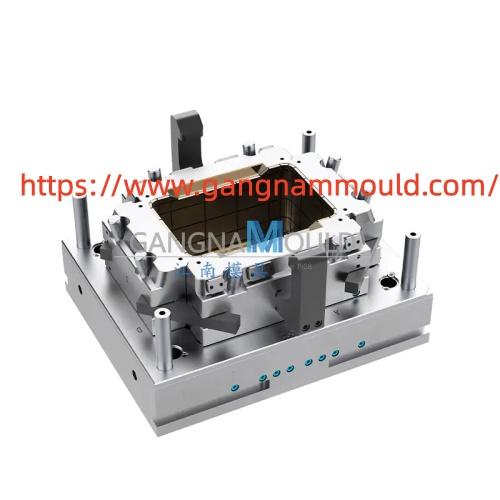
Turnover Box Mould steel selection starts with matching the alloy to the expected mechanical load and thermal cycles of daily industrial use. The right choice supports reliable forming of reusable logistics containers while controlling long term wear on the cavity and core surfaces.
Hardness stands as a primary consideration. Prehardened grades in the range of 30 to 36 HRC often serve medium volume runs because they arrive ready for machining and resist deformation under clamping forces. For higher volume work or abrasive fillers the cavity and core may receive further treatment to reach 48 to 52 HRC. This step raises resistance to surface scoring yet requires attention to toughness so that sharp corners or thin sections do not become brittle.
Thermal conductivity ranks next. Efficient heat removal shortens cooling intervals and reduces the risk of sink marks or warpage in the finished container. Alloys that conduct heat well allow cooling channels to work more evenly across large flat bases and ribbed side walls. Designers therefore weigh conductivity against hardness because some high hardness grades transfer heat more slowly and may need closer channel spacing or auxiliary inserts of higher conductivity metals.
Wear resistance follows closely. Reusable containers often contain reinforcing ribs and textured exterior surfaces that create sliding contact during ejection. Alloys formulated for abrasion resistance keep the cavity geometry accurate over many thousands of cycles. When the resin includes mineral fillers or regrind the demand for wear resistance rises further and may justify the addition of surface treatments or local inserts in high friction zones.
Corrosion resistance enters the picture when the production environment includes moisture or when certain resins release acidic by products. Grades with elevated chromium content or those finished with protective coatings help maintain surface integrity and reduce the frequency of polishing or repair. This factor also affects storage conditions between runs because unprotected steel can develop surface oxidation that later transfers to the product.
Polishability and surface finish requirements complete the list. Clear or high gloss containers demand steels that accept fine polishing without revealing porosity or soft spots. Prehardened tool steels generally respond well to progressive polishing sequences while fully hardened grades may need more careful control of heat treatment to avoid micro structural irregularities. The chosen finish must also support easy release so that ejector pins and slides operate without excessive force.
Cost and availability interact with all technical factors. Higher performance alloys raise the initial investment yet can lower the total cost per part when they extend tool life and reduce downtime. Project planners therefore compare the expected annual volume against the price difference between standard and upgraded grades. Local supply chains and heat treatment capacity also influence the final decision because long lead times for specialty material can delay the entire schedule.
Gangnammould applies these principles during every tooling project by reviewing load data resin type and target cycle counts before recommending an alloy. The same review covers cavity layout cooling layout and expected maintenance intervals so that the selected steel supports the full production plan.
A balanced selection process that weighs hardness thermal behavior wear resistance corrosion protection polish quality and overall economy produces tooling capable of steady output across varying industrial demands. Teams that document these factors at the quotation stage reduce later adjustments and keep production schedules intact.
Visitors seeking further product details can review current offerings at https://www.gangnammould.com/product/

 English
 Arabic
 French
 Spanish
 Deutsch
 Turkish
 Dutch
Dutch
 Italiano
 Russian
 Romaian
 Portuguese (Brazil)
 Greek
Greek