


Managed SIEM Providers: Safer Cybersecurity for Indian Healthcare
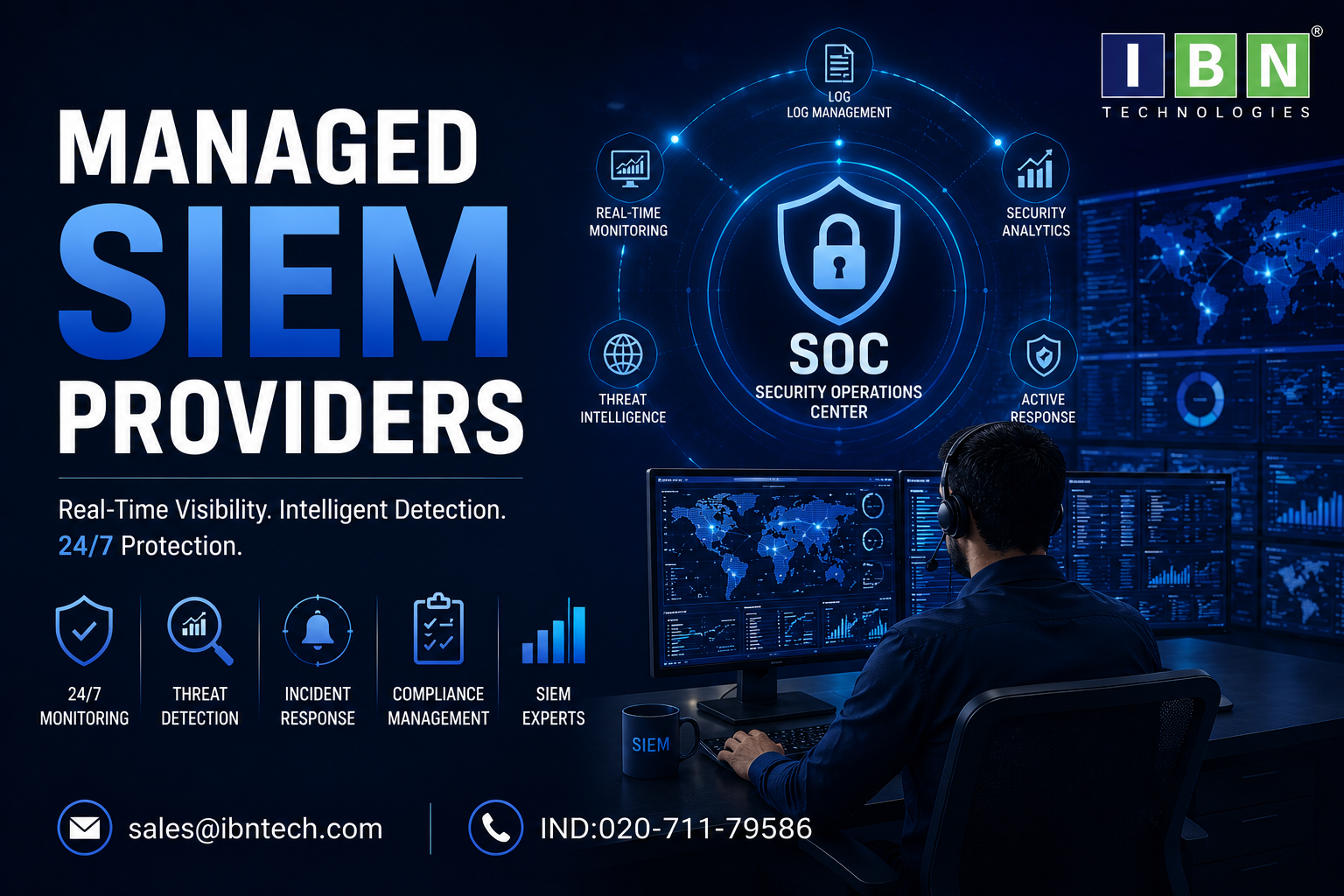
Why Indian Healthcare Organizations Need Managed SIEM Monitoring
Healthcare organizations in India are increasingly dependent on digital systems. Hospitals, diagnostic centers, clinics, healthtech companies, and healthcare service providers use electronic records, patient portals, cloud applications, connected devices, digital payments, and online communication systems.
This digital transformation creates significant security responsibilities. Sensitive patient information must be protected while clinical and business systems need to remain available. For organizations facing growing security complexity, managed siem providers can provide continuous monitoring and specialist security analysis without requiring every healthcare organization to build a large internal security operations team.
The purpose of SIEM is not simply to collect security logs. It is to help organizations identify unusual activity, investigate potential threats, and respond before security incidents become larger business problems.
What Are Managed SIEM Providers in Healthcare?
Managed SIEM providers combine SIEM technology with continuous security monitoring and professional analysis. Security events from relevant systems are collected and analyzed to identify suspicious patterns, potential attacks, and activities that require investigation.
For healthcare organizations, this can create greater visibility across systems that may otherwise be monitored separately.
A managed approach can also help healthcare IT teams focus on patient services, infrastructure, applications, and business operations while security specialists handle ongoing monitoring and alert investigation.
Why Healthcare Organizations Face Greater Security Pressure
Healthcare environments contain information that can be highly sensitive and valuable. Patient records, medical information, insurance details, employee information, financial data, and authentication credentials all require appropriate protection.
At the same time, healthcare systems are often interconnected.
A hospital may have clinical applications, administrative systems, medical devices, workstations, wireless networks, cloud services, patient portals, and third party integrations.
Each technology layer can generate security events.
The challenge for healthcare security teams is determining which events represent genuine risk and which are routine system activity.
A growing healthcare organization can therefore face a difficult balance between maintaining operational availability and strengthening cybersecurity.
Why Manual Monitoring Is Not Enough
Traditional security monitoring often depends heavily on internal IT personnel reviewing alerts from different tools.
This model can become difficult when the organization has limited security expertise or when security responsibilities are added to an already busy IT team.
Healthcare organizations also operate in environments where downtime can have serious operational consequences. Security teams need to identify potential incidents while supporting the availability of essential systems.
Manual monitoring can create several challenges.
Security events may remain distributed across different platforms.
Important alerts can be mixed with large volumes of routine activity.
Internal teams may not have continuous coverage.
Incident investigation can take time when analysts lack sufficient context.
Security processes can also become dependent on individual employees rather than standardized procedures.
A managed security model can address some of these challenges by introducing dedicated monitoring and defined investigation and escalation processes.
How Managed SIEM Supports Healthcare Security
A strong SIEM monitoring program starts with visibility.
The organization identifies critical systems, applications, infrastructure, endpoints, identity systems, and other relevant sources of security information.
Security events can then be collected and analyzed centrally. Patterns across multiple systems may provide more useful context than reviewing individual events separately.
When suspicious behavior is detected, security analysts investigate the activity and determine whether escalation is necessary.
If an incident requires action from the healthcare organization's internal team, predefined procedures can establish who needs to be contacted and what information needs to be provided.
Continuous monitoring also creates an opportunity for improvement. Detection rules and monitoring priorities can be reviewed as the organization's technology environment changes.
What Healthcare Leaders Should Look For
Healthcare CIOs, CISOs, CTOs, and security managers should assess a provider based on its ability to support the organization's actual security environment.
Continuous monitoring should be a core requirement. Healthcare organizations need security visibility that does not depend entirely on traditional office hours.
Threat investigation is equally important. Alerts need context and analysis to determine whether they represent a genuine security concern.
Incident response procedures should be clearly defined. Healthcare leaders should know how serious events are escalated and which responsibilities remain with the organization's internal team.
Data protection should also receive careful attention. Security monitoring itself involves access to potentially sensitive information, making governance and access controls important considerations.
Reporting should be practical. Management teams need information that explains significant risks and incidents in business terms.
Finally, the service should be able to adapt as the healthcare organization adds facilities, applications, users, cloud services, and connected technologies.
A Practical Healthcare Scenario
Imagine an Indian healthcare provider expanding from a single facility into a network of clinics and digital healthcare services.
Its technology environment grows rapidly. New users receive accounts, additional applications are introduced, more endpoints are connected, and patient services increasingly rely on online systems.
The internal IT team must support this growth while also monitoring for cyber threats.
A managed SIEM service can provide a centralized security monitoring layer across relevant systems. Security specialists can review suspicious activity, investigate unusual behavior, and escalate significant incidents to the appropriate internal stakeholders.
This gives the healthcare organization a more structured approach to security monitoring without requiring the internal IT team to manage every security event manually.
Security Practices Healthcare Organizations Should Prioritize
Identify critical healthcare systems and sensitive data environments.
Determine which systems would create the greatest operational or privacy impact if compromised.
Prioritize relevant security telemetry.
Not every system needs identical monitoring. Security teams should focus on the data sources most important to their risk profile.
Define incident escalation procedures.
Healthcare organizations should establish clear communication responsibilities for suspected account compromise, malware, ransomware, unauthorized access, and other serious events.
Review access to security information.
Only authorized personnel should have appropriate access to monitoring systems and sensitive security data.
Keep monitoring aligned with technology changes.
New applications, cloud environments, integrations, and facilities can change the organization's security profile.
Connect security monitoring with incident response.
Detection has limited value if the organization does not have a defined process for investigation, containment, recovery, and communication.
Review security reporting regularly.
Leadership should receive clear information about important security events, recurring issues, and areas requiring improvement.
Healthcare Cybersecurity Compliance in India
Healthcare cybersecurity compliance requires more than implementing a single security tool.
Organizations may need to consider the Digital Personal Data Protection Act, contractual requirements, industry expectations, and international frameworks depending on their operations and customers.
Organizations dealing with international healthcare information may also encounter requirements such as HIPAA, while other organizations may use frameworks such as ISO 27001 or SOC 2 as part of their security and governance programs.
SIEM monitoring can contribute to these efforts by providing security visibility, supporting incident investigation, and helping maintain operational records.
However, compliance should be viewed as part of a wider security program. Vulnerability management, access controls, risk management, employee awareness, incident response, security policies, and governance must operate together.
IBN Technologies offers cybersecurity capabilities that include SOC and SIEM, vulnerability assessment and penetration testing, managed detection and response, compliance management, and healthcare-focused cybersecurity services.
Moving Toward Stronger Healthcare Security
Healthcare organizations cannot afford to treat security monitoring as an occasional IT activity. Digital healthcare environments require continuous awareness of what is happening across critical systems.
The right managed siem providers can help healthcare organizations strengthen visibility, support faster investigation, and reduce the monitoring burden placed on internal teams. For Indian healthcare organizations, IBN Technologies can be considered as part of a broader cybersecurity strategy that connects SIEM monitoring with vulnerability management, incident response, and compliance requirements.
Contact Us:
IND- 02067680404
IBN Technologies Ltd.
E-mail: - sales@ibntech.com

 English
 Arabic
 French
 Spanish
 Deutsch
 Turkish
 Dutch
Dutch
 Italiano
 Russian
 Romaian
 Portuguese (Brazil)
 Greek
Greek