


Which jinglitools Air Compressor Machine Features Matter For Daily Work?
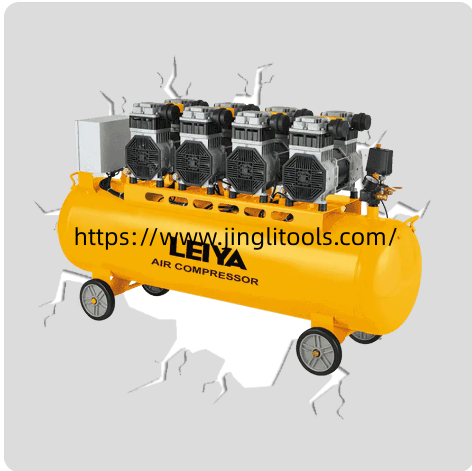
Air Compressor Machine selection should begin with the actual work a workshop needs to complete. Pneumatic tools, inflation tasks, cleaning, spraying, assembly, and maintenance can place different demands on compressed gas equipment. Buyers should compare airflow, working pressure, receiver size, duty cycle, electrical requirements, noise, physical dimensions, maintenance access, and installation conditions rather than focusing on one specification. A careful application-based review can help buyers choose equipment that corresponds with their daily workflow.
Start With Actual Applications
Before comparing equipment, buyers should identify the tasks that will use compressed gas.
A repair workshop may operate impact tools and inflation equipment, while a manufacturing area may require pressurized gas for assembly, cleaning, spraying, or automated processes.
Each application can create different consumption and pressure requirements. Reviewing connected tool specifications first provides a useful reference for selecting suitable equipment.
This approach also helps prevent purchasing decisions from being based mainly on appearance or motor size.
Check Required Airflow
Airflow indicates how much usable compressed gas a unit can provide under specified conditions.
Buyers should compare delivered airflow at the pressure required by their applications. A published output figure may not directly represent the performance needed by a particular pneumatic tool.
It is useful to record consumption figures for frequently used equipment and consider whether several tools could operate simultaneously.
For workshops with changing workloads, reasonable operating flexibility can also help with equipment planning.
Match The Working Pressure
Pressure requirements should be confirmed before ordering.
Different pneumatic tools can operate within different pressure ranges. Buyers should review the recommended values for each application and compare them with the proposed configuration.
Insufficient pressure may affect tool operation, while selecting equipment around an unnecessarily high specification may create an unsuitable purchasing decision.
The objective should be a practical match between equipment capability and actual workplace requirements.
Review Receiver Size
The receiver stores compressed gas and provides a reserve during periods of short-term demand.
Its size should be evaluated together with airflow and working pressure. A larger receiver does not automatically resolve a situation where connected tools consume gas faster than the system can replenish it.
Buyers should consider how frequently tools operate, how long each task lasts, and whether demand occurs continuously or intermittently.
These factors can help determine a more appropriate configuration.
Consider Operating Frequency
Usage frequency can influence equipment selection significantly.
Occasional inflation creates different demands from repeated pneumatic assembly or extended workshop cleaning.
Buyers should review the manufacturer's operating guidance and estimate how long the equipment will run during a normal working day.
For frequent operation, the installation should provide suitable ventilation and enough space for inspection and routine servicing.
A realistic workload estimate makes product comparisons more useful.
Verify Electrical Requirements
Electrical compatibility should be confirmed before installation.
Buyers can check voltage, frequency, input rating, current requirements, plug configuration, and circuit capacity. These details should correspond with the electrical supply available at the intended workstation.
For commercial or industrial installations, qualified personnel can verify whether the planned electrical arrangement is appropriate.
This step becomes particularly relevant when several machines operate within the same facility.
Consider Workplace Noise
Sound levels can affect the working environment, especially in smaller workshops, garages, repair areas, and shared production spaces.
Buyers can compare published sound measurements and consider where the equipment will be positioned.
A unit installed close to operators may require different considerations from one placed in a separate utility area.
It is also useful to consider operating schedules when several employees share the same workspace.
Measure Installation Space
Physical dimensions should correspond with the intended workstation.
Buyers should measure available floor space while leaving room for ventilation, electrical connections, inspection, cleaning, and maintenance.
If equipment needs to move between work areas, weight, wheels, handles, and dimensions may also affect the decision.
jinglitools offers different equipment categories and configurations for workshop applications, allowing buyers to compare models according to intended use and installation conditions.
Assessing the workspace before ordering can make installation planning easier.
Review Cleanliness Requirements
Some applications require compressed gas with limited oil contamination.
Oil-free configurations may be considered for environments where cleanliness matters, including certain electronics, medical-related, food-related, and manufacturing applications.
Buyers should still evaluate filtration, moisture management, and application-specific requirements rather than assuming that one configuration will suit every process.
For distributors, understanding these requirements can also help match equipment with the expectations of different customer groups.
Examine Maintenance Access
Maintenance requirements should be discussed before purchase.
Users may need to clean filters, inspect components, drain accumulated moisture, check connections, and monitor unusual sounds or vibration.
The maintenance routine should be practical for the workshop's operating schedule.
Buyers can also ask about replacement parts, service documentation, warranty arrangements, and recommended inspection intervals.
For distributors, clear maintenance information can make customer support after delivery easier to organize.
Check Controls And Safety Features
Controls can affect how easily operators manage pressure and routine operation.
Buyers can review pressure gauges, regulators, automatic shut-off functions, switches, protective systems, and other controls included with the selected configuration.
Equipment should always be operated within the manufacturer's stated limits.
Operators should also follow appropriate safety procedures around pressurized systems, electrical connections, moving components, and compressed gas.
Clear controls can support organized daily operation.
Think About Future Requirements
Purchasing decisions can include realistic future demand.
A workshop may add pneumatic tools, increase production volume, or establish another workstation after the initial purchase.
There is no need to size equipment around uncertain assumptions. Instead, buyers can estimate realistic future demand and determine whether the selected configuration provides enough flexibility.
This can help balance current requirements with sensible equipment planning.
Compare Complete Specifications
A useful comparison should cover more than motor input.
Buyers can prepare a checklist including airflow, working pressure, receiver size, operating frequency, electrical requirements, noise, dimensions, weight, maintenance needs, controls, and included components.
The jinglitools range includes different configurations, including oil-free and low-noise models, allowing buyers to compare equipment according to different workshop conditions.
Reviewing complete specifications can reveal practical differences that may not be obvious from a product name alone.
Consider Sample Testing
Distributors and project buyers may benefit from evaluating a representative unit before placing a larger order.
Testing can cover startup behavior, pressure recovery, connected-tool performance, sound level, portability, controls, and maintenance access.
Buyers can also inspect packaging, labels, accessories, documentation, and product appearance when preparing equipment for a particular market.
Sample evaluation provides an opportunity to compare equipment with actual working conditions before a larger purchasing commitment.
Discuss Requirements With The Manufacturer
For B2B purchasing, communication with the manufacturer can be an important part of product selection.
Buyers can ask about available configurations, technical documentation, packaging, spare parts, customization, sample orders, warranty terms, and delivery planning.
jinglitools provides product categories covering corded tools and related workshop equipment, with OEM and ODM capabilities described on its website.
For workshops, distributors, contractors, and professional buyers, a practical selection process should connect specifications with real operating conditions. Reviewing airflow, pressure, receiver size, duty cycle, electrical supply, sound level, installation space, maintenance, cleanliness requirements, and future demand can make purchasing decisions easier to organize. To compare available models and discuss your application requirements with jinglitools, visit https://www.jinglitools.com/product/ and select equipment according to your workshop tasks, operating environment, and purchasing plans.

 Arabic
 French
 Spanish
 Portuguese
 Deutsch
 Turkish
 Dutch
Dutch
 Italiano
 Russian
 Romaian
 Portuguese (Brazil)
 Greek
Greek