


Europe’s Agrivoltaic Industry Surges as Clean Energy Meets Sustainable Farming
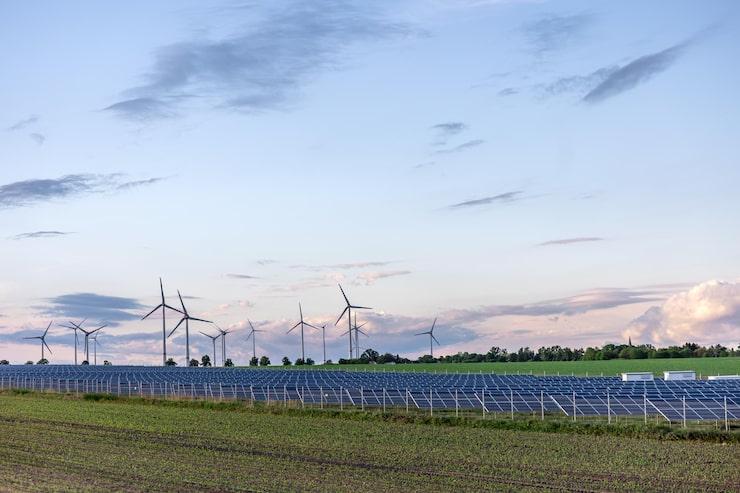
Europe is increasingly exploring ways to expand renewable energy without placing additional pressure on agricultural land. Agrivoltaics provides a promising solution by combining photovoltaic electricity generation with crop cultivation on the same land. Solar panels can be positioned above or alongside crops while agricultural activity continues underneath, creating a dual-use model that can improve land-use efficiency and potentially provide farmers with an additional source of income.
The Europe Agrivoltaic Market was valued at around USD 278.29 million in 2024 and is projected to reach USD 2.49 billion by 2030, expanding at an exceptional CAGR of approximately 45% during 2025–2030. The Europe Agrivoltaic industry report identifies supportive government policies, substantial solar investments, climate concerns, and the need to simultaneously address agricultural and clean-energy requirements as major factors supporting this expansion. The study covers the UK, France, Germany, the Netherlands, Italy, Spain, Ireland, and the rest of Europe.
Dual Land Use Addresses Europe’s Growing Space Challenge
One of the biggest advantages of agrivoltaics is its ability to combine two productive activities on the same piece of land. Conventional solar projects can compete with agriculture for suitable land, whereas agrivoltaic systems are designed to maintain agricultural activity while producing electricity.
The European Commission recognizes agrivoltaics as an innovative form of solar deployment that can help address competition for land. Its guidance on solar-energy deployment notes that, under appropriate conditions, agriculture and solar generation can coexist while potentially supporting crop protection and yield stabilization.
This dual-use model is becoming particularly relevant as Europe simultaneously pursues food production, energy security, climate objectives, and renewable-energy expansion.
Government Policies Strengthen Project Development
Supportive government policies and significant investments in renewable energy are among the strongest factors driving adoption. European countries are developing frameworks intended to accelerate renewable-energy deployment while addressing land-use considerations.
The EU’s revised Renewable Energy Directive establishes a binding target of at least 42.5% renewable energy in the EU energy mix by 2030, with an ambition of reaching 45%. The European Commission also highlights agrisolar as an innovative form of renewable deployment that can benefit from clearer regulatory and financial frameworks. EU Renewable Energy Directive provides an important policy foundation for further development of solar technologies, including agricultural applications.
France, Germany, Italy, and other European countries are consequently becoming important locations for agrivoltaic project development.
Pilot Projects Help Improve Crop Compatibility
Agrivoltaic deployment is still evolving, and pilot projects are playing an important role in determining how different crops respond to solar installations. Factors such as panel height, shading intensity, orientation, crop variety, irrigation, and local climate can influence agricultural outcomes.
The European Commission's AGRISOL project is supporting agrivoltaic adoption across countries including Greece, Italy, Spain, Denmark, and Poland by working with farmers, agribusinesses, and photovoltaic technology stakeholders. The AGRISOL project focuses on technical, financial, and business support while also promoting knowledge sharing and training.
Such initiatives can generate practical data that helps farmers determine which crops and system configurations are most suitable.
Vegetables Represent an Important Application
Vegetables held a significant position within the crop-collaboration segment during the historical period. Their importance is linked to European cultivation practices and the potential for agrivoltaic systems to support crop production while generating electricity.
Vegetable growers can benefit from systems that provide partial shade under suitable conditions. Solar structures may help moderate certain environmental stresses and reduce water loss, although outcomes vary according to crop and local conditions.
Agrivoltaics can also reduce farmers’ dependence on grid electricity by allowing electricity generated on-site to support irrigation and other agricultural operations. This creates a potential economic benefit alongside the environmental advantages of renewable generation.
Monocrystalline Technology Leads Cell Adoption
Monocrystalline photovoltaic cells have gained a notable share because of their higher efficiency compared with polycrystalline modules. Higher conversion efficiency can be particularly valuable in agrivoltaic applications where developers need to balance electricity generation with the amount of sunlight reaching crops.
As solar technology continues to improve, developers are also investigating transparent and semi-transparent modules. These technologies can potentially allow more sunlight to reach crops while maintaining electricity-generation capabilities.
The European Commission's Joint Research Centre estimates that covering just 1% of the EU’s utilised agricultural area with agrivoltaic systems could theoretically result in about 944 GW of installed capacity, demonstrating the substantial technical potential of combining agriculture with solar generation. JRC research on agrivoltaics also emphasizes that agricultural activity should remain the primary use of the land.
Transparent Solar Panels Open New Possibilities
Transparent solar panels are emerging as an important technological trend. Unlike conventional opaque modules, transparent or semi-transparent systems can be designed to permit portions of sunlight to reach vegetation.
This technology could create new possibilities for greenhouses and high-value crops where light management is particularly important. Developers can potentially optimize the balance between solar generation and crop requirements by adjusting panel transparency, spacing, orientation, and height.
Continued reductions in solar-module costs and improvements in photovoltaic efficiency can further strengthen the economic case for these systems.
The UK Offers Significant Growth Potential
The UK is expected to maintain a significant position in Europe’s agrivoltaic landscape, supported by low-carbon policies, rising energy requirements, and efforts to diversify energy supplies.
Agrivoltaic systems can help address land-use pressures by allowing agricultural production and renewable-energy generation to coexist. They may also provide opportunities for landowners to participate in decentralized electricity production while continuing farming activities.
The broader European renewable-energy expansion provides an additional foundation. The International Energy Agency expects solar PV to account for nearly 80% of global renewable electricity capacity expansion during 2025–2030, illustrating the scale of solar deployment occurring internationally. IEA Renewables 2025 This broader technological momentum can support continued innovation in agricultural solar applications.
Regulatory Harmonization Remains a Challenge
Despite strong growth prospects, inconsistent definitions, standards, and regulatory frameworks remain important obstacles. Different countries can apply different requirements concerning agricultural land classification, permitting, subsidies, and project design.
The European Commission has also identified regulatory clarity as important for agrisolar development. Recent EU guidance notes that clear definitions are necessary to ensure that agricultural activity remains genuinely integrated with solar generation rather than being displaced by it.
Greater harmonization could reduce uncertainty for farmers and developers while making project planning more predictable across Europe.
Outlook Through 2030
Europe’s agrivoltaic industry is moving rapidly toward a model where agriculture and renewable energy can coexist on the same land. With the industry projected to increase from USD 278.29 million in 2024 to USD 2.49 billion by 2030, the sector presents significant opportunities for farmers, solar developers, technology companies, and infrastructure providers.
Government support, pilot projects, improved photovoltaic technologies, and rising demand for clean electricity are expected to remain key growth catalysts. At the same time, regulatory harmonization and careful crop-specific planning will be essential to ensure that solar deployment supports rather than compromises agricultural production.
As Europe works to strengthen energy security while preserving productive farmland, agrivoltaics is positioned to become an increasingly important part of the region’s renewable-energy and sustainable-agriculture strategy.

 English
 Arabic
 French
 Spanish
 Portuguese
 Deutsch
 Turkish
 Dutch
Dutch
 Italiano
 Russian
 Romaian
 Greek
Greek