


Hair Transplant in Dubai for Scalp Scar Coverage
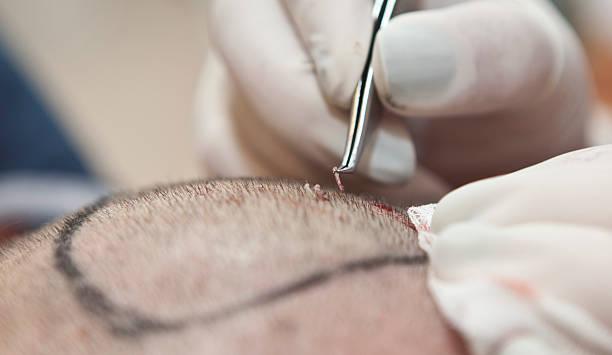
Visible scalp scars can create a permanent break in an otherwise natural hair pattern. Hair Transplant in Dubai may provide a hair-restoration option for selected patients whose scars have stabilized and whose surrounding tissue can support follicular grafts. The planning is different from ordinary hair restoration because scar tissue may have altered blood supply, elasticity, and follicular growth potential.
Whether the scar resulted from surgery, trauma, an accident, or an earlier hair procedure, the first objective is to understand the tissue itself. Grafts should not simply be placed into a scar because it is visibly hairless. The condition of the scar, donor supply, and surrounding hair pattern all influence whether transplantation is appropriate.
Why Hair Loss Over a Scar Is Different
Normal scalp contains functioning hair follicles surrounded by vascularized tissue that supports follicular growth.
Scar tissue develops differently after injury or surgical healing. Normal structures can be replaced by fibrous tissue, potentially creating an environment that is less predictable for newly transplanted follicles.
This means scar restoration requires a more cautious assessment than standard recipient-site planning.
Scar Characteristics Matter
A clinician may evaluate whether the scar is:
- Flat or raised
- Soft or firm
- Stable or changing
- Narrow or extensive
- Highly visible through surrounding hair
- Associated with altered skin texture
- Well supplied with surrounding healthy tissue
These characteristics can influence whether graft placement is technically reasonable.
Stable Tissue Is Important
A scar that is still changing should generally be assessed differently from an old, stable scar.
Changes in thickness, color, sensitivity, or texture can indicate that the tissue is still undergoing remodeling or may require separate medical evaluation before elective hair restoration is considered.
Hair Transplant in Dubai for Different Types of Scalp Scars
Not every scar creates the same restoration challenge.
A small linear surgical scar may require a completely different approach from a broad traumatic scar. Likewise, a scar caused by previous hair surgery can have different characteristics from one caused by an accident.
| Scar situation | Main consideration | Restoration challenge |
|---|---|---|
| Small linear scar | Width and surrounding density | Blending the scar with nearby hair |
| Broad traumatic scar | Scar size and tissue quality | Limited recipient area |
| Previous surgical scar | Existing hair pattern | Matching surrounding direction |
| Donor-area scar | Remaining donor follicles | Concealing the scar without overharvesting |
| Irregular scar | Variable tissue characteristics | Uneven graft-growth potential |
| Long-standing stable scar | Tissue condition | Determining realistic coverage |
The visible size of a scar alone does not determine whether transplantation will work. Tissue quality and available donor follicles can be equally important.
How Scar Tissue Is Evaluated Before Transplantation
A careful consultation should examine the scar and the surrounding scalp rather than focusing exclusively on the hairless section.
The assessment may include the density of neighboring follicles, the direction of existing hair, scar dimensions, tissue flexibility, and the overall availability of donor grafts.
Surrounding Hair Can Influence the Result
A scar may be much less noticeable when surrounding hair provides sufficient coverage.
The objective can therefore involve integrating transplanted follicles with existing hair rather than attempting to completely fill the scar with maximum density.
This approach can produce a more natural transition and reduce unnecessary use of donor follicles.
The Scar Should Be Viewed as Part of the Hair Pattern
Hair does not grow as a flat visual layer.
Its direction, length, angle, and surrounding density determine how much of the scalp is visible. A narrow scar running against the direction of nearby hair may remain noticeable even when some graft growth occurs.
The planning therefore needs to account for the way the surrounding hairstyle exposes or conceals the scar.
Can Hair Transplantation Work in Scar Tissue
In selected cases, transplanted follicles can grow in scarred areas, but outcomes may be less predictable than transplantation into healthy scalp tissue.
The underlying reason is that scar tissue can differ in vascularity and structure from normal scalp.
This does not automatically rule out transplantation. Instead, it makes patient selection and surgical planning more important.
Recipient-Site Creation Requires Precision
Creating sites within or around a scar requires careful consideration of the tissue's resistance and characteristics.
The goal is to place grafts where they have a reasonable opportunity to establish while avoiding unnecessary trauma to the surrounding scalp.
Coverage May Be More Important Than Maximum Density
Scar camouflage does not always require the same density as a conventional hairline.
If surrounding hair is sufficiently dense, a strategically distributed number of grafts may reduce the visual contrast between the scar and the surrounding scalp.
This is particularly useful when donor resources are limited.
Donor Hair Selection for Scar Coverage
The donor area remains one of the most important resources in any transplant procedure.
For scar restoration, the selected follicles should be compatible with the surrounding hair in terms of characteristics such as caliber, growth pattern, and expected visual contribution.
Donor Quality Can Affect Camouflage
A scar may require relatively modest coverage when surrounding hair is thick and substantial coverage when neighboring hair is fine or sparse.
This is why simply estimating the scar's surface area does not provide an accurate graft requirement.
Donor Conservation Still Matters
Patients should avoid viewing a small scar as an insignificant use of donor follicles.
Every transplanted follicular unit represents part of the patient's finite donor reserve. A good plan considers whether future hair loss could create additional restoration needs.
Hair Transplant in Dubai After Surgical Scarring
Some patients develop visible scalp scars after previous procedures unrelated to hair restoration.
Examples can include operations involving the scalp or head, depending on the surgical approach and incision location.
Before considering transplantation, the scar should be fully healed and medically stable.
The restoration strategy then focuses on integrating hair growth with the existing scalp rather than treating the scar as an isolated cosmetic mark.
Matching Existing Hair Direction
Hair surrounding a scar may grow in a predictable direction.
New follicles need to be positioned with attention to that direction. If they emerge at noticeably different angles, the area can remain visually distinguishable even when the scar itself becomes less visible.
This is why scar restoration involves both coverage and orientation.
Hair Transplantation Around a Scar Versus Directly Into It
There are situations in which surrounding the scar with strategically positioned grafts may be more appropriate than placing every available follicle directly into scar tissue.
The choice depends on scar characteristics and the surrounding hair pattern.
A planning approach may involve three zones:
- Healthy scalp surrounding the scar
- The transition area between normal and scarred tissue
- The central scar itself
The relative importance of these zones depends on the individual case.
Transition Zones Can Improve Visual Blending
A sharp contrast between dense hair and bare scar tissue can make a scar obvious.
Gradual visual integration can reduce that contrast. Carefully distributed follicles around the perimeter may therefore contribute significantly to the final appearance.
When Scar Camouflage May Need More Than One Stage
Some scars are too large or unpredictable to address effectively in a single procedure.
A staged approach may allow the clinician to evaluate initial graft growth before deciding whether additional coverage would provide meaningful improvement.
This can be particularly relevant when:
- The scar is extensive
- Donor supply is limited
- Surrounding hair is also thinning
- Scar tissue has variable characteristics
- The first treatment produces partial camouflage
The purpose of staging is not automatically to increase the number of procedures. It can provide a more controlled way to evaluate the response of the treated area.
Hair Transplant in Dubai for Donor-Area Scars
Scars in the donor region create another planning challenge.
If a previous procedure has left visible marks, additional extraction must be considered carefully. Removing more follicles from the surrounding area could potentially make the donor region appear less uniform.
The restoration objective may therefore be to improve the visibility of the existing scar while protecting the remaining donor supply.
Hair Length Can Affect Scar Visibility
A donor scar may be almost invisible with longer hair but noticeable when the patient chooses a shorter hairstyle.
This lifestyle factor should be discussed before planning treatment.
Someone who regularly wears short hair may have different restoration priorities from someone who keeps longer hair that naturally conceals the donor region.
Dubai Climate and Postoperative Scar Care
Dubai's strong sunlight and high temperatures make postoperative environmental management particularly relevant.
Freshly treated scalp tissue should be protected according to the treating clinician's instructions. Excessive sun exposure, strenuous activity, and other factors that could interfere with early healing may need to be limited during the recovery period.
Patients should also understand that scar tissue can require individualized aftercare. Instructions should be based on the actual procedure and condition of the treated area rather than generic recovery timelines.
Setting Realistic Expectations for Scar Restoration
A hair transplant can potentially reduce the visual prominence of a stable scalp scar, but it should not be presented as a guarantee that the scar itself will disappear.
The expected result depends on the scar's characteristics, recipient tissue, surrounding hair, donor availability, and follicular growth.
The realistic goal is often camouflage rather than complete removal of the underlying scar.
This distinction helps patients understand why careful planning can matter more than simply increasing graft numbers.
Questions to Ask About Hair Transplant for Scars
Can a hair transplant cover a scalp scar?
Selected stable scars may be suitable for follicular transplantation, although growth can be less predictable than in healthy scalp tissue.
Does every scalp scar qualify for transplantation?
No. Scar stability, tissue characteristics, surrounding hair, donor availability, and the cause of the scar all need to be evaluated.
Can transplanted hair grow directly through scar tissue?
It can in some appropriately selected cases, but scar tissue may provide a less predictable environment for follicular growth.
Is direct scar coverage always necessary?
No. Strategic placement around the scar and within transition zones may sometimes provide better visual camouflage.
Can donor-area scars also be treated?
Potentially. The approach depends on the scar, surrounding donor density, hairstyle preferences, and remaining follicular reserve.
Will a transplant completely remove the scar?
No. Hair restoration is generally intended to camouflage the scar and reduce its visibility rather than eliminate the underlying scar tissue.
Choosing a Long-Term Restoration Strategy
Scar-related hair loss should be treated as an individual anatomical problem rather than a standard hair-loss pattern.
The most effective planning begins by identifying the scar's characteristics, understanding the surrounding hair, and determining how many suitable donor follicles can be used without compromising future options.
For some patients, a small targeted procedure may be sufficient. Others may benefit from staged restoration or an alternative cosmetic strategy when the tissue is unsuitable for transplantation.
The important decision is not simply how many grafts can be placed. It is how those grafts can create the greatest visual improvement while respecting the biology of the scarred scalp.
The Strategic Investment
For patients with stable scalp scarring and localized hair loss, Hair Transplant in Dubai can be considered as part of a carefully individualized camouflage strategy. Evaluating the scar, surrounding follicles, donor capacity, hair direction, and long-term restoration needs before treatment helps establish realistic expectations and avoid unnecessary graft use.
Patients exploring individualized hair-restoration options can learn more through Tajmeels Clinic and discuss whether their scalp characteristics are appropriate for further evaluation.

 English
 Arabic
 French
 Spanish
 Portuguese
 Deutsch
 Dutch
Dutch
 Italiano
 Russian
 Romaian
 Portuguese (Brazil)
 Greek
Greek