


EV Charger Dubai For Reliable Electric Vehicle Charging Solutions
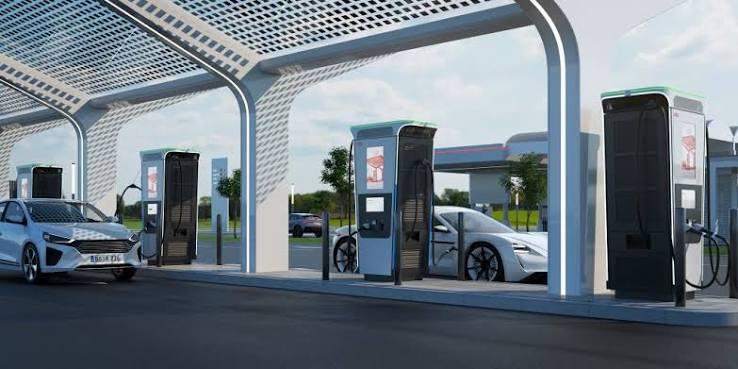
Selecting and installing an EV charger in Dubai allows electric vehicle owners and commercial property operators to establish fast, safe, and cost-effective charging infrastructure across the United Arab Emirates. As the UAE advances its Green Mobility Strategy, electric vehicles (EVs) have transitioned from niche alternatives to mainstream transportation choices. Having a dedicated charging setup at home, in residential buildings, or at commercial premises ensures your vehicle remains charged and ready for daily commutes without relying solely on public infrastructure.
Understanding charger types, Dubai Electricity and Water Authority (DEWA) regulations, power load capacities, and installation requirements helps property owners choose the right hardware and avoid safety or compliance risks.
What Is an EV Charger and How Does Charging Infrastructure Work in Dubai?
An electric vehicle charger (also called Electric Vehicle Supply Equipment, or EVSE) delivers electrical energy safely from an electrical supply—such as a villa distribution board or commercial panel—to an electric vehicle's onboard battery system.
In Dubai, charging infrastructure operates under regulatory guidelines defined by DEWA to maintain grid stability, electrical safety, and fair billing practices.
+-----------------------------------------------------------------------------------+
|                        DUBAI EV CHARGING POWER CLASSIFICATIONS                    |
+-----------------------------------------------------------------------------------+
                                          |
        +---------------------------------+---------------------------------+
        |                                                                   |
        v                                                                   v
+-------------------------------+                       +-------------------------------+
|    LEVEL 1 / SLOW CHARGING    |                       |   LEVEL 2 / FAST AC CHARGING   |
| 2.3 kW - 3.7 kW (1-Phase AC)  |                       | 7 kW - 22 kW (1-Phase / 3-Phase) |
| Standard wall outlet (Emergency) |                   | Dedicated wallbox (Home/Office) |
+-------------------------------+                       +-------------------------------+
        |                                                                   |
        +---------------------------------+---------------------------------+
                                          |
                                          v
                        +-------------------------------+
                        |   LEVEL 3 / DC FAST CHARGING  |
                        |  50 kW - 360+ kW (Direct DC)  |
                        | Commercial hubs / Depots      |
                        +-------------------------------+
The choice of charging level depends directly on daily driving distance, available electrical service capacity, and desired charging speed.
EV Charger Dubai: Guide to Home and Commercial Charging Solutions
Whether setting up charging facilities for a private villa, a residential tower, or a corporate fleet, selecting the correct hardware profile ensures long-term operational efficiency:
| Solution Type | Charging Power & Hardware | Typical Installation Setting | Key Operational Features |
| Residential Single-Phase | $7\text{ kW}$ AC Wallbox ($32\text{ A}$) | Private villas & townhouse garages | Overnight charging ($6\text{--}8\text{ hours}$ full charge), Wi-Fi scheduling, app control. |
| Residential Three-Phase | $11\text{ kW}\text{--}22\text{ kW}$ AC Wallbox | Large villas & private estates | High-speed AC charging ($2\text{--}4\text{ hours}$ full charge), requires $32\text{ A}$ 3-phase supply. |
| Multi-Family & Apartments | $7\text{ kW}\text{--}22\text{ kW}$ Dual-Socket Chargers | Residential building parking decks | RFID access control, dynamic load balancing, individual sub-metering. |
| Commercial & Corporate Fleet | $22\text{ kW}$ AC to $50\text{--}180\text{ kW}$ DC | Office towers, malls & logistics parks | OCPP software integration, payment gateway processing, rapid fleet turnover. |
Step-by-Step Installation and Compliance Process
Installing a wallbox or commercial charger in the UAE involves technical assessment, electrical safety engineering, and official authority approvals.
EV Charger Dubai: Complete Guide to Home and Commercial Charging Solutions
To reliably charge an electric vehicle in Dubai, you need an EV charger tailored to your daily driving distance, your electrical panel’s capacity, and local regulatory standards. For residential properties, installing an AC Level 2 charger (7 kW to 22 kW) provides complete overnight charging. For commercial environments, options range from dual-port AC wallboxes for employee parking to high-power DC fast chargers (50 kW to 360 kW) designed for rapid fleet turnarounds and customer amenities.
Deploying an ev charger dubai driver can depend on requires navigating heat management, electrical load approvals from Dubai Electricity and Water Authority (DEWA), and choosing weather-resistant hardware suited to Middle Eastern environmental conditions.
Understanding EV Charging Standards and Levels in Dubai
Selecting the correct charging infrastructure begins with understanding how power output affects charging speeds and site requirements.
| Charger Type | Power Output | Average Charging Time (10% to 80%) | Primary Use Case | Installation Requirement |
| Level 1 (AC) | 1.4 kW – 2.3 kW | 24 – 40+ Hours | Emergency / Backup | Standard 230V Single-Phase Outlet |
| Level 2 (AC) | 7 kW – 22 kW | 4 – 8 Hours | Residential & Workplace | Dedicated Single-Phase or 3-Phase Breaker |
| DC Fast Charging | 50 kW – 180 kW | 30 – 60 Minutes | Fleet & Retail Depots | Direct High-Voltage Grid Connection |
| Ultra-Fast (DC) | 200 kW – 360+ kW | 15 – 25 Minutes | Highway Hubs & Transit Terminals | Dedicated Substation / High-Power Transformer |
Level 2 AC Chargers for Homes and Small Offices
Level 2 AC chargers are the baseline standard for home garages, private villas, and multi-dwelling units across Dubai. Operating on either single-phase (7.4 kW) or three-phase (22 kW) AC power, these units convert alternating current from the grid into direct current via the vehicle's onboard converter.
Commercial DC Fast Chargers
DC fast chargers bypass the vehicle’s onboard converter, delivering direct current straight to the battery pack. These units are necessary for commercial operations requiring rapid vehicle turnaround, such as logistics fleets, ride-hailing hubs, and shopping center car parks.
Residential vs. Commercial EV Charger Deployments
The process of installing an EV charger varies significantly between a private villa and a commercial facility.
Residential Villa and Apartment Installations
For villa owners in areas like Arabian Ranches, Jumeirah, or Dubai Hills, residential installation involves evaluating the home’s main distribution board (MDB). A dedicated circuit breaker and direct cabling from the panel to the parking bay prevent electrical overloads.
Key residential considerations include:
-
Cable Management: Tethered cables (permanently attached) offer convenience for daily home use, while untethered units allow flexibility for guests with different vehicle plug types.
-
Smart Scheduling: Utilizing smart chargers with built-in Wi-Fi or Bluetooth allows home owners to schedule charging during off-peak hours to manage household power draw.
Commercial and Fleet Operations
Commercial deployments involve complex electrical loads, access control, and billing integration. Commercial parking structures in Business Bay or Dubai Marina require networked chargers connected via Open Charge Point Protocol (OCPP).
Commercial features require:
-
Dynamic Load Management (DLM): Automatically balances power distribution across multiple chargers based on real-time building power consumption, preventing circuit breaker trips without upgrading the site's total power allocation.
-
User Authentication: Integrated RFID card readers, mobile app access, or credit card terminals to restrict usage or monetize charging sessions.
Key Technical Considerations for Dubai's Environment
Operating high-voltage electrical equipment in hot, arid climates presents technical challenges that require specific hardware features.
Ambient Heat Management and Solar Degradation
Summer ambient temperatures in Dubai frequently exceed 45°C. Electronic components inside EV chargers generate additional heat during power conversion.
-
Thermal Derating: Choose chargers with smart thermal management systems that gracefully adjust power output down when internal temperatures spike, rather than shutting down entirely.
-
Ingress Protection (IP) & IK Ratings: Hardware installed outdoors must feature at least an IP65 weatherproofing rating to protect internal electronics against fine sand particles and dust, along with an IK10 impact resistance rating for high-traffic environments.
Regulatory Compliance and DEWA Infrastructure
All EV charger installations in Dubai must comply with DEWA guidelines and the UAE’s national standards managed by the Ministry of Industry and Advanced Technology (MoIAT). Chargers must be certified to IEC standards (such as IEC 61851 for conductive charging systems) and fitted with Type 2 connectors (Mennekes) for AC charging, or CCS2 (Combined Charging System Combo 2) for DC fast charging.
How to Choose the Right EV Charger
To select an optimal charging unit, evaluate these core decision factors:
                  [ Determine Daily Mileage & Fleet Needs ]
                                     │
                 ┌───────────────────┴───────────────────┐
                 ▼                                       ▼
       [ Low to Moderate Usage ]               [ High Daily Usage ]
       Daily Drive < 120 km                    Daily Drive > 120 km / Fleet
                 │                                       │
                 ▼                                       ▼
       [ AC Level 2 Charger ]                 [ DC Fast Charger ]
            (7 kW - 22 kW)                        (50 kW - 180 kW+)
                 │                                       │
                 └───────────────────┬───────────────────┘
                                     │
                                     ▼
                      [ Assess Electrical Supply ]
                 ┌───────────────────┴───────────────────┐
                 ▼                                       ▼
        [ Single-Phase 230V ]                   [ Three-Phase 400V ]
        Cap at ~7.4 kW Output                   Supports Up to 22 kW AC /
                                                Full DC Output
                                     │
                                     ▼
                      [ Site & Heat Readiness Check ]
                      • Enclosure Rating: IP65 / IK10
                      • Thermal Derating Protection
                      • DEWA & IEC Safety Compliance
-
Electrical Panel Capacity: Check if your facility’s main panel has sufficient spare amperage. A standard 7.4 kW AC charger requires a dedicated 32-amp single-phase breaker.
-
Vehicle Compatibility: While Type 2 and CCS2 are the dominant standard in the region, non-standard imports (such as US-spec vehicles using NACS or Type 1 connectors, or Asian imports using GB/T) require certified adapters or dedicated dual-standard charging cables.
-
Software & OCPP Compatibility: Select non-proprietary chargers running OCPP 1.6J or higher. This ensures you can switch software management platforms without needing to replace physical hardware.
Common Installation Pitfalls to Avoid
-
Undersized Cabling: Using wiring with insufficient cross-sectional area over long cable runs causes voltage drops, excess heat generation, and potential safety risks.
-
Ignoring Residual Current Protection: EV chargers require Type B Residual Current Circuit Breakers (RCCBs) or Type A units with integrated 6mA DC leakage detection to prevent electrical shock from direct current faults.
-
Installing in Direct Sunlight: Mounting a charger where it receives unshaded afternoon sun increases thermal throttling and reduces long-term component lifespan. Always select shaded installation zones or install protective canopies.
Recommended Supporting Media and Technical Documentation
For site operators and facility managers preparing for an installation, the following media assets provide clear technical context:
-
Diagram: Electrical Single-Line Diagram (SLD) for Commercial EV Load Balancing.
-
Filename:
ev-charger-dubai-commercial-sld-diagram.png -
Alt Text: Single-line electrical diagram showing dynamic load balancing integration for an EV charger deployment in Dubai.
-
-
Photo: IP65-rated Outdoor Wallbox Installation.
-
Filename:
ev-charger-dubai-outdoor-villa-installation.jpg -
Alt Text: Weatherproof wall-mounted EV charger installed in a shaded villa driveway in Dubai.
-
Frequently Asked Questions
What connector type is standard for EV chargers in Dubai?
The standard connector type across Dubai and the broader UAE is the Type 2 (Mennekes) plug for AC charging, and CCS2 (Combined Charging System Combo 2) for DC fast charging.
Can I plug my electric car into a standard wall socket at home?
Yes, using a Portable Level 1 trickle charger plugged into a standard 230V domestic outlet is possible, but it is very slow. It adds roughly 10 to 15 kilometers of range per hour, making a dedicated Level 2 wallbox much more practical for daily driving.
What is the difference between a tethered and an untethered EV charger?
A tethered charger has a built-in cable permanently attached to the unit, while an untethered charger features a socket where you plug in a separate cable. Untethered units offer greater flexibility for multi-car households or public bays.
How does hot weather affect EV charging speeds?
High ambient temperatures cause chargers and vehicle battery management systems (BMS) to automatically slow down power delivery (thermal throttling) to protect internal electronics from overheating. Selecting hardware with advanced thermal management mitigates this issue.
Is dynamic load management necessary for multi-charger installations?
Yes. Dynamic Load Management monitors the total electrical demand of a building or site in real time, routing available spare capacity to connected vehicles. This prevents circuit overloads without requiring expensive power supply upgrades from the utility provider.
Technical Indexing and Deployment Checklist
Before making a charger live, review these essential deployment steps:
-
[ ] Verify that electrical supply matches the charger's voltage and amperage requirements.
-
[ ] Ensure all installed hardware carries IP65 ingress protection and IEC compliance certifications.
-
[ ] Confirm that Type A-EV or Type B RCCD circuit protection is present on the supply line.
-
[ ] Test physical connection, cable strain relief, and lock mechanisms on tethered cables.
-
[ ] Validate OCPP communication with the central management server for commercial units.
-
[ ] Conduct thermal inspection under full load to check for hot spots in distribution boards.
Suggested Structured Data (Schema.org)
To help search engines understand the structure of this content, consider implementing
TechArticle and FAQPage JSON-LD schema markup on the published page. Ensure all schema properties directly match the visible body text.
 Arabic
 French
 Spanish
 Portuguese
 Deutsch
 Turkish
 Dutch
Dutch
 Italiano
 Russian
 Romaian
 Portuguese (Brazil)
 Greek
Greek