


How Are Plastic Granules Made? Understanding the Manufacturing Process
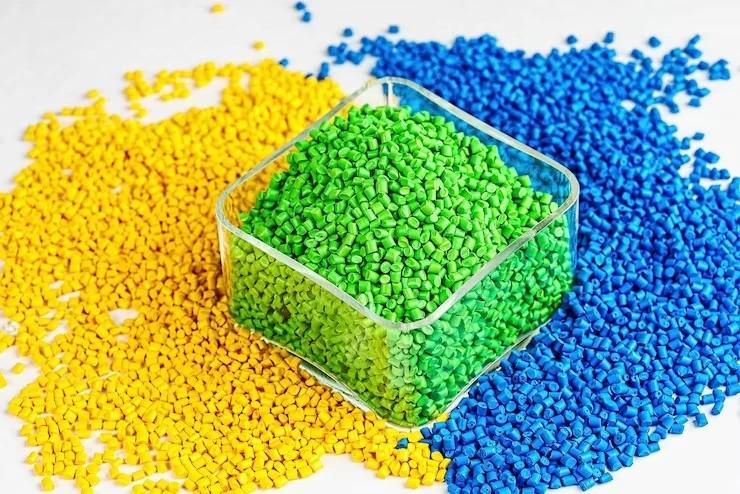
Plastic granules are widely used as feedstock for producing plastic products. They provide manufacturers with a convenient and consistent form of material that can be processed through different methods. But how are these small granules actually produced?
The manufacturing process depends on the type of plastic, its intended application, and whether the material is produced from virgin polymers, recycled plastics, or recovered industrial resources.
What Are Plastic Granules Made From?
Plastic granules can be produced from different polymer materials. Common materials include polyethylene, polypropylene, polystyrene, and other thermoplastic polymers.
The choice of material depends on the properties required in the final product. Factors such as flexibility, strength, heat resistance, chemical resistance, transparency, and durability can influence material selection.
In some applications, recycled or recovered plastic materials may also be processed into granules for further manufacturing.
Step 1: Selecting the Raw Material
The first stage involves selecting and preparing the appropriate raw material. For virgin plastic granules, this may involve polymer resins supplied specifically for plastic processing.
For recycled materials, suitable plastic waste is collected and sorted according to material type and quality. Proper separation is important because different polymers can have different melting temperatures and processing characteristics.
Step 2: Cleaning and Preparation
When recovered plastic is used, contaminants need to be removed before further processing. Depending on the source material, this can involve cleaning, drying, sorting, or other preparation steps.
The objective is to create a feedstock that is suitable for the next stage of processing.
Step 3: Size Reduction
Larger pieces of plastic may be reduced into smaller pieces using suitable equipment. This makes the material easier to process and allows it to be fed more consistently into processing machinery.
The size and condition of the prepared material can affect how efficiently it moves through the subsequent stages.
Step 4: Melting and Extrusion
The prepared material is introduced into an extruder, where controlled heat softens or melts the plastic. A screw mechanism moves the material through the machine while maintaining suitable processing conditions.
The molten plastic is then pushed through a die, forming continuous strands of material.
Step 5: Cooling and Pelletizing
The extruded strands are cooled to solidify the material. They are then cut into small, manageable pieces using a pelletizing system.
These pieces become the plastic granules used as feedstock for various plastic manufacturing processes.
Step 6: Quality Checks
Quality control is an important part of granule production. Depending on the material and application, manufacturers may evaluate characteristics such as particle size, moisture content, material composition, colour, density, and processing behaviour.
Consistent properties help manufacturers achieve more predictable results when the granules are later processed into finished products.
Why Granule Consistency Matters
Manufacturing processes rely on predictable material behaviour. Differences in moisture, particle size, composition, or other characteristics can affect melting, flow, moulding, and the quality of the finished product.
For this reason, consistent preparation and quality control are important when producing plastic granules for industrial applications.
Recycled Materials and Resource Recovery
Plastic granule production can also be part of a broader resource-recovery process. Suitable industrial plastic waste can sometimes be processed and converted into useful material instead of being sent directly for disposal. For a Plastic Granules Manufacturer in India, this approach can support better material utilization while addressing the growing need for responsible plastic resource management.
RRAJ Bioplast focuses on this concept by working toward converting industrial waste into useful ingredients for the plastics industry. Its approach connects material development with principles of sustainability, zero wastage, and circularity.
However, the suitability of recovered material depends on its composition, processing history, quality, and intended application. Not every type of plastic waste is suitable for every end use.
Where Are Plastic Granules Used?
Once produced, plastic granules can be used in processes such as injection moulding, extrusion, blow moulding, and film production. They can become components, packaging products, containers, films, household items, and numerous other plastic products.
The required characteristics vary according to the application, which is why material selection is an important part of plastic product development.
Conclusion
Plastic granules are the result of a series of material preparation, processing, cooling, pelletizing, and quality-control steps. Whether produced from virgin polymers or suitable recovered materials, their consistency plays an important role in downstream plastic manufacturing.
Understanding how granules are produced can help manufacturers better evaluate material selection, processing requirements, and opportunities for more efficient use of plastic resources.

 English
 Arabic
 French
 Spanish
 Portuguese
 Deutsch
 Turkish
 Dutch
Dutch
 Russian
 Romaian
 Portuguese (Brazil)
 Greek
Greek