


Digital Transformation in Logistics Market Size to Hit US$ 92.81 Billion by 2034
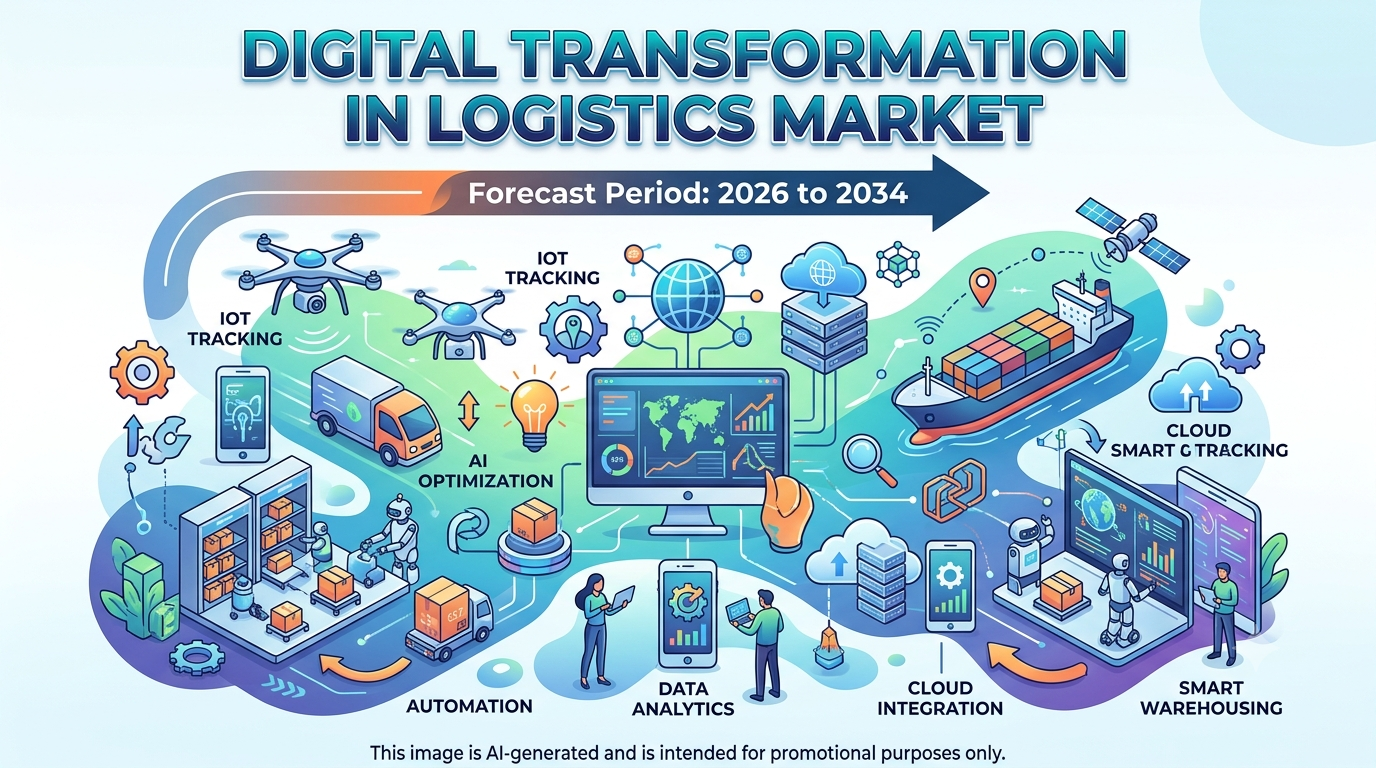
The increasing complexity of global supply chains is encouraging logistics companies to adopt advanced digital technologies. AI, IoT, cloud computing, automation, and analytics are being used to enhance operational visibility, streamline transportation and warehouse activities, improve inventory management, and facilitate informed business decisions.
The global Digital transformation In Logistics Market size is projected to reach US$ 92.81 billion by 2034 from US$ 40.47 billion in 2025. The market is anticipated to register a CAGR of 10.93% during the forecast period 2026-2034.
What is driving the market?
E-commerce expansion, demand for real-time visibility, operational cost pressures, and supply chain volatility are the principal growth drivers. Logistics and supply chain operators are increasingly required to provide end-to-end shipment traceability, optimize transport routes, automate manual documentation, and manage labor shortages. Retailers, manufacturers, and cross-border traders are seeking digital solutions that improve delivery speed and fleet efficiency without compromising accuracy or service reliability.
The transition is moving beyond isolated software tools toward fully interconnected digital ecosystems. Providers are investing in IoT telematics, AI-driven dynamic routing, automated storage and retrieval systems (ASRS), digital control towers, and electronic data interchange (EDI) platforms. Legacy systems, data siloes across multi-carrier networks, integration costs, and cybersecurity risks remain important constraints.
Which region leads?
Asia Pacific leads the market, driven by rapid e-commerce growth, massive manufacturing output, expanding cross-border trade, and aggressive investments in port, rail, and warehouse automation. China, India, Japan, and Southeast Asian economies present significant opportunities as surging parcel volumes coincide with national infrastructure modernization initiatives.
North America holds a substantial market share, supported by early adoption of advanced logistics technologies, dense warehousing hubs, digital freight matching platforms, and strong investments in supply chain resilience. Europe accounts for a major share, driven by cross-border trade digitization, carbon emission tracking regulations, and automated fulfillment networks.
Which segment leads?
Software & Platforms represents the leading component segment, supported by high demand for Transportation Management Systems (TMS), Warehouse Management Systems (WMS), Enterprise Resource Planning (ERP) integrations, and supply chain visibility platforms. Software solution adoption is expected to maintain steady market dominance through 2033.
By deployment, Cloud-based systems lead the market due to scalability, lower upfront capital expenditure, real-time data sync, and remote management capabilities across global networks. By function, Transportation Management and Warehouse Automation are identified as high-growth applications, as dynamic route optimization, autonomous mobile robots (AMRs), and predictive maintenance gain rapid adoption.
Which companies are prominent?
The report identifies IBM Corporation, SAP SE, Oracle Corporation, Hexaware Technologies, Tech Mahindra, Mindtree Ltd (LTIMindtree), Blue Yonder, Manhattan Associates, Siemens AG, and Honeywell International Inc. as prominent market participants.
These companies compete across supply chain software development, enterprise integration, IoT hardware, warehouse control systems, and predictive analytics platforms. Strategic differentiation increasingly depends on platform interoperability, AI integration, real-time data accuracy, ecosystem connectivity, and scalable cloud infrastructure. The list reflects the competitive landscape rather than a revenue-ranked market-share table.
What is changing in 2026?
The market is shifting from reactive digitizing of paper workflows toward compliance-ready, AI-native logistics systems. Logistics specifications increasingly emphasize real-time carbon tracking, autonomous fleet integration, digital twins, automated cross-border customs clearing, and end-to-end supply chain visibility. Regulatory frameworks such as mandatory digital trade documentation initiatives and scope 3 emissions reporting are establishing new standards for logistics compliance and data transparency.
Logistics providers are accelerating adoption of predictive freight matching, computer vision for inventory auditing, automated sorting, and electric vehicle fleet management tools. Procurement decisions are increasingly linked to system interoperability and proven ROI rather than tech adoption claims alone, driving demand for API standardization, cybersecurity certifications, and collaborative platforms across shippers, carriers, and customs agencies.
What are the major investment opportunities?
The strongest opportunities lie in AI-driven predictive logistics, warehouse robotics and automation, integrated cloud platforms, and secure supply chain visibility networks. Investment in fleet telematics, automated fulfillment centers, smart sorting infrastructure, and edge-computing devices can improve order accuracy and reduce transit delays. Long-term software-as-a-service (SaaS) and platform partnerships can help logistics providers upgrade legacy infrastructure with lower upfront risk.
Additional opportunities include digital freight brokerage platforms, carbon accounting tools, last-mile delivery software, and cold chain monitoring systems for pharmaceuticals and perishable food. Dynamic routing algorithms and autonomous freight tracking create recurring value where high-density shipping routes operate at scale.
Asia Pacific and emerging logistics corridors offer attractive expansion potential through growing trade volumes and modernization of transport infrastructure. Investors should prioritize solutions that balance technology performance, software integration, cybersecurity resilience, and local system compatibility, while assessing implementation timelines and capital requirements.
The Insight Partners provides comprehensive syndicated and tailored market research services in the healthcare, technology, and industrial domains. Renowned for delivering strategic intelligence and practical insights, the firm empowers businesses to remain competitive in ever-evolving global markets.
• Email: sales@theinsightpartners.com
• Website: theinsightpartners.com
• Phone: +1-646-491-9876

 English
 Arabic
 French
 Spanish
 Portuguese
 Deutsch
 Turkish
 Dutch
Dutch
 Italiano
 Russian
 Romaian
 Greek
Greek