


Nikahnama in Pakistan: What Should You Know Before Signing?
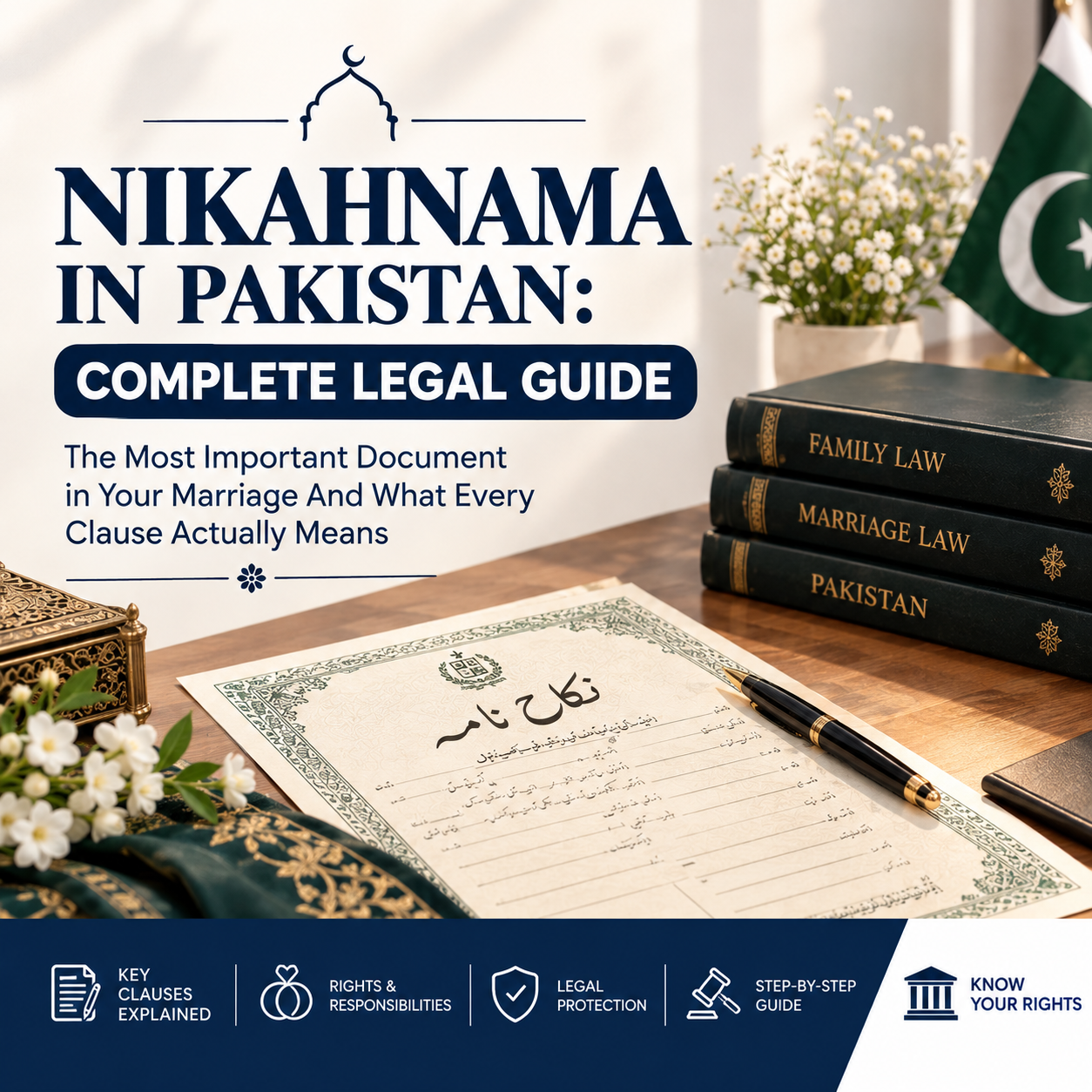
The Nikahnama is one of the most important legal documents associated with a Muslim marriage in Pakistan. While many couples focus on the wedding arrangements, venue, and celebrations, the legal details written in the Nikahnama deserve equal attention. Understanding its terms before signing can help both spouses know what has been agreed upon and what information has been officially recorded.
A Nikahnama is more than a ceremonial document. It records important details about the bride, groom, witnesses, dower (Haq Mehr), and other terms connected with the marriage. For anyone planning a marriage, taking time to understand these details can help avoid confusion later.
What Is a Nikahnama in Pakistan?
A Nikahnama is the marriage document used to record the terms and essential details of a Muslim marriage. It contains information about the parties, witnesses, date and place of Nikah, Haq Mehr, and certain other conditions.
The document should be completed carefully, with names, CNIC information, addresses, and other details checked against the relevant identification documents. Errors in important information can create difficulties when the marriage documents are later required for legal, administrative, immigration, or family-law matters.
Because a Nikahnama functions as a formal marriage contract, couples should understand what they are signing rather than treating it as routine paperwork.
Why Is the Marriage Contract Important?
A marriage involves both personal and legal commitments. The written terms can become important if questions later arise concerning dower, maintenance, divorce, or other contractual conditions.
For this reason, a Marriage Contract Pakistan should be reviewed carefully before it is signed. Both parties should have an opportunity to understand the information entered into the document and discuss any conditions that they want formally recorded.
One of the most important areas to review is Haq Mehr. The amount and whether it is payable immediately or deferred should be clearly recorded. Vague wording can make future interpretation or enforcement more complicated.
What Information Is Recorded in a Nikahnama?
Different sections of the Nikahnama record different information. These commonly include:
-
Names and identification details of the bride and groom
-
CNIC numbers and addresses
-
Information about the bride's guardian where applicable
-
Details of witnesses
-
Date and place of Nikah
-
Haq Mehr and its payment terms
-
Information concerning existing or previous marriages
-
Special conditions agreed between the parties
-
Delegation of the right of divorce where applicable
It is important to check the actual heading of each section because numbering and forms can vary depending on the applicable form or jurisdiction.
What Is Haq Mehr?
Haq Mehr, also known as dower, is an important part of the marriage arrangement. The amount agreed between the spouses should be clearly stated in the Nikahnama.
The document may distinguish between prompt and deferred Mehr. Prompt Mehr is generally payable according to the agreed terms, while deferred Mehr becomes payable according to the conditions recorded in the marriage contract or applicable law.
Before signing, couples should make sure the amount is written clearly and that there is no uncertainty about what has been agreed.
Can Special Conditions Be Included?
The Nikahnama may provide space for additional conditions agreed between the parties. These can be important when the couple has specific arrangements that they want to record formally.
For example, the parties may discuss matters relating to employment, education, residence, financial responsibilities, or other agreed arrangements. However, the legal effect of any particular condition depends on its wording, applicable law, and the circumstances of the case.
Anyone considering adding important conditions should consider obtaining professional legal advice before signing the document.
What Is Tafweez-e-Talaq?
Tafweez-e-Talaq refers to the delegation of the husband's right of divorce to the wife under agreed terms. Where this is relevant to a marriage, the corresponding section of the Nikahnama should be understood carefully before signing.
The legal consequences of delegation can depend on the exact wording used in the document. Therefore, it is important not to rely only on verbal explanations. The actual wording entered into the Nikahnama should be reviewed.
Why Should You Review Nikahnama Before the Wedding?
Wedding preparations can become busy, and couples may be asked to sign documents quickly. However, the Nikahnama should not be treated as paperwork that can simply be signed without reading.
Before the Nikah, both parties should:
-
Review the document carefully.
-
Check names and CNIC numbers.
-
Confirm the Haq Mehr amount.
-
Understand any special conditions.
-
Check witness information.
-
Make sure relevant sections have been completed correctly.
-
Ask a qualified lawyer if any clause is unclear.
A short review before the marriage can help prevent misunderstandings about the terms that were actually agreed.
How Can a Lawyer Help With a Nikahnama?
A family lawyer can explain the legal meaning of clauses and identify areas that may require clarification before the document is signed.
This can be particularly useful where the marriage involves specific contractual conditions, substantial financial arrangements, previous marriages, overseas documentation, or other circumstances requiring additional legal attention.
For people searching for a Female Family Lawyer in Lahore, Noor & Huda Associates provides family-law services relating to marriage, divorce, Nikahnama matters, and other family-law concerns.
Professional advice does not replace the need for both parties to read the document themselves. Instead, it can help them understand the legal implications of the terms they are considering.
What About Court Marriage in Pakistan?
A court marriage involves legal and procedural requirements that should be handled carefully. Couples considering Court Marriage Pakistan should make sure that the required documentation, identification, witnesses, Nikah, and registration procedures are properly addressed.
The exact process can depend on the circumstances of the couple and the applicable local requirements. Anyone considering court marriage should therefore verify the current requirements before proceeding.
Legal guidance can also be useful when one or both parties have previously been married, live abroad, or need additional documentation for immigration or official purposes.
What Should You Do After the Nikah?
After the Nikah, it is important to make sure the marriage has been properly registered and that you receive the relevant documentation.
Keep a copy of the registered Nikahnama in a secure place. You may need it later for matters involving family law, official records, immigration, or other legal procedures.
If a copy has not been provided, the relevant registration authority may be able to provide a certified copy according to the applicable procedure.
What Should Overseas Pakistanis Know?
Pakistani citizens living abroad may also need assistance with Nikahnama and marriage documentation in Pakistan. This can include reviewing an existing Nikahnama, obtaining copies of marriage records, dealing with registration requirements, or understanding documents needed for immigration and family-law matters.
Because procedures can differ depending on the country involved and the purpose for which the documents are required, overseas Pakistanis should obtain advice based on their individual circumstances.
Final Thoughts
The Nikahnama deserves careful attention because it records important details and terms connected with a marriage. Whether you are planning a traditional Nikah or considering Court Marriage Pakistan, understanding the document before signing is an important step.
Check the identification details, understand the Haq Mehr, review special conditions, and make sure the registration process is completed correctly. If you are unsure about any provision, obtaining advice from a qualified family lawyer before signing can help you understand your legal position.
For individuals looking for a Best Female Family Lawyer Lahore, Noor & Huda Associates offers legal assistance for Nikahnama reviews, marriage-related matters, family law, and other legal services in Pakistan.
Frequently Asked Questions
1. What is a Nikahnama in Pakistan?
A Nikahnama is the official marriage document that records important details of a Muslim marriage, including the spouses' information, witnesses, Haq Mehr, and other agreed terms. It serves as an important legal record of the marriage.
2. Why is a Marriage Contract Pakistan important?
A Marriage Contract Pakistan records the terms and commitments agreed between the spouses. Reviewing the document carefully before signing can help both parties understand their rights, responsibilities, Haq Mehr, and any special conditions included in the marriage.
3. Can special conditions be added to a Nikahnama?
Yes, certain conditions can be recorded in the Nikahnama where they are legally permissible and properly agreed upon. Anyone considering important conditions should have the wording reviewed before signing to understand its potential legal effect.
4. What should I check before signing a Nikahnama?
You should check the names, CNIC numbers, addresses, witness details, date and place of Nikah, Haq Mehr, and any special conditions. If you are unsure about a clause, consulting a qualified family lawyer before signing can help you understand the document.
5. Can a lawyer help with Court Marriage Pakistan and Nikahnama matters?
Yes. A qualified family lawyer can assist with Nikahnama review, marriage documentation, and procedures relating to Court Marriage Pakistan. For individuals looking for a Best Female Family Lawyer Lahore, Noor & Huda Associates provides family-law assistance for marriage and related legal matters.

 English
 Arabic
 French
 Spanish
 Portuguese
 Deutsch
 Dutch
Dutch
 Italiano
 Russian
 Romaian
 Portuguese (Brazil)
 Greek
Greek