


Difference Between GRC and GFRC: Complete Guide
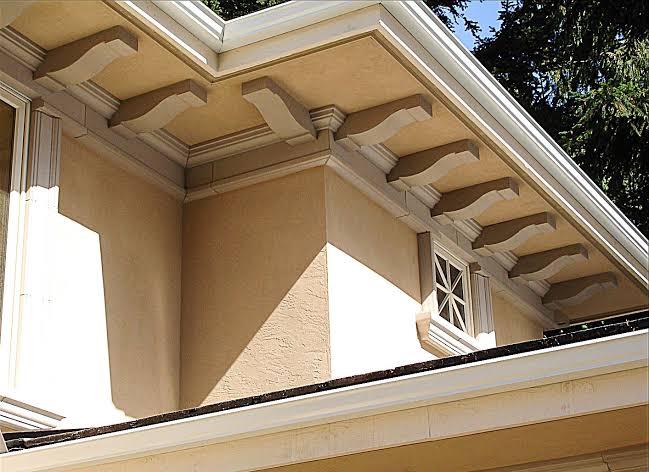
Architectural materials have a major influence on the appearance, durability, weight, and design flexibility of modern buildings. Designers and contractors often consider cement-based composites for façades, screens, decorative panels, columns, cornices, and other architectural elements. Two terms that frequently appear during material selection are GRC and GFRC.
Understanding the difference between GRC and GFRC is useful when discussing architectural products with manufacturers, architects, contractors, and project consultants. In many markets, GRC means Glassfibre Reinforced Concrete, while GFRC means Glass Fiber Reinforced Concrete. In practical architectural use, these terms commonly describe the same broad class of glass-fiber-reinforced cementitious material. MAHESH GRC provides customized architectural GRC solutions for different construction requirements.
What Is GRC?
GRC is commonly used as an abbreviation for Glassfibre Reinforced Concrete. It is a cement-based composite in which alkali-resistant glass fibers provide reinforcement.
The material can be produced in relatively thin sections compared with traditional concrete components. This makes it suitable for architectural products where detailed shapes and controlled weight are important.
GRC can be manufactured into:
- Decorative façade panels
- Architectural screens
- Columns
- Cornices
- Mouldings
- Cladding elements
- Feature panels
- Decorative wall elements
The exact composition and manufacturing method can vary depending on the manufacturer and intended application.
What Is GFRC?
GFRC generally stands for Glass Fiber Reinforced Concrete. It describes a similar cementitious composite reinforced with glass fibers.
GFRC is widely used in architectural applications because it can be molded into detailed shapes and customized designs. The glass fiber reinforcement helps provide tensile reinforcement to the cementitious matrix.
Like GRC, GFRC can be manufactured for both decorative and functional architectural applications.
Difference Between GRC and GFRC Terminology
The most important point about the difference between GRC and GFRC is that the terms frequently refer to essentially the same material category.
The distinction is mainly linguistic. “GRC” is commonly used in the United Kingdom, India, and several other markets, while “GFRC” is particularly common in North America and some international specifications.
Therefore, someone searching for the difference between GRC and GFRC should not automatically assume that the two names represent completely separate materials.
Instead, the project specification should identify the actual material composition, reinforcement type, manufacturing process, performance requirements, dimensions, and finish.
Manufacturing Process
Both GRC and GFRC products can be manufactured using different production techniques.
Common methods include spray-up production and premix methods. In spray-up manufacturing, a cementitious mixture and glass-fiber reinforcement are deposited into a mold. Premix systems incorporate chopped glass fibers into the cementitious mixture before placement.
The appropriate method depends on product design, production volume, required thickness, reinforcement arrangement, surface finish, and technical specifications. MAHESH GRC can develop customized architectural products according to project-specific design requirements.
Design Flexibility
One reason architects consider these materials is their ability to create detailed forms.
GRC or GFRC can be used for curved surfaces, decorative screens, geometric patterns, façade elements, cornices, and other architectural features.
The ability to manufacture customized molds gives designers considerable freedom. However, practical limitations still need to be considered, including panel dimensions, handling, fixing, transportation, and manufacturing tolerances.
Weight Considerations
Compared with many traditional concrete architectural components, thin GRC/GFRC elements can reduce the amount of material required for certain applications.
Lower component weight can be useful during transportation and installation. However, the final weight depends on thickness, dimensions, reinforcement, framing, and design.
Engineers should determine structural and fixing requirements rather than selecting a product based solely on nominal material properties.
Applications
The architectural uses of GRC and GFRC overlap considerably.
Typical applications include:
Facades
Panels and decorative components can create distinctive building elevations.
Screens
Perforated and patterned screens can be used for privacy, ventilation, shading, and visual decoration.
Interior Elements
GRC products can be used for partitions, ceilings, decorative walls, and feature installations.
Decorative Profiles
Cornices, mouldings, bands, columns, and other details can be manufactured in customized designs.
How to Choose the Right Product
Instead of focusing only on the terminology, customers should evaluate the actual product specification.
Important questions include:
- What type of glass fiber is used?
- What manufacturing process is followed?
- What are the panel dimensions and thickness?
- What fixing system is recommended?
- What surface finish is available?
- What quality-control procedures are followed?
- Can the design be customized?
- What installation support is available?
These questions provide more useful information than simply asking about the name of the material.
Why Work With MAHESH GRC?
MAHESH GRC focuses on architectural GRC solutions for different residential, commercial, and institutional requirements. Customized manufacturing can help architects and builders achieve specific patterns, dimensions, profiles, textures, and finishes.
A professional manufacturer can also help customers understand product limitations, installation requirements, and appropriate applications before production begins.
Conclusion
The difference between GRC and GFRC is often primarily a difference in terminology rather than a fundamental difference in material. Both terms commonly describe glass-fiber-reinforced cementitious architectural products. When selecting a product, customers should focus on composition, reinforcement, manufacturing quality, dimensions, performance requirements, finish, and installation details. MAHESH GRC can provide customized GRC architectural solutions based on individual project needs.

 English
 Arabic
 French
 Spanish
 Portuguese
 Deutsch
 Turkish
 Dutch
Dutch
 Italiano
 Russian
 Romaian
 Greek
Greek