


Managed SIEM Providers: A Trusted Healthcare Guide for India
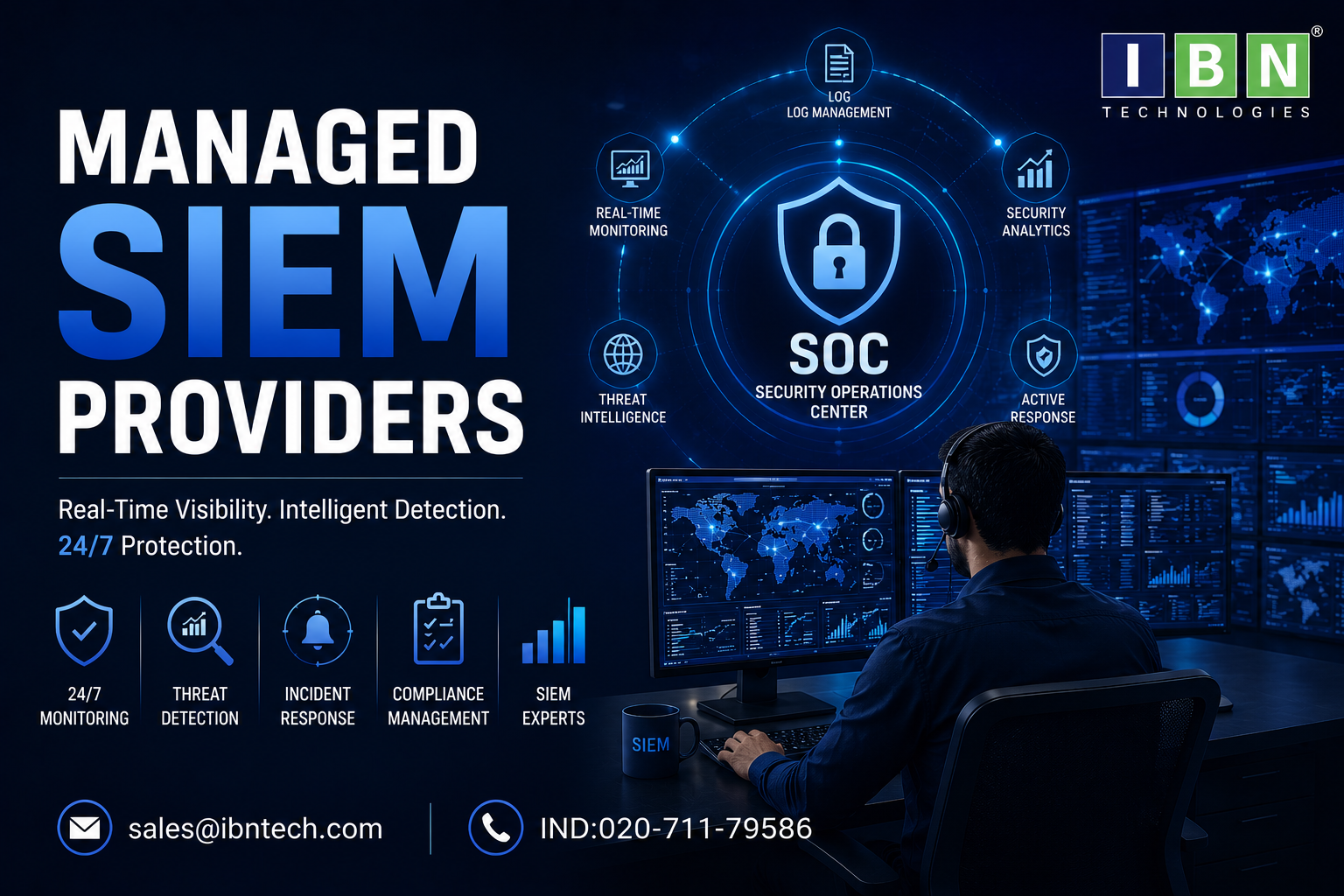
Managed SIEM Providers for Safer Healthcare Operations in India
Healthcare organizations need security monitoring that protects clinical systems without disrupting patient care. Managed SIEM providers help hospitals, diagnostic networks, healthcare platforms, and medical service organizations collect and analyze security events, identify suspicious activity, coordinate incident response, and improve visibility across increasingly connected IT environments.
Why healthcare security needs an operational approach
Clinical dependence: Healthcare delivery increasingly relies on electronic records, diagnostic systems, connected medical technologies, patient portals, applications, and communication platforms. A security issue affecting one system can have operational consequences beyond the technology department.
For organizations evaluating NOC and SOC services for Indian healthcare compliance, security monitoring should be considered alongside network availability, access management, incident handling, and governance. The objective is not simply to generate more alerts but to create a controlled process for identifying and responding to meaningful events.
Sensitive information: Healthcare organizations handle highly sensitive personal and clinical information. Unauthorized access can create privacy, operational, and reputational concerns.
Always-on operations: Hospitals and healthcare platforms may operate outside conventional business hours. Security monitoring therefore needs a defined process for handling events when internal technology teams are occupied with operational priorities.
Where NOC and SOC functions intersect
A NOC and a SOC have different primary responsibilities, but healthcare environments benefit when their activities are coordinated.
Network visibility: NOC teams focus on network performance, availability, connectivity, and infrastructure health. These signals can provide useful context when the SOC investigates suspicious network activity.
Security monitoring: SOC teams focus on security events, suspicious behavior, investigation, and incident escalation. They need access to relevant infrastructure information to understand what an alert means.
Joint escalation: When an event affects both security and availability, the two functions need a coordinated response. For example, isolating a compromised endpoint may protect the environment but could also affect a clinical workflow.
Operational context: Security analysts can investigate more effectively when they understand scheduled maintenance, approved changes, network outages, and application dependencies.
How managed SIEM supports healthcare monitoring
Centralized collection: Security events from endpoints, servers, network devices, applications, identity systems, and other supported sources can be brought together for analysis.
Event correlation: Individual events can be examined as part of a broader sequence. A suspicious login followed by unusual privilege activity and unexpected access to a sensitive application may warrant investigation.
Alert investigation: Security analysts review relevant context rather than treating every technical event as an incident.
Escalation: Significant findings can be communicated to designated healthcare IT and security stakeholders according to agreed procedures.
Response coordination: Internal teams can then manage approved containment, remediation, recovery, and operational continuity activities.
Questions healthcare leaders should ask
How can NOC and SOC services for Indian healthcare compliance support hospital operations?
They can create coordinated visibility across network and security events while keeping availability and security responsibilities clearly defined. This helps healthcare IT teams investigate incidents without losing sight of clinical and operational dependencies.
- Map critical clinical systems.
- Identify security and availability dependencies.
- Define joint escalation paths.
- Establish incident ownership.
- Review operational changes that affect monitoring.
What should Indian healthcare organizations ask managed SIEM providers?
They should ask how the provider collects security data, investigates alerts, protects administrative access, communicates incidents, and works with internal IT teams. The provider should also be able to explain how the monitoring model fits the organization's existing infrastructure.
- Identify supported log sources.
- Review investigation workflows.
- Confirm escalation procedures.
- Examine access requirements.
- Clarify reporting arrangements.
Can managed SIEM support healthcare compliance activities in India?
Security monitoring can provide useful operational records for organizations managing applicable privacy, security, and governance requirements. However, SIEM alone does not make an organization compliant; processes, controls, policies, access management, and documented responsibilities remain important.
What happens when security monitoring is handled only internally
Competing priorities: Healthcare IT teams may need to resolve application issues, connectivity problems, system upgrades, user requests, and clinical technology requirements at the same time as security events.
Incomplete visibility: Security data can remain distributed across separate systems. Without centralized analysis, relationships between authentication, endpoint, network, and application events may be harder to identify.
Response delays: When responsibilities are unclear, an alert can remain in an investigation queue while teams determine who should act.
Operational conflicts: Security containment can affect important healthcare services. Response procedures should therefore include the right technical and operational stakeholders.
A practical healthcare scenario
Consider a hospital network where an employee account begins authenticating unusually and later accesses an application outside its normal working pattern. At approximately the same time, an endpoint associated with the account generates additional security events.
A managed SIEM can correlate these signals and give security analysts a broader view of the activity. If the investigation indicates a potential compromise, the SOC can escalate the event while internal IT and clinical technology stakeholders determine appropriate containment without unnecessarily disrupting essential services.
Designing security monitoring around healthcare workflows
Critical systems: Begin by identifying systems whose availability or confidentiality has direct operational importance. These may include patient-facing applications, clinical information systems, identity infrastructure, databases, and supporting network services.
Priority alerts: Not every event deserves the same response. Define severity categories based on potential impact, affected systems, user privileges, and evidence of unauthorized activity.
Escalation rules: Establish who should be contacted when an incident affects sensitive information, privileged accounts, critical infrastructure, or patient-facing services.
Change awareness: Scheduled maintenance and approved infrastructure changes should be visible to the monitoring process. This helps analysts distinguish expected activity from potentially suspicious behavior.
Access governance: Provider and internal administrator access should be limited to necessary responsibilities. Privileged access should be controlled and periodically reviewed.
Compliance considerations for Indian healthcare organizations
Indian healthcare organizations should map security monitoring to the laws, contractual obligations, internal policies, and sector requirements applicable to their operations. The exact compliance landscape can differ according to the organization's structure, services, technology environment, and data responsibilities.
Privacy management: Security monitoring should support appropriate controls around sensitive information without creating unnecessary exposure to the monitoring data itself.
Audit readiness: Consistent records of security events, investigations, escalations, and response actions can help organizations demonstrate how security operations are managed.
Third-party governance: If an external provider participates in monitoring, the organization should document responsibilities for data access, incident notification, privileged operations, retention, and service oversight.
Building a sustainable monitoring model
Start with visibility: Identify the systems that matter most before expanding monitoring broadly. A focused deployment can help teams understand what information is useful for investigation.
Tune continuously: Detection rules should change as applications, users, infrastructure, and normal operating patterns change.
Connect teams: NOC, SOC, infrastructure, application, compliance, and clinical technology stakeholders should understand their roles during significant incidents.
Review procedures: Incident workflows should be tested periodically so that escalation contacts, permissions, and responsibilities remain current.
FAQ
What is the difference between NOC and SOC services in healthcare?
A NOC primarily focuses on network and infrastructure availability, while a SOC focuses on security monitoring, investigation, and incident response. Healthcare organizations may need both functions to coordinate when a security event can affect service availability.
Are managed SIEM providers suitable for hospitals?
They can be suitable when the service is designed around the hospital's systems, security requirements, operational dependencies, and governance processes. The organization should establish clear access, escalation, and response responsibilities before implementation.
Does SIEM monitoring alone satisfy healthcare compliance requirements?
No. SIEM can support security visibility and evidence collection, but compliance also depends on policies, technical controls, access governance, incident management, documentation, and other applicable requirements.
IBN Technologies supports managed SOC and SIEM operations that can help organizations strengthen security monitoring and structured incident response.
Contact Us
IBN Technologies
Phone: +91 20 6768 0404
Email: sales@ibntech.com

 English
 Arabic
 French
 Spanish
 Portuguese
 Deutsch
 Dutch
Dutch
 Italiano
 Russian
 Romaian
 Portuguese (Brazil)
 Greek
Greek