


The US Chamber of Commerce - What It Does and How Businesses Can Benefit
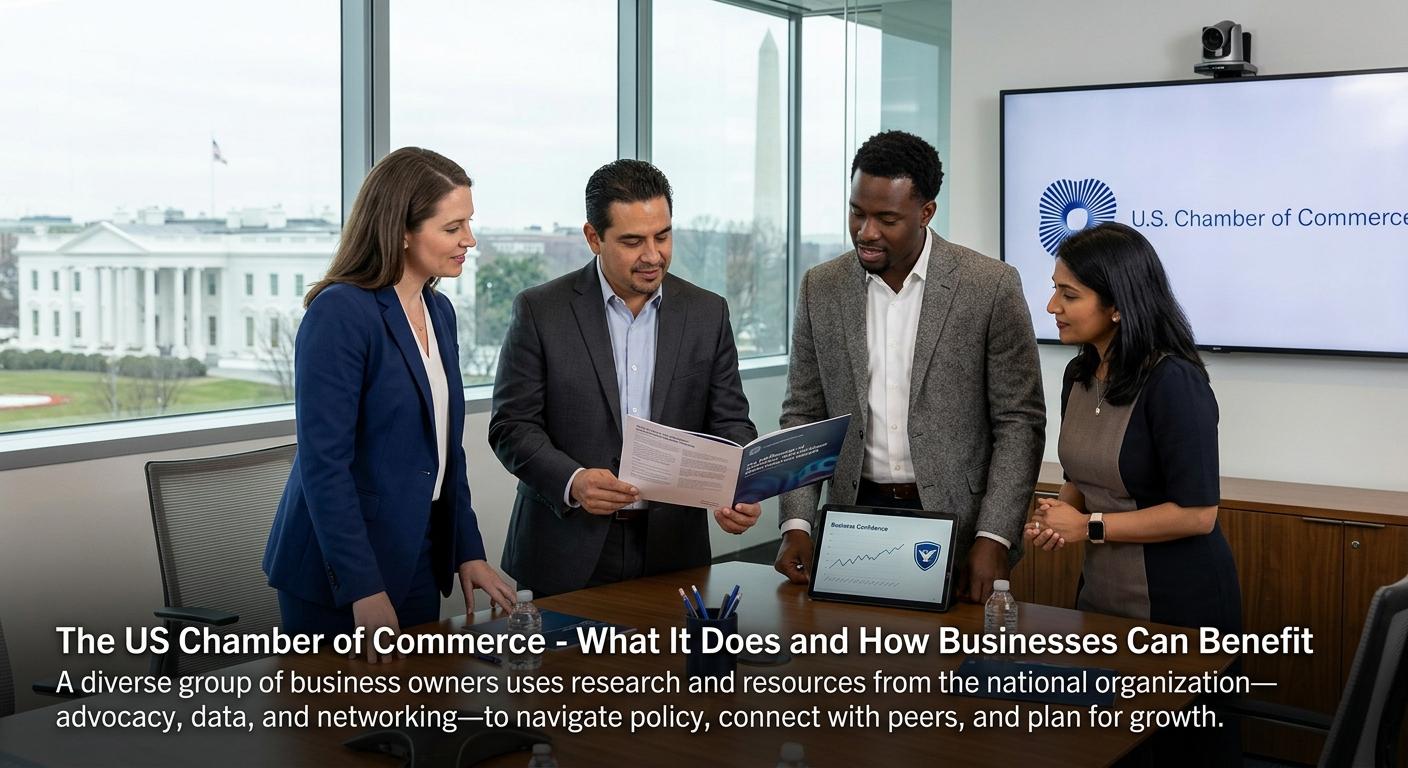
The US Chamber of Commerce - What It Does and How Businesses Can Benefit
The US Chamber of Commerce is one of the best-known business organizations in America, yet many owners are unsure what it does or whether joining makes sense. Founded in 1912 and based in Washington, D.C., it is a private, nonprofit federation of businesses, not a government agency. Understanding how it works can help founders, small business owners, and executives decide how to use it.
What Is the US Chamber of Commerce?
The US Chamber of Commerce is a national business association that represents companies of every size, from solo operators to multinational corporations. Its members include individual businesses, trade associations, and local and state chambers. The organization focuses on three broad areas: advocating for business interests in policymaking, producing research on the economy, and offering resources that help companies grow.
It is easy to confuse the national body with the thousands of local chambers across the country. Those local groups are independent organizations with their own boards, budgets, and membership rules. Some collaborate with the national Chamber, but a membership in one does not automatically include the other.
How the US Chamber of Commerce Influences Policy
The US Chamber of Commerce is best known for its advocacy work in Washington and in state capitals. It weighs in on topics such as taxation, trade, regulation, workforce development, energy, technology, and healthcare. Its staff meet with lawmakers, submit comments on proposed rules, and sometimes bring legal cases that affect the business community.
Opinions on its positions vary. Supporters say it gives employers a unified voice, while critics sometimes argue its priorities favor larger corporations. For a business owner, the practical takeaway is to read the Chamber’s published positions on issues that affect your industry and decide whether they align with your own interests. Treating it as one viewpoint among many is a healthy approach.
Research and Data From the US Chamber of Commerce
Beyond advocacy, the US Chamber of Commerce publishes research that many business leaders use for planning. Its reports often cover small business sentiment, workforce trends, supply chains, international trade, and emerging technologies such as artificial intelligence. Its affiliated foundation also produces studies on topics like competitiveness and education.
This material is valuable because it is free to read in many cases and often includes charts and survey results you can cite in presentations or strategy documents. When you use outside data, check the publication date and methodology, since economic conditions can shift quickly.
Membership Benefits of the US Chamber of Commerce
The US Chamber of Commerce offers several member-focused benefits, though the exact options change over time and depend on the membership level. Commonly highlighted areas include:
-
Networking and events. Conferences, forums, and virtual sessions that connect you with peers, partners, and potential customers.
-
Educational resources. Guides, webinars, and toolkits on hiring, compliance, cybersecurity, and growth planning.
-
Savings programs. Member discounts on services such as shipping, insurance, or software, where available.
-
Policy updates. Alerts that help you track legislation and regulation that could affect your operations.
Before paying for any membership, review the current offerings on the official website, compare them against your goals, and ask what is actually included.
US Chamber of Commerce Support for Small Businesses
The US Chamber of Commerce has made small business a visible part of its work, publishing surveys of owner confidence and offering practical resources for operating in changing conditions. Topics that regularly draw attention include access to capital, rising costs, hiring challenges, and adopting new technology.
Small business owners often get the most value by combining national resources with local ones. A national report can show you where the economy is heading, while your local chamber can introduce you to customers, suppliers, and referral partners in your own community. Using both creates a stronger network than relying on either alone.
Why Super-Niche CEOs™ Should Pay Attention to the US Chamber of Commerce
For Super-Niche CEOs™, who build their companies around one clearly defined audience or problem, the US Chamber of Commerce can serve as a credibility and visibility channel. A specialist founder can use the organization’s research to support their own content, attend events to meet adjacent businesses, and follow policy developments that affect their narrow market. Because focused leaders depend on trust within a tight community, participation in respected business networks signals stability and commitment. The key is to engage selectively: pick the events, resources, and relationships that match your niche instead of trying to be everywhere.
Getting the Most From the US Chamber of Commerce
The US Chamber of Commerce rewards active participation more than passive membership. Setting clear goals before you join makes it easier to measure results. Consider a simple approach:
-
Define your objective. Decide whether you want leads, partnerships, education, policy awareness, or visibility.
-
Choose your channels. Select a few events, newsletters, or committees that fit your objective instead of signing up for everything.
-
Follow up. Connect with people you meet and continue the conversation within a few days.
-
Track outcomes. Record introductions, referrals, and ideas gained, and review them after six months.
-
Reassess. Renew only if the benefits clearly outweigh the cost and time.
Questions to Ask Before You Join the US Chamber of Commerce
The US Chamber of Commerce is not the right fit for every company, so a few honest questions can save time and money. Does the organization’s policy agenda reflect your values and industry needs? Would a local chamber or an industry-specific association serve you better? Can you commit the time to attend events or read updates? Are there overlapping benefits you already receive through other memberships?
It also helps to be careful about claims. Membership does not endorse your products, guarantee sales, or create an official partnership, so avoid implying otherwise in your marketing. Describing yourself accurately as a member, where that is true, keeps your reputation intact.
Final Thoughts
The US Chamber of Commerce remains a significant presence in American business, offering advocacy, research, and networking that many companies find useful. Its value depends on how deliberately you use it. Start with clear goals, verify current benefits on the official site, combine national resources with local relationships, and measure what you gain. Done well, it can support growth, strengthen your network, and keep you informed in a fast-moving economy.

 Arabic
 French
 Spanish
 Portuguese
 Deutsch
 Turkish
 Dutch
Dutch
 Italiano
 Russian
 Romaian
 Portuguese (Brazil)
 Greek
Greek