


Single Process Color: When Is All-Over Color a Better Choice Than Highlights?
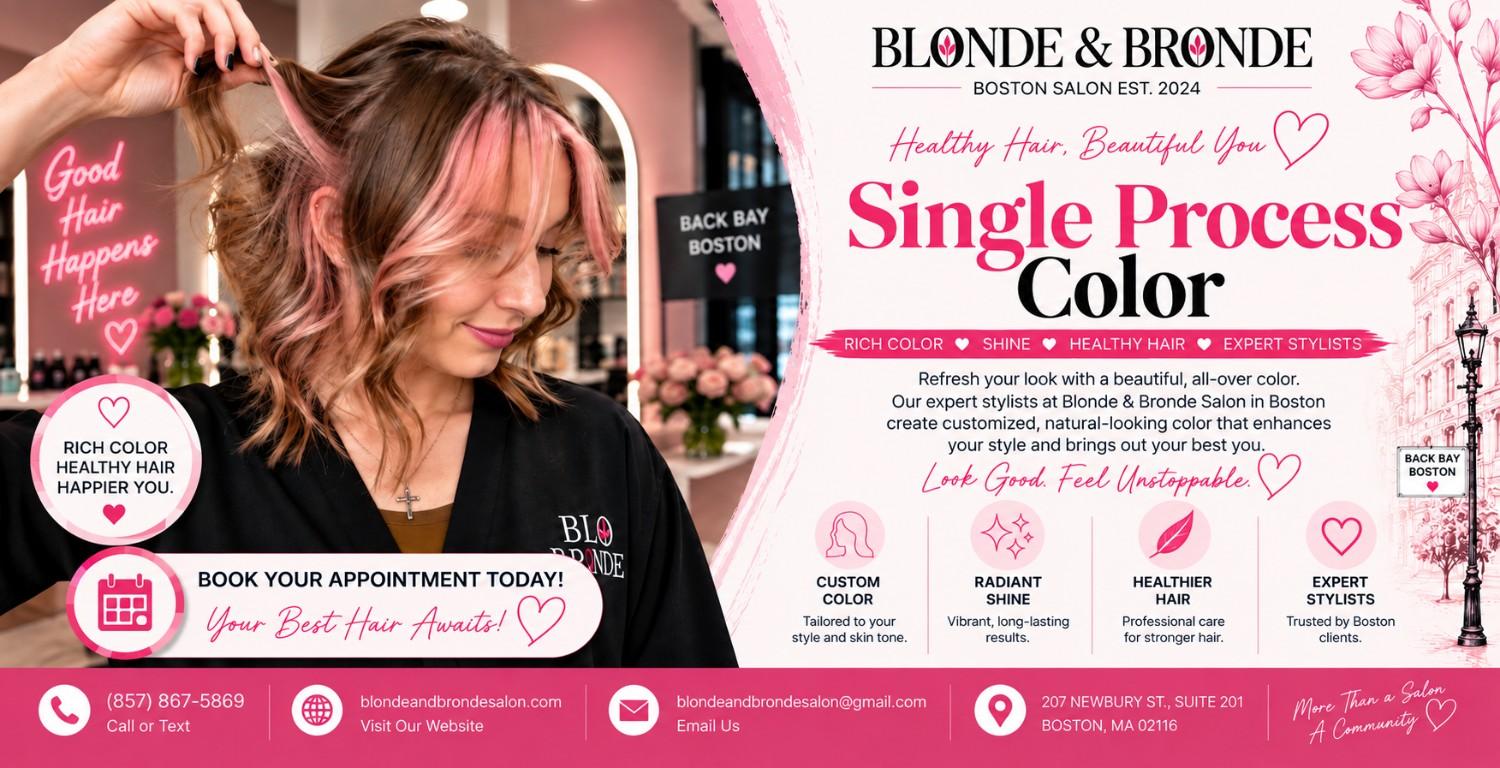
Choosing a new hair color involves more than picking a shade you love. You also need to consider your natural hair color, your desired result, how much maintenance you can manage, and the overall look you want to achieve. Single process color can be an excellent choice if you want an even, refreshed shade without the contrast created by highlights.
At Blonde and Bronde Salon, understanding the difference between all-over color and highlighting techniques can help you make a more confident decision. Both services can create beautiful results, but they serve different purposes. Single process hair color is often ideal for adding richness, refreshing faded color, or covering gray hair, while highlights create dimension through lighter sections.
So, when is all-over color the better choice? Let's explore the differences, benefits, limitations, and factors to consider before your next salon appointment.
What Is Single Process Color?
Single process color is a hair coloring service that uses one primary color process to achieve the desired result. Depending on the formula, it can change your overall shade, deepen your natural color, refresh existing color, or provide gray coverage.
The service may involve permanent, demi-permanent, or other appropriate color formulations. The best option depends on your starting color, hair condition, and goals.
For example, someone with faded medium-brown hair may choose a rich chocolate shade to restore depth and shine. Another person may want to blend gray strands into a more consistent brunette color.
Single process color can help you achieve results such as:
-
Richer color: Add depth to dull or faded brunette, red, or blonde shades.
-
Gray coverage: Cover gray hair or create a more uniform appearance.
-
Color refresh: Revive an existing shade that has lost its vibrancy.
-
A more even finish: Reduce unwanted differences in tone across the hair.
-
A subtle color change: Adjust your shade without adding separate highlight sections.
However, single process color does not automatically make hair lighter or darker in every situation. The result depends on the formula, your existing color, and the condition of your hair.
Single Process Color vs. Highlights: What's the Difference?
The main difference is how color is applied and the visual effect it creates.
Single process color focuses on achieving an overall shade. Highlights selectively lighten certain sections to create contrast, brightness, and dimension.
When Single Process Color Works Best
All-over color may be the right choice if you want a consistent shade from roots to ends or prefer a polished, uniform appearance.
It can be particularly useful when:
-
Your current color looks faded or uneven.
-
You want to move toward a richer brunette or red shade.
-
You need gray coverage throughout your hair.
-
You prefer a solid color rather than visible lighter pieces.
-
You want to refresh your existing shade without adding highlights.
For example, a client with faded copper hair might choose a single process color service to restore a more vibrant, consistent tone.
When Highlights Are a Better Choice
Highlights are designed to create lighter sections throughout the hair. Depending on their placement, they can brighten the face, add visual movement, or create a sun-kissed effect.
Highlights may be more suitable if you want:
-
A brighter blonde appearance without coloring every strand.
-
Dimension in naturally dark or medium-brown hair.
-
Face-framing brightness.
-
A softer, blended transition between shades.
-
A multidimensional look with contrasting tones.
Balayage and foil highlights can produce different effects, too. Foils provide controlled placement and can support more noticeable lightening, while balayage is often used to create a softer, painted effect.
The key distinction: Single process color emphasizes overall shade, while highlights emphasize contrast and dimension. Neither technique is universally better; the right choice depends on the result you want.
5 Signs All-Over Color May Be the Better Choice
Not sure which service to book? These five situations can help you decide whether single process hair color is worth considering.
1. You Want a Richer, More Consistent Shade
If your hair looks dull or has lost its original depth, all-over color may help restore a more uniform appearance.
A carefully selected formula can refresh your shade and make the overall color look more polished. Your stylist will assess the differences between your roots, mid-lengths, and ends before choosing the application method.
2. Gray Coverage Is Your Main Goal
Highlights can soften the appearance of gray hair, but they may not provide the complete coverage you want.
Single process color can offer more consistent gray coverage when the appropriate permanent color formula is selected. Your natural percentage of gray, hair texture, and desired result all influence the best approach.
If you prefer to blend gray rather than cover every strand, your stylist may recommend a different technique.
3. Your Existing Color Looks Faded
Sun exposure, frequent washing, heat styling, and time can affect hair color. Brunette shades may lose richness, while red tones can become less vibrant.
A color refresh may help restore the appearance of your existing shade. Your stylist can determine whether the roots and lengths need the same formula or different treatments to achieve an even result.
4. You Prefer a Simple, Polished Look
Not everyone wants bright pieces or noticeable color variation. If you prefer a classic, consistent shade, single process color can be a suitable option.
It works well for people who enjoy rich chocolate brown, soft black, copper, or other shades that look intentional and uniform.
5. You Want to Maintain Your Current Color Family
If you like your existing brunette or red shade but want to refresh it, all-over color may be more appropriate than adding highlights.
However, if your goal is to move from dark hair to a much lighter blonde, a single process service may not achieve the desired result. Your stylist may need to recommend a lightening service instead.
How to Choose the Right Single Process Hair Color
Choosing a color involves more than selecting a shade from a photograph. Your natural color, previous treatments, and hair condition can affect the final result.
Consider these factors before your appointment.
Your starting shade: Your natural and existing colors influence how a new formula will look. Previously colored hair may respond differently from untreated hair.
Your desired result: Decide whether you want to deepen your color, refresh faded lengths, cover gray, or make a subtle tonal adjustment.
Your hair history: Previous permanent color, highlights, bleach, and chemical treatments can affect the outcome. Share this information with your stylist.
Your maintenance preferences: Think about how often you are comfortable returning for root touch-ups or color refreshes.
Your hair condition: Dryness, breakage, and uneven porosity can affect color absorption. Your stylist may recommend conditioning care or a different approach before coloring.
Bring a few reference photos to your consultation, but remember that lighting, natural hair color, and editing can make online images look different from real-life results.
Common Single Process Color Mistakes to Avoid
Even a straightforward color service requires thoughtful planning. Avoiding common mistakes can help you achieve a more satisfying result.
-
Choosing a shade without a consultation: A color that looks beautiful online may not produce the same result on your hair.
-
Ignoring previous color treatments: Applying a new shade over previously colored hair can create uneven results if the application is not planned carefully.
-
Expecting permanent color to lighten all previously colored hair: Permanent color generally cannot reliably lighten artificial color already present in the hair. A separate corrective or lightening process may be needed.
-
Overlapping color unnecessarily: Repeatedly applying permanent color to already-colored lengths can contribute to dryness and unwanted color buildup.
-
Skipping aftercare: Frequent washing, excessive heat, and harsh cleansing products can affect color longevity.
-
Assuming all-over color requires no maintenance: New growth may become noticeable as your hair grows, especially when there is a strong contrast between your natural roots and colored hair.
A professional consultation helps your stylist plan the service around your hair history, desired shade, and long-term maintenance needs.
How to Maintain Your Hair Color Between Appointments
Good aftercare can help your color look fresher for longer.
Follow a Color-Friendly Hair Care Routine
Use a gentle shampoo suited to color-treated hair and condition your lengths regularly. Washing less frequently, when appropriate for your scalp and lifestyle, may help reduce fading.
Limit Excessive Heat Styling
High temperatures can contribute to dryness and affect the appearance of colored hair. Use a heat protectant and choose moderate styling temperatures whenever possible.
Protect Your Hair From Sun Exposure
Extended sun exposure can affect some hair colors. Wear a hat when appropriate and ask your stylist whether a UV-protective hair product would suit your routine.
Schedule Touch-Ups Based on Your Hair Growth
Your ideal appointment schedule depends on your natural color, gray coverage needs, and desired result. Clients who want consistent root coverage may need appointments more frequently than those refreshing only their existing lengths.
Your stylist can recommend a schedule that balances your color goals with the condition of your hair.
Finding the Best Hair Color in Boston, MA
Choosing the best hair color Boston MA clients can feel confident about starts with finding a salon that listens to your goals and evaluates your hair before recommending a service.
At Blonde and Bronde Salon, a personalized consultation can help you compare single process color, highlights, balayage, and other coloring options. Discuss your desired shade, previous chemical treatments, maintenance preferences, and any concerns about gray coverage or color fading.
A thoughtful color plan should consider not only how your hair will look when you leave the salon but also how the color will grow out and fit into your everyday routine.
The best service is not necessarily the most complicated one. It is the one that suits your hair, your preferences, and the result you want to maintain.
Frequently Asked Questions
1. Is single process color better than highlights?
Neither is automatically better. Single process color is generally suited to creating a consistent overall shade or covering gray, while highlights add brightness and dimension. Your choice depends on your desired result.
2. Does single process hair color cover gray hair?
Yes, an appropriate single process formula can provide gray coverage. Permanent color is often used when more complete coverage is desired, while other formulations may help blend gray. Your stylist can recommend the best option.
3. Can single process color make dark hair blonde?
Usually, achieving a significant change from dark hair to blonde requires a lightening process. A single process color service may not lift previously colored hair enough to create a blonde result.
4. How long does single process color last?
Longevity varies by formula, hair care routine, washing frequency, and new hair growth. Permanent color remains in the colored hair until it grows out or is altered, but its tone may fade over time.
5. Is single process color suitable for damaged hair?
It depends on the hair's condition and the coloring formula. A stylist should assess dryness, breakage, and previous chemical treatments before recommending a service.
6. Can I get highlights after single process color?
Often, yes, but the best approach depends on your color history and hair condition. Lightening previously colored hair can require additional planning to reduce the risk of uneven results or damage.
7. How do I choose between all-over color and balayage?
Choose all-over color if you prefer a more consistent shade. Consider balayage if you want lighter pieces and a softer, dimensional effect. A consultation can help you compare both options.
Conclusion: Is Single Process Color Right for You?
Single process color can be an excellent choice when you want a richer shade, a more uniform appearance, refreshed color, or reliable gray coverage. Highlights may be a better fit when your goal is to add brightness, contrast, and dimension.
Before choosing a service, consider your starting color, hair history, desired result, and maintenance preferences. A personalized recommendation can help you achieve a shade that complements your style while supporting your hair's condition.

 English
 Arabic
 French
 Spanish
 Portuguese
 Deutsch
 Dutch
 Italiano
 Russian
 Romaian
 Portuguese (Brazil)
 Greek