


Does Botox Injection Help With Crow's Feet?
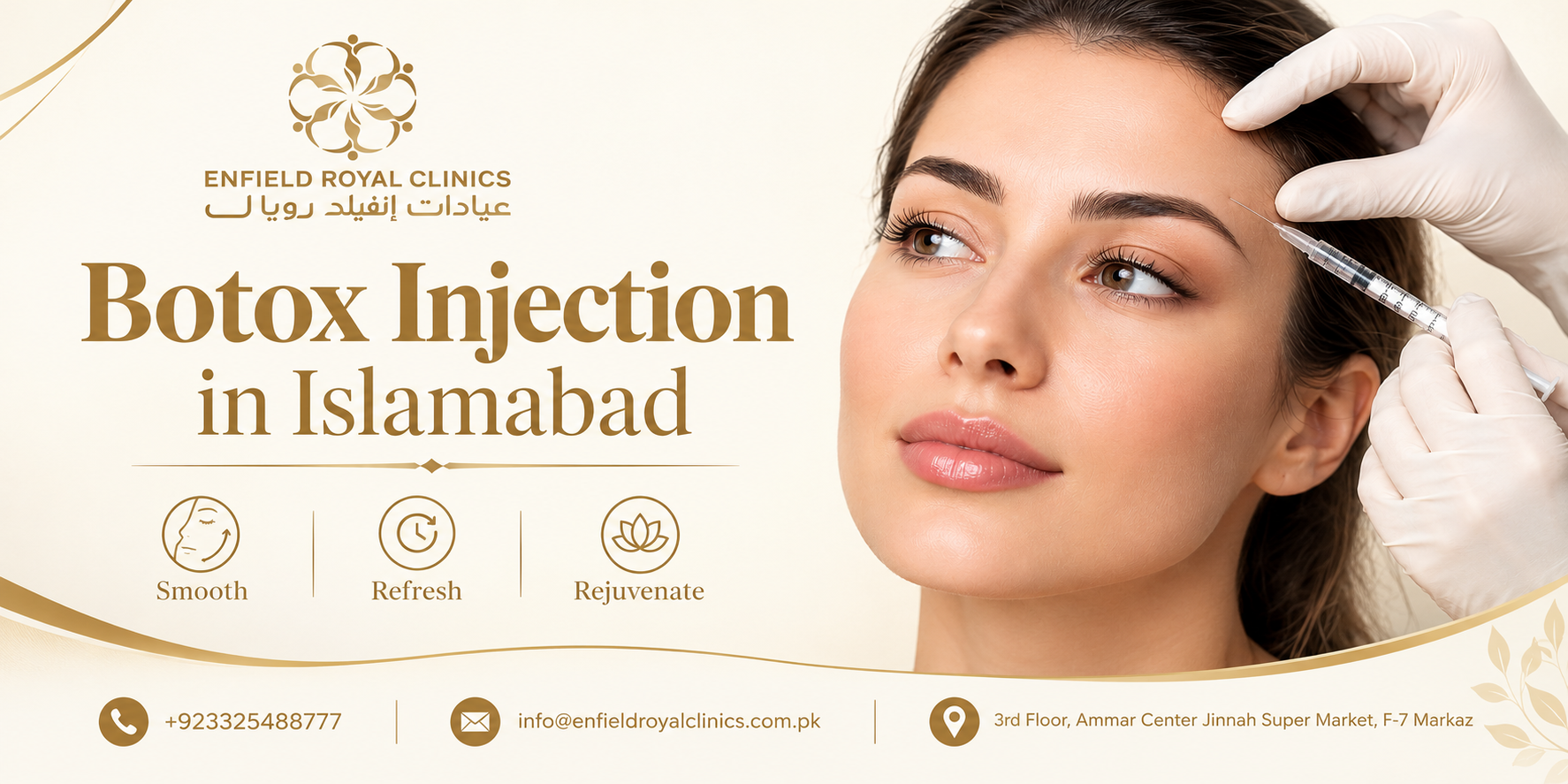
Crow’s feet are the fine lines and wrinkles that develop around the outer corners of the eyes. They often become more noticeable when a person smiles, squints, or makes other facial expressions. Although these lines are a natural part of aging, many people look for safe and effective ways to soften their appearance while maintaining a natural smile.
Botox is a popular non-surgical treatment for reducing the appearance of crow’s feet. It works by temporarily relaxing the small muscles responsible for these expression lines. For people considering Botox injection in Islamabad, understanding how the treatment works, what results to expect, and how to care for the skin afterward can help them make an informed decision.
What Causes Crow’s Feet Around the Eyes?
Crow’s feet develop for several reasons, including natural aging, repeated facial movements, sun exposure, and changes in skin elasticity. The skin around the eyes is relatively thin and delicate, making it more susceptible to visible lines over time.
Repeated smiling and squinting cause the muscles around the eyes to contract. These movements create temporary creases that may gradually become visible even when the face is at rest. As collagen and elastin levels decline with age, the skin becomes less able to return to its original smooth appearance.
Other factors can contribute to the development of crow’s feet, such as:
-
Frequent exposure to ultraviolet (UV) radiation.
-
Smoking and exposure to tobacco smoke.
-
Natural changes in collagen production.
-
Dehydration and dryness that make fine lines more noticeable.
-
Genetic factors and individual facial expressions.
While moisturizers and sun protection can support overall skin health, they may not fully address wrinkles caused by repeated muscle movement. Botox can help reduce this type of wrinkle by temporarily limiting the activity of the muscles around the eyes.
How Does Botox Injection Help With Crow’s Feet?
Botox is a purified form of botulinum toxin type A used in carefully controlled amounts for cosmetic and medical purposes. For crow’s feet, it is injected into selected areas of the orbicularis oculi, the muscle responsible for closing the eyelids and contributing to the fine lines that appear when a person smiles or squints.
The treatment temporarily blocks the release of acetylcholine, a chemical messenger involved in muscle contraction. As the targeted muscle activity decreases, the skin folds less deeply during facial expressions, making crow’s feet appear softer.
The procedure usually involves several small injections around the outer corners of the eyes. The exact injection points and dosage depend on the person's facial anatomy, muscle strength, skin condition, and desired outcome.
For individuals researching Botox injection in Islamabad, it is important to understand that the goal is generally to soften wrinkles rather than eliminate every line or completely prevent facial movement. A carefully planned treatment can help preserve a natural appearance while reducing the prominence of expression lines.
What Results Can Be Expected After Botox Treatment?
Botox does not produce its full effect immediately. Some people begin noticing changes within three to five days, while the results typically develop more fully over approximately 10–14 days.
After treatment, crow’s feet may appear less pronounced when smiling or squinting. The skin around the outer corners of the eyes may also look smoother when the face is relaxed, particularly when the lines are primarily caused by muscle movement.
Results vary according to several factors:
-
Type of wrinkles: Dynamic wrinkles caused by facial expressions generally respond better than deeper lines that remain visible at rest.
-
Skin condition: Sun damage, reduced elasticity, and established wrinkles can influence the final appearance.
-
Muscle activity: Stronger or more active muscles may require a different treatment approach.
-
Individual response: Metabolism, dosage, and other personal factors can affect how long the effects last.
The results commonly last around three to four months, although some people experience shorter or longer-lasting effects. As muscle activity gradually returns, the wrinkles may become noticeable again.
Botox does not replace lost skin volume or reverse all signs of aging. Deeper static wrinkles may remain partially visible, and a qualified practitioner can explain whether additional skin treatments might be appropriate.
Is Botox Injection Safe for Crow’s Feet?
Botox is generally considered safe for appropriate candidates when administered by a qualified healthcare professional with suitable training in facial anatomy and injection techniques. However, like any medical procedure, it carries potential risks.
Common temporary side effects include mild redness, swelling, tenderness, bruising, or a headache. These effects usually resolve without significant intervention.
Less common complications may include eyelid drooping, eyebrow asymmetry, or unwanted weakness in nearby muscles. The risk of these problems can be influenced by injection placement, dosage, and individual anatomy.
Before treatment, a healthcare professional should review the person's medical history, allergies, medications, and previous cosmetic procedures. Botox may not be appropriate for everyone, particularly people with certain neuromuscular conditions. Cosmetic treatment is generally avoided during pregnancy and breastfeeding because safety information is limited.
Anyone considering Botox injection in Islamabad should choose a legitimate clinical setting and a properly qualified provider rather than relying on unverified products or untrained injectors.
Although serious complications are rare, symptoms such as difficulty breathing, swallowing, or speaking after treatment require urgent medical attention.
How Can Patients Maintain Results After Botox?
Appropriate aftercare helps patients follow treatment recommendations and monitor their response. A healthcare professional should provide personalized instructions based on the injection technique and individual circumstances.
Helpful aftercare practices include:
-
Avoid rubbing or massaging the treated areas unless the provider advises otherwise.
-
Follow professional guidance about exercise and other strenuous activities immediately after treatment.
-
Use a gentle cleanser and moisturizer to support the delicate skin around the eyes.
-
Apply broad-spectrum sunscreen with SPF 30 or higher and wear sunglasses outdoors to reduce UV exposure.
-
Avoid smoking and maintain a consistent skincare routine.
-
Attend a follow-up appointment if the results appear uneven or unexpected.
Patients should also avoid arranging repeat injections too soon. Allowing enough time for the full effect to develop makes it easier to assess the results accurately.
Regular sun protection, adequate hydration, and suitable skincare can complement Botox by supporting overall skin quality. However, these habits do not make the effects permanent.
People considering Botox for the first time should discuss their expectations clearly with a qualified professional. A conservative approach may be suitable for those who want softer crow’s feet without a noticeably restricted smile.
For more information visit Enfield royal clinic in islamabad
Frequently Asked Questions
1. Does Botox completely remove crow’s feet?
Botox can significantly soften crow’s feet caused by repeated facial movements, but it may not remove every line. Deeper wrinkles, sun damage, and reduced skin elasticity can leave some lines visible even after treatment.
2. How long does Botox take to work on crow’s feet?
Some improvement may become noticeable within three to five days. The full cosmetic effect usually develops over 10–14 days, although the timeline varies from person to person.
3. Is Botox around the eyes painful?
Most people experience only mild, brief pinching or stinging during the injections. A fine needle is typically used, and the procedure generally requires little downtime. Individual comfort levels can vary.
4. How often should Botox treatment for crow’s feet be repeated?
Results commonly last around three to four months. Repeat treatment may be considered when muscle activity returns and the wrinkles become noticeable again. The appropriate interval depends on the individual's response and the healthcare professional's recommendations.

 Arabic
 French
 Spanish
 Portuguese
 Deutsch
 Turkish
 Dutch
 Italiano
 Russian
 Romaian
 Portuguese (Brazil)
 Greek