


Can LongHui Machinery Support Precision Nut and Fastener Manufacturing
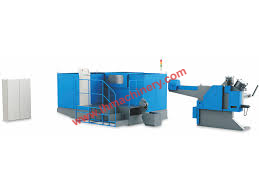
How Does a Multi-station Cold Heading Forming Machine Ensure Dimensional Accuracy?
Dimensional accuracy is a central requirement in the production of nuts, bolts, screws, pins, and other metal fasteners. Even a small difference in diameter, length, or forming shape can affect assembly, connection strength, and the performance of a finished component. A multi-station cold heading forming machine is designed to complete several forming operations in a coordinated production cycle, helping manufacturers maintain consistent part dimensions while processing metal wire at room temperature. For buyers exploring a reliable nut machine, understanding the relationship between equipment structure, tooling, material feeding, and process adjustment is an important step. How do these elements work together to support accurate production?
The Role of Progressive Forming
Cold heading forms metal through pressure rather than heating. A wire is first straightened and cut into blanks of a specified length. Each blank then moves through a sequence of forming stations, where punches and dies gradually change its shape. Depending on the product design, these operations may include upsetting, extrusion, shaping, trimming, and other forming actions.
Dividing the forming process into separate stages allows each station to perform a defined task. Instead of forcing the entire shape to be completed in one operation, the machine distributes the deformation across several positions. This arrangement can help control material flow and reduce the risk of uneven forming.
The sequence must be planned according to the geometry and material properties of the workpiece. If one station removes too much material from a particular area or applies an unsuitable forming force, the following stations may not be able to correct the variation. Proper process design therefore begins with an understanding of the finished component, the required tolerances, and the behavior of the selected wire material.
Tooling Design and Alignment
Punches and dies have a direct influence on the dimensions of cold-headed parts. Their cavity shape, working clearance, surface condition, and installation position all affect the final result. A die that is incorrectly aligned with its corresponding punch may produce uneven pressure, surface marks, dimensional deviations, or premature tool wear.
For this reason, tooling should be designed around the actual product rather than selected only by its general appearance. Engineers need to consider the blank dimensions, the amount of material displaced at each station, the required head or body shape, and the forming sequence. Complex components may require several carefully arranged operations to achieve the intended geometry.
Tool installation is equally important. Each forming station needs to maintain the correct relationship between its punch, die, and transfer mechanism. During setup, technicians should check alignment, fastening conditions, working clearance, and the movement of relevant components. Regular inspection can identify wear or damage before it creates a large batch of nonconforming parts.
LongHuI's equipment range includes multi-station models for standard nuts and extended or special-shaped metal components. These machine configurations provide options for manufacturers whose products have different dimensions and forming requirements. The appropriate tooling arrangement still needs to be confirmed through product drawings, material information, and forming trials.
Stable Feeding and Accurate Transfer
A precise die cannot produce consistent parts if the wire feeding and workpiece transfer systems are unstable. Feeding determines how much material enters the cutting and forming process. Differences in blank length or positioning can influence the volume of material available for each operation, which may result in changes to the finished dimensions.
The wire should enter the machine smoothly and remain properly aligned during straightening and feeding. The cutting mechanism must produce blanks with suitable length and end conditions. If the blank is bent, poorly cut, or positioned incorrectly, the first forming station may receive an inconsistent workpiece.
Transfer between stations is another important factor. The workpiece must be held and moved into the next die position with suitable timing and positioning accuracy. A transfer error can cause misalignment during the next forming operation. This may lead to uneven deformation, damaged tooling, or parts that do not meet the drawing requirements.
Manufacturers should therefore evaluate the complete feeding and transfer process when selecting equipment. Looking only at the machine's rated output does not provide a full picture of production capability. The stability of blank preparation, gripping, movement, and release all contribute to repeatable results.
Machine Structure and Operating Stability
The mechanical structure provides the foundation for accurate forming. During operation, the machine generates substantial force as the punch presses the metal blank into the die. If the frame or key moving components lack sufficient rigidity, vibration and deflection may affect the relationship between the punch and die.
A stable machine structure helps maintain forming alignment under working loads. The quality of the main frame, spindle support, connecting components, and other critical parts can influence operating behavior over extended production periods. Bearing condition and lubrication also matter because wear or excessive clearance may gradually affect movement accuracy.
LongHui Machinery states that its production process uses machining equipment such as gantry, horizontal, and vertical machining centers. The company also describes quality control procedures under an ISO 9001 quality management system. Its standard nut cold heading machine uses a QT500-7 alloy ductile iron body and imported spindle bearings, according to the product information published on its website. These design details are relevant to buyers assessing machine construction and long-term operating requirements.
A machine should also be installed on a suitable foundation and maintained according to its operating instructions. Correct leveling, fastening, lubrication, and scheduled inspection help reduce avoidable vibration and mechanical variation. Operators should monitor unusual noise, temperature changes, and movement irregularities rather than waiting until a dimensional problem appears.
Material Selection and Process Adjustment
The properties of the wire material influence how it behaves during cold heading. Different metal grades can vary in hardness, ductility, surface condition, and resistance to deformation. Even when two batches have the same nominal diameter, differences in material properties may affect forming pressure and the final shape.
Before production, manufacturers should confirm that the wire grade and condition are suitable for the intended component. Surface defects, inconsistent wire diameter, and unsuitable material hardness can create forming difficulties. Material inspection and supplier consistency are therefore part of dimensional control, not separate concerns.
Machine settings must also match the material and product design. Feeding length, forming pressure, station timing, and tool position should be adjusted through a controlled setup process. When a new product is introduced, trial production can help technicians identify whether the selected sequence and settings produce dimensions within the required range.
Changes should be made systematically. Adjusting several settings at once can make it difficult to identify the cause of a dimensional deviation. A better procedure is to record the initial condition, change one relevant parameter, inspect the resulting parts, and document the confirmed setting for repeat production.
Inspection Throughout Production
Dimensional accuracy should be checked during setup and throughout the manufacturing run. Measuring only the first finished part is not sufficient for a long production order because tool wear, material variation, temperature, and mechanical conditions can change over time.
Inspection plans should reflect the product drawing and its critical dimensions. Depending on the component, checks may include overall length, head diameter, body diameter, thickness, concentricity, and other geometric characteristics. Threaded fasteners may also require additional checks after subsequent thread-forming operations.
A practical quality procedure includes first-piece inspection, scheduled sampling, and checks after tool adjustment or machine stoppage. If measurements begin to move toward the tolerance limit, operators can investigate the cause before a large quantity of parts is affected. Records of inspection results also help production teams compare batches and identify recurring process issues.
The machine's safety and fault-monitoring features are relevant to stable production as well. LongHui's published standard nut machine information describes a fault detector and protective devices that can stop the equipment when a fault occurs. Such functions support equipment protection and help operators respond to abnormal operating conditions, although they do not replace dimensional inspection.
Choosing Equipment for Different Fastener Requirements
Selecting a machine should begin with the product range rather than a single output figure. Buyers need to consider wire diameter, blank length, finished component dimensions, material type, forming complexity, expected production volume, and the tolerances specified by customers. A model suitable for small standard nuts may not be the right choice for a longer or unusually shaped component.
It is also useful to review the machine's station configuration, forming force, operating speed, tooling compatibility, maintenance requirements, and available technical support. Product samples and drawings can help the manufacturer assess whether a particular machine configuration is suitable. For special-shaped parts, the forming sequence and any additional mechanisms should be discussed before an order is finalized.
Zhejiang Longhui Machinery Manufacturing Co., Ltd. focuses on multi-station cold heading forming machines and automatic zipper injection molding machines. Its published product range includes six-station models for standard nut production as well as extended machines designed for longer and special-shaped metal parts. The company also identifies automotive, motorcycle, bicycle, construction hardware, furniture hardware, railway engineering, and mechanical equipment as application areas. These details give buyers a starting point for discussing equipment selection according to their own production requirements.
When manufacturers compare equipment, they should consider the entire production system: material preparation, forming sequence, tooling, transfer, inspection, and maintenance. A machine's rated speed is only one part of the decision. Stable operation and a suitable process configuration are essential to achieving repeatable dimensions across production batches.
For manufacturers evaluating a Multi-station Cold Heading Forming Machine, LongHui offers equipment options for standard fasteners and special-shaped metal components, supported by its experience in cold heading machinery. Buyers can review the available models, share product drawings, and discuss material and production requirements through https://www.lhmachinery.com/ to identify a suitable machine configuration for their nut machine and fastener manufacturing plans.

 English
 Arabic
 French
 Spanish
 Portuguese
 Deutsch
 Turkish
 Dutch
 Italiano
 Romaian
 Portuguese (Brazil)
 Greek