


Audio Visual Alarm in Industrial Control Panels: Improving Fault Detection, Workplace Awareness, and Operational Efficiency
Introduction
Industrial workplaces rely on electrical control panels, automated machinery, and monitoring systems to maintain smooth operations. These systems perform different functions throughout the production process, but unexpected faults, equipment interruptions, and abnormal operating conditions can affect productivity. When such situations occur, operators need a clear and reliable way to identify that something requires attention.
This is where an Audio visual alarm becomes an important part of industrial warning arrangements. By combining audible sound with a flashing light, it provides two forms of notification that help operators recognise warning conditions without depending entirely on visual monitoring or sound alone.
From manufacturing units to electrical distribution panels, combined warning devices support better communication between equipment and personnel. Understanding their working principles, applications, and selection criteria can help businesses choose suitable signalling solutions for their installations.
What Makes an Audio and Visual Warning System Important?
In a busy industrial environment, operators may be responsible for monitoring several machines and electrical systems simultaneously. Continuously observing every indicator on every panel is not always practical.
A combined warning system addresses this challenge by providing an alert through two different channels.
-
Sound-based notification: The buzzer produces an audible signal that attracts attention, even when the operator is facing away from the control panel.
-
Light-based notification: The flashing indicator creates a visible signal that can be noticed during routine equipment monitoring.
-
Combined communication: Both indications work together to make warning conditions more noticeable.
This arrangement is particularly useful in environments where machinery noise, multiple operating stations, and frequent equipment movement can make individual warning indicators easier to overlook.
How Does a Buzzer Cum Flasher Operate?
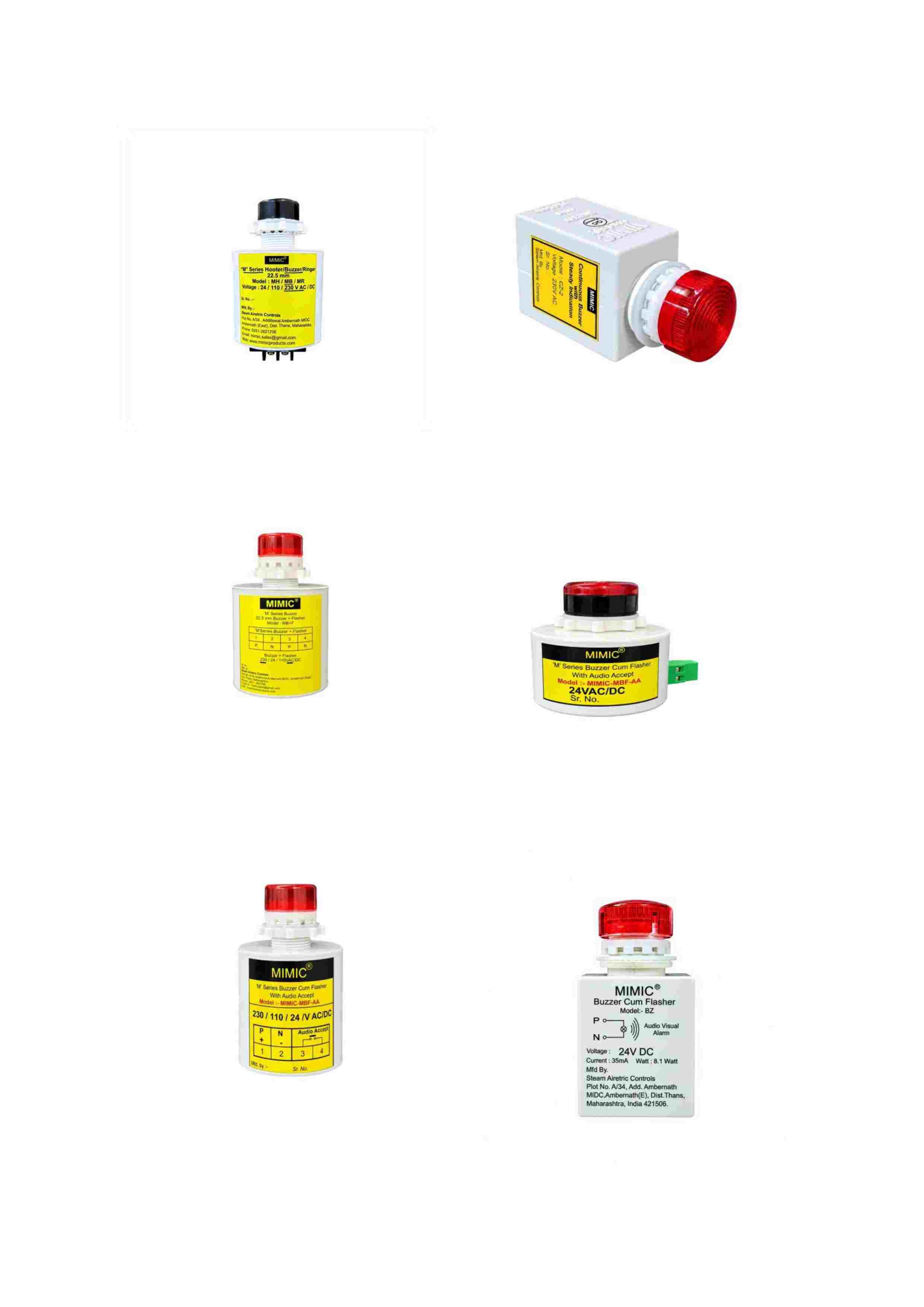
A buzzer cum flasher is an electrical signalling device that integrates an audible buzzer and a flashing light into a single unit. It is designed to communicate warning conditions when activated by a compatible electrical supply or control circuit.
The operating process generally involves the following stages:
1. Detection of an Abnormal Condition
A sensor, relay, controller, or monitoring circuit identifies a condition that requires attention. This may include equipment failure, an interruption, or a predefined process warning.
2. Activation of the Warning Circuit
The control system sends the appropriate activation signal to the connected warning device.
3. Audible Indication
The internal buzzer produces sound to attract the operator's attention.
4. Visual Indication
The flashing light provides a visible alert, helping personnel recognise the warning even in areas where sound may be difficult to distinguish.
The exact operating sequence and control arrangement depend on the selected model and electrical installation.
Important Factors to Evaluate Before Choosing an Audio Visual Alarm
Not every industrial installation has the same warning requirements. A device suitable for a small electrical panel may not be appropriate for a large manufacturing floor. Therefore, selecting the right model involves evaluating several technical and practical factors.
1. Sound Level and Workplace Noise
The sound output should be appropriate for the surrounding environment. In areas with heavy machinery, a higher-pitch warning may help operators distinguish the alarm from regular equipment noise.
For example, Mimic's buzzer cum flasher range includes models with high-pitch audible indications. The appropriate sound level should be evaluated according to the installation area and applicable workplace requirements.
2. Flashing Frequency and Light Visibility
A flashing indication helps differentiate an active warning from ordinary panel indicators. Its brightness, colour, and flashing pattern should be considered when selecting a device.
Mimic's BZ buzzer cum flasher catalogue describes a flashing pattern of approximately one second ON and half a second OFF.
3. Voltage Requirements
Voltage compatibility is one of the most important purchasing considerations. Industrial control panels may use different AC and DC supplies depending on their design.
Before purchasing, verify:
-
Rated operating voltage.
-
AC or DC supply requirement.
-
Voltage tolerance.
-
Current consumption.
-
Wiring and terminal arrangement.
Mimic's product information lists multiple voltage options, including 12V, 24V, 48V, 110V and 230V variants, depending on the model.
4. Mounting and Available Space
Installation space can influence the choice of warning equipment. A compact panel-mounted device may be suitable when the control cabinet has limited space.
Mimic's BZ series includes a 22.5 mm panel cutout arrangement, which can be useful for compatible control panel designs.
5. Environmental Conditions
The surrounding environment should also be considered. A device installed inside an electrical cabinet may have different protection requirements from one installed on an exposed industrial shop floor.
Check the specified IP rating, housing material, temperature range, and mounting requirements before selecting the product.
Different Industries Where Combined Warning Devices Are Useful
The need for clear warning communication extends across several industries. An audible and visual signalling device can support different operational processes depending on how it is connected to the control system.
Manufacturing and Production Units
Manufacturing facilities use several machines and production stations simultaneously. A warning signal can notify operators when a machine stops, a fault occurs, or a process requires inspection.
Electrical Switchgear Installations
Electrical switchgear systems require clear indication of abnormal conditions. Warning devices can be integrated into suitable control circuits to notify maintenance personnel about conditions that need investigation.
Parking Systems and Vehicle Elevators
Parking installations and vehicle elevators involve moving equipment and controlled operating sequences. Audible and visual warnings can communicate specific operating or safety-related conditions to nearby personnel.
Automation and Process Control
Automated systems use sensors, relays, PLCs, and other control components. A warning device connected to an appropriate output can help communicate equipment status or process interruptions.
Emergency Warning Arrangements
Certain emergency installations require both sound and light indications to notify people about potential hazards. The warning device must be selected according to the application, coverage requirements, and applicable safety standards.
Buzzer Cum Flasher: A Practical Choice for Panel Designers
For electrical panel manufacturers and automation professionals, component selection involves more than just functionality. Space availability, wiring convenience, compatibility, and maintenance requirements also influence purchasing decisions.
A combined buzzer and flashing indicator can offer practical benefits:
-
Compact arrangement: Both warning functions are incorporated into one device.
-
Simplified panel design: It can reduce the need for separate buzzer and flashing indicator units in suitable applications.
-
Dual notification: Operators receive audible and visual warnings.
-
Flexible selection: Different models and electrical ratings can accommodate different installation requirements.
-
Convenient integration: Compatible models can be incorporated into appropriately designed electrical control panels.
However, the device should always be matched to the required circuit and warning function. It should not replace dedicated protective equipment or safety systems where those are required.
What Makes Mimic Products' Buzzer Cum Flasher Range Worth Exploring?
Mimic Products provides electrical switchgear components and warning signalling solutions for industrial applications. Its buzzer cum flasher category is relevant to electrical panel manufacturers, automation system integrators, maintenance professionals, and equipment designers.
The BZ series is designed to provide audible and flashing indications for fault warnings and related signalling applications. Product catalogue information highlights features such as:
-
High-pitch sound output.
-
Bright flashing indication.
-
Compact 22.5 mm panel cutout.
-
Multiple AC and DC voltage options across models.
-
Different indication colour choices.
-
ABS body and polycarbonate cap construction.
These features make the range worth considering for suitable electrical and automation panel installations. Actual specifications should be checked against the selected model before ordering.
Best Practices for Installing and Testing Warning Devices
Correct installation is essential for dependable warning communication. Even a suitable alarm may become less effective when its position, wiring, or control connection is not properly planned.
Consider the following practices:
-
Install the device where the visual indication can be noticed easily.
-
Select a location where the sound can be recognised within the intended operating area.
-
Verify electrical ratings before connecting the supply.
-
Follow the manufacturer's wiring and installation instructions.
-
Test audible and flashing functions after installation.
-
Inspect connections and the physical condition of the device periodically.
-
Replace damaged components when necessary.
Regular testing helps identify potential issues before they affect the warning arrangement during actual operation.
Conclusion
Effective warning communication helps industrial teams respond to equipment-related problems with greater awareness. A combination of audible and visual indications provides a practical way to communicate faults, interruptions, and other conditions requiring operator attention.
An Audio visual alarm is particularly useful in environments where machinery noise, multiple operating processes, and continuous equipment monitoring make warning visibility important. By evaluating sound output, flashing patterns, voltage compatibility, mounting arrangements, and environmental requirements, businesses can select an appropriate signalling device for their applications.
Mimic Products offers buzzer cum flasher solutions for electrical switchgear and automation applications. Exploring its product range can help panel manufacturers and industrial professionals identify suitable warning devices for their equipment requirements.
Frequently Asked Questions
1. What is the difference between an audio alarm and an audio visual alarm?
An audio alarm communicates through sound, whereas an audio visual alarm combines sound with a visible flashing indication. The combined arrangement provides two methods of alerting operators.
2. Can a buzzer cum flasher be used in automation control panels?
Yes. Compatible buzzer cum flasher models can be connected to suitable automation control circuits to provide audible and visual warnings when predefined conditions occur.
3. Why is flashing LED indication useful in industrial environments?
Flashing LED indication helps operators identify warning conditions visually. It can be particularly useful when several machines and indicators are present in the same working area.
4. Which voltage should be selected for a buzzer cum flasher?
The selected voltage should match the electrical supply available in the control panel. Always verify the product's rated voltage and AC/DC requirements before installation.
5. What is the purpose of a 22.5 mm panel cutout?
A 22.5 mm cutout provides a standardised mounting arrangement for compatible panel-mounted components. It helps designers incorporate suitable signalling devices into electrical control panels.
6. How frequently should an industrial warning device be inspected?
Inspection frequency should follow the equipment manufacturer's recommendations and the site's maintenance schedule. Regular functional testing helps confirm that sound and flashing indications are operating correctly.

 English
 Arabic
 French
 Spanish
 Portuguese
 Turkish
 Dutch
 Italiano
 Russian
 Romaian
 Portuguese (Brazil)
 Greek