


Inside Guanfeng: IE2 Three-Phase Asynchronous Electric Motor Starting Systems
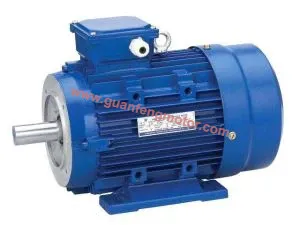
Three-phase asynchronous motors drive pumps, compressors, conveyors, and ventilation systems across countless industrial settings, and the way such a machine begins its rotation determines whether it runs smoothly or strains itself from the first second. A well-specified IE2 Three-Phase Asynchronous Electric Motor, as offered by a trusted manufacturer such as guanfengmotor, accepts a range of proven starting approaches, each designed to balance current draw, torque delivery, and mechanical stress for a particular duty. When a motor reaches full speed with controlled grace rather than violent surge, can the reliability of an entire production line depend on that very first moment?
Understanding the Starting Challenge
An induction motor at standstill behaves almost like a short circuit, pulling a starting current several times its rated value while producing torque far below what a smooth ramp would deliver. This inrush, if left unchecked, trips protective devices, causes voltage dips across the facility, and subjects windings, couplings, and gearboxes to repeated shocks that shorten their useful life. The starting method therefore exists to shape that electrical and mechanical profile, giving the machine room to accelerate without punishing its own components.
Direct-on-line connection remains the simplest and most economical route, suitable for small machines or applications where the supply network can absorb the surge without disturbance. It connects the stator directly to the full line voltage, producing high starting torque and a quick climb to speed, and it suits compressors, small pumps, and general-purpose drives where a sharp start poses no risk to the connected equipment.
Star-Delta and Reduced-Voltage Approaches
For motors of moderate power, the star-delta switch offers a practical reduction of starting current without elaborate electronics. The stator is first connected in a star configuration, lowering the voltage each winding receives to a fraction of line level, then switched to delta once the rotor has gained sufficient speed. This transition eases the electrical demand on the supply while still delivering solid torque, making it a natural fit for pumps, fans, and machines that can tolerate a brief period of gentler acceleration.
Reduced-voltage starters extend that principle further, using autotransformers or tapped configurations to dial the starting voltage to a chosen percentage. Such systems give engineers finer command over the acceleration curve, allowing a heavy-duty IE2 Three-Phase Asynchronous Electric Motor to ease into motion while keeping the line current within acceptable limits, a valuable trait on installations where the grid is already carrying substantial load.
Soft Starters and Variable Frequency Drives
Modern soft starters have become the preferred choice for many applications because they control the starting process electronically and continuously. Rather than stepping through fixed configurations, a soft starter gradually raises the voltage applied to the stator, shaping both torque and current into a smooth ramp that eliminates mechanical jolts and protects bearings, belts, and shafts. The same device can also bring the motor to a gentle stop, reducing the water hammer effect in pumping systems and the stress on conveyor drives when loads must halt without abrupt force.
Variable frequency drives go one step beyond, converting fixed line power into adjustable frequency and voltage so that speed, torque, and acceleration can all be tuned in real time. This flexibility suits processes that require precise control, energy savings across varying loads, or frequent start-stop cycles, and it turns the motor into a fully programmable element of an automated system.
Guanfeng and Practical Selection
guanfengmotor understands that the correct starting method depends on the machine, the supply, and the duty it will perform day after day. Each IE2 Three-Phase Asynchronous Electric Motor from this manufacturer is built to accept DOL, star-delta, soft-start, and VFD operation with equal stability, giving engineers freedom to choose the approach that matches their installation rather than being limited by the motor's design. That compatibility, combined with robust insulation and reliable bearings, allows the motor to serve across demanding environments with consistent performance.
Matching the Method to the Machine
The final decision rests on a few practical questions. Does the application tolerate a sharp start, or does connected machinery require gentle acceleration? Can the supply absorb a direct-on-line surge, or must starting current be restrained? Does the process demand speed control or frequent cycling that favors a variable frequency drive? Answering these questions honestly prevents both over-engineering and costly damage, guiding engineers toward the configuration that delivers reliable operation without unnecessary expense.
For professionals weighing which motor deserves their trust, finished performance tells the story. Reviewing the IE2 series lineup at https://www.guanfengmotor.com/ reveals how controlled starting, sturdy construction, and broad drive compatibility combine into a machine that performs across every industrial duty. Guanfeng supports buyers who value precision, durability, and dependable execution, turning a simple motor into the steady heart of a production system. Will your next installation run on a motor that starts with confidence?

 English
 French
 Spanish
 Portuguese
 Deutsch
 Turkish
 Dutch
 Italiano
 Russian
 Romaian
 Portuguese (Brazil)
 Greek