


Improving Voltage Regulation in Electrical Networks
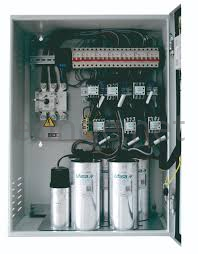
Power transmission and distribution networks must maintain suitable voltage conditions while supplying electricity to loads with different electrical characteristics. Inductive equipment such as transformers, motors, and reactors consumes reactive power, increasing current flow through network components. A Shunt Power Capacitor is connected in parallel with an electrical circuit to supply capacitive reactive power locally, helping offset inductive demand and improve the operating conditions of the power system.
The basic construction of this equipment centers on capacitor elements that store electrical energy in an electric field. These elements generally consist of conductive electrodes separated by dielectric materials. Metallized polypropylene film is widely used in modern capacitor manufacturing because of its dielectric strength, low dielectric losses, and favorable electrical stability. The selection of dielectric material influences insulation performance, temperature behavior, capacitance consistency, and long-term operational characteristics.
Manufacturing processes require precise control over film quality, electrode deposition, winding tension, and internal connections. Uneven winding or contamination between dielectric layers can create localized electrical stress. To reduce these risks, manufacturers need controlled production environments, consistent material inspection, and suitable electrical testing procedures. The finished elements are assembled into a complete unit with terminals, insulating components, and a protective enclosure.
Depending on the voltage level and installation requirements, the enclosure may be designed for indoor switchgear or outdoor substation applications. Mechanical strength, sealing performance, corrosion resistance, and insulation distances are important design considerations. Outdoor equipment may need additional protection against moisture, dust, temperature changes, and environmental contamination. Terminal arrangements must also support secure electrical connections and appropriate conductor clearances.
The operating principle is based on the relationship between voltage, current, and phase angle in an alternating-current network. Inductive loads draw lagging reactive current, while capacitors provide leading reactive current. When connected in parallel with the network, the capacitor supplies part of the reactive power required by nearby loads. This reduces the reactive component that must be transmitted from upstream sources and can improve the power factor at the relevant connection point.
In utility systems, this function is particularly useful for voltage support. Reactive power demand and network voltage are closely related, especially in systems with long transmission lines or substantial load variations. Installing capacitive compensation at selected substations can help maintain voltage within the required operating range. The actual effect depends on network impedance, load distribution, switching conditions, and the location of the installation.
Shunt compensation can be implemented using individual capacitor units or groups of units arranged into capacitor banks. A bank may use a fixed configuration where reactive power demand is relatively stable, or a switched arrangement where operating conditions change throughout the day. Circuit breakers, disconnectors, protective relays, discharge devices, and measurement equipment form part of the complete installation. These components must be coordinated to manage normal switching and abnormal electrical conditions.
Switching operations require special attention because capacitor banks can produce transient currents when energized. Back-to-back switching, where one bank is connected while another is already operating, may create particularly high inrush currents. Appropriate switching devices, reactors, and control strategies can help manage these conditions. Engineers should also evaluate the possibility of resonance between network inductance and capacitor banks, especially in systems with nonlinear loads or existing harmonic sources.
Harmonic studies are therefore an important part of project planning. Industrial converters, variable-speed drives, and power-electronic equipment can introduce harmonic currents into the network. Capacitors may interact with these frequencies and potentially amplify distortion if the system is not properly designed. Depending on the results of the assessment, detuned reactors or harmonic filtering arrangements may be required. The compensation configuration should be selected according to measured or calculated network conditions rather than relying only on nominal power ratings.
Product selection requires an understanding of the intended electrical application. Relevant factors include rated system voltage, frequency, required reactive power, short-circuit level, harmonic spectrum, ambient temperature, installation altitude, and environmental exposure. Engineers should also consider the switching frequency, protection philosophy, available installation space, and maintenance accessibility. For high-voltage installations, insulation coordination and surge protection are especially important.
Installation quality contributes directly to safe and reliable operation. The capacitor bank should be positioned according to the manufacturer's clearance and ventilation requirements. Busbar connections, grounding arrangements, and cable terminations must comply with the approved electrical design. Before maintenance, the equipment must be isolated, discharged, and verified as de-energized using appropriate procedures. Routine inspections should include terminals, enclosure condition, signs of overheating, leakage where applicable, and protective device operation.
For utilities, substations, renewable-energy projects, and large industrial facilities, reactive power planning is an important part of electrical infrastructure management. Procurement teams should review dielectric materials, production quality, electrical test records, applicable standards, and technical documentation when evaluating suppliers. A properly engineered Shunt Power Capacitor can support voltage regulation and reactive power management when integrated into a coordinated network design. Shanghai Yongjin Electric Technology Co.,Ltd. provides further information about electrical equipment and product solutions at https://www.eonge.net/product.

 English
 Arabic
 French
 Spanish
 Portuguese
 Deutsch
 Turkish
 Italiano
 Russian
 Romaian
 Portuguese (Brazil)
 Greek