


Urban Mining in India: How E-Waste Can Become a Valuable Source of Critical Minerals
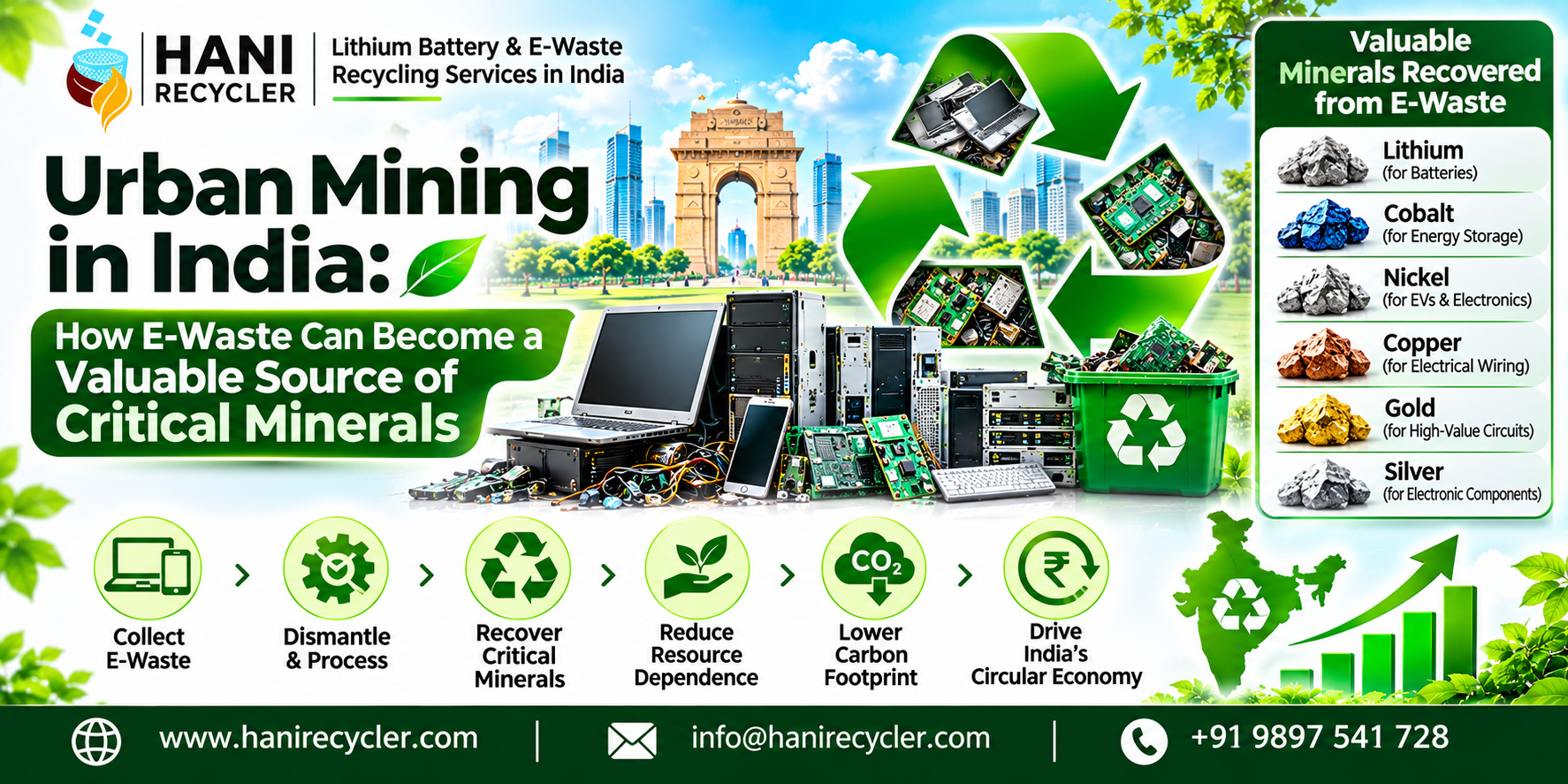
A few days ago, I was holding my old phone and thinking about how many metals are packed inside something that fits in my palm. The next thought was a little funny: my cupboard might be a small "mine." That's the idea behind urban mining, and it's changing how we look at old electronics.
What Is Urban Mining?
Urban mining means recovering useful materials from things we've already made and thrown away, like old phones, laptops, circuit boards and batteries. Instead of digging deeper into the earth, we dig into our own waste. The "mine" is the pile of gadgets sitting in our homes, offices and storerooms.
Which Critical Minerals Are Hiding in E-Waste?
Critical minerals are materials that modern technology depends on. Many of them are inside the devices we use every day:
- Lithium, nickel and cobalt: Found in rechargeable batteries
- Copper: Present in wires, cables and circuit boards
- Gold, silver and palladium: Used in small amounts on circuit boards and connectors
- Aluminium: Found in casings and frames
- Rare earth elements: Used in some magnets and components
Each device holds only a little, but when thousands are processed together, it adds up quickly.
Why Urban Mining Matters for India
India uses more electronics and batteries every year, thanks to smartphones, laptops, solar systems and electric vehicles. Many of the minerals behind them are imported. Urban mining offers a way to:
- Reduce import dependence: Materials recovered at home mean less need to buy from abroad.
- Cut down on mining: Mining uses a lot of land, water and energy, and recovery from waste helps ease that pressure.
- Keep hazardous waste out of nature: Proper recycling stops toxic materials from reaching soil and water.
- Create green jobs: Collection, dismantling, processing and compliance all need skilled people.
The government has also shown interest in this area, including support aimed at recycling critical minerals from e-waste and battery scrap.
How Does It Work?
In simple words, the journey looks like this:
- Collection: Old devices and batteries are gathered from homes, offices and businesses.
- Safe dismantling: Batteries and hazardous parts are removed first, then the devices are taken apart.
- Separation: Metals, plastics and circuit boards are sorted into different streams.
- Recovery: Methods using liquid solutions or high heat help extract metals from circuit boards and battery materials like black mass.
- Purification: The recovered metals are cleaned so they can go back into new products.
It's like sorting a very complicated toolbox, with safety rules at every step.
The Challenges We Can't Ignore
I'd be misleading you if I made this sound easy. A large part of India's e-waste still moves through informal channels, where burning wires and using acid baths waste valuable materials and harm people. Collection is a big hurdle, and many households don't know where to take old devices. Devices also come in different designs, which makes recovery harder, and advanced recycling needs investment and trained workers.
What You Can Do
Urban mining only works if the "ore" reaches the right place. Here's how you can help:
- Don't keep old devices and batteries sitting at home for years.
- Back up and wipe your data before handing anything over.
- Gather everything, including chargers, cables and batteries.
- Stop using any battery that is swollen, hot or leaking.
- Choose an authorised recycler who gives you proper paperwork.
If you'd like a simple and responsible way to recycle, you can reach out to us at Hani Recycler and we'll point you in the right direction.
Final Thoughts
Urban mining turns a problem into an opportunity. Our old gadgets don't have to be waste. They can become a trusted source of the minerals India needs. So the next time you spot a dead device in a drawer, remember it could be a small mine, waiting to be opened the right way.
I kept the article general and didn't include statistics, recovery rates or company details, since I can't verify them. If you have trusted data or details about your own recycling work, send them over and I'll add them. I can also prepare the metadata, meta tags, tags and a social bookmarking description, as before.
Read another Article: Battery Waste Management Rules in India

 English
 Arabic
 French
 Spanish
 Portuguese
 Turkish
 Dutch
 Italiano
 Russian
 Romaian
 Portuguese (Brazil)
 Greek