


USD to PKR: The Rupee's Rollercoaster Through Pakistan's Economic History
Introduction About USD to PKR
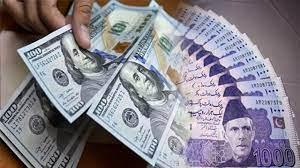
The exchange rate between the United States Dollar and the Pakistani Rupee, commonly tracked as USD to PKR, represents far more than a simple financial metric. It serves as a powerful barometer of Pakistan's economic health, reflecting the nation's historical trajectory, policy decisions, and vulnerabilities in the global marketplace. The story of the USD to PKR exchange rate is a dramatic narrative of a currency that has experienced an extraordinary decline since independence, transforming from a relatively strong currency to one that struggles against the dollar's dominance. Understanding this journey requires examining the historical foundations, the key policy shifts, and the economic forces that have shaped the rupee's value over more than seven decades.
When Pakistan gained independence in 1947, the USD to PKR exchange rate stood at approximately 3.31 rupees per dollar, a figure that remained relatively stable throughout the 1950s. This initial stability reflected the country's economic potential and the relatively modest demands placed on its foreign exchange reserves. However, the first major shock to the system came in 1972 when the government deliberately devalued the currency, pushing the USD to PKR rate to 11 rupees per dollar under a fixed exchange rate system. This strategic decision, though controversial at the time, was intended to boost the economy through increased exports by making Pakistani goods more competitive in international markets.
The Transition to Managed Float and Economic Liberalization
The 1980s brought about a major transformation in Pakistan's exchange rate policy when the country transitioned to a managed float system, allowing market forces to influence the USD to PKR rate within a specified range determined by the central bank. This period was marked by significant trade deficits, which forced the government to rely increasingly on foreign borrowing, thereby adding constant downward pressure on the rupee's value. By 1989, the exchange rate had climbed to roughly 21 rupees per dollar, reflecting the growing imbalance between imports and exports. The move to a free-floating system in the 1990s exposed the rupee to even greater market volatility, exacerbated by political instability, changing governments, and international sanctions that followed the nuclear tests conducted by Pakistan. By 1999, the USD to PKR rate had settled at 52 rupees per dollar, representing a dramatic decline from its early post-independence value.
The economic liberalization policies of the 1990s opened Pakistan's economy to greater international trade and investment, but they also exposed the currency to the full force of global market dynamics. The removal of capital controls and the increasing integration of Pakistan's financial system with global markets meant that the USD to PKR rate became more sensitive to international investor sentiment, global commodity prices, and the monetary policies of major economies. This period saw the rupee experience both periods of relative stability and sharp declines, often in response to political developments, changes in government, or shifts in international relations that affected foreign investment flows and aid packages from international financial institutions.
The Twenty-First Century Challenges and Sharp Depreciation
The 21st century has been particularly challenging for the USD to PKR exchange rate, with the currency experiencing unprecedented volatility and sustained depreciation against the dollar. The persistent current account deficits, fueled by growing import bills and stagnant export growth, combined with fiscal deficits that required continuous foreign borrowing, have led to a steady erosion of the rupee's value. The 2008 global financial crisis and the subsequent rise in oil prices created a perfect storm for the Pakistani economy, as the country's heavy reliance on imported energy meant that higher oil prices required more dollars, putting immense downward pressure on the rupee and depleting foreign exchange reserves.
The Factors Driving Currency Fluctuations
Several interconnected factors continuously influence the USD to PKR exchange rate, creating a complex web of economic pressures that determine the rupee's value at any given moment. Pakistan's heavy reliance on imported oil, which is priced in dollars, represents one of the most significant and persistent drivers of currency depreciation. When global oil prices rise, Pakistan needs more dollars to finance its imports, putting downward pressure on the rupee and requiring the central bank to expend precious foreign exchange reserves to meet the demand. This creates a vicious cycle where higher oil prices lead to rupee depreciation, which in turn makes all imports more expensive, fueling inflation and further weakening the currency.
The country's persistent trade deficit, where imports significantly exceed exports, creates a constant and structural demand for foreign currency that leads to ongoing currency depreciation. This imbalance reflects deeper structural issues in the economy, including limited export diversification, low value-added manufacturing, and a heavy reliance on imported raw materials and capital goods. Remittances from overseas Pakistanis, while a vital source of foreign exchange that helps offset the trade deficit, are subject to global economic conditions, host country policies, and the complex dynamics of the international financial system, making them an unreliable source of stability. The State Bank of Pakistan's foreign exchange reserves play a crucial role in determining the USD to PKR rate, as strong reserves allow the central bank to intervene in the market and stabilize the rupee during periods of volatility, while depleted reserves leave the currency vulnerable to speculative attacks and sudden depreciation.
The Real-World Consequences for Ordinary Citizens
The depreciation of the rupee against the dollar has profound and far-reaching consequences for ordinary Pakistanis, affecting every aspect of daily life. A weaker rupee makes imported goods, from essential food items and medicines to electronics, machinery, and industrial inputs, significantly more expensive. This directly contributes to inflation, increasing the cost of living and reducing the purchasing power of the average citizen, particularly those in lower-income brackets who spend a larger proportion of their income on imported necessities. As the dollar strengthens against the rupee, the price of essential commodities such as petrol rises sharply, creating a cascading effect that impacts transport costs, electricity bills, and ultimately, the price of all goods and services throughout the economy.
The impact of a falling rupee extends beyond consumer prices to affect business operations, investment decisions, and employment prospects. Pakistani manufacturers who rely on imported raw materials and machinery face higher production costs, reducing their competitiveness both in domestic markets and in export markets. This can lead to reduced production, layoffs, and business closures, further exacerbating economic hardship. For students seeking to study abroad or families with members working overseas, the fluctuating exchange rate creates uncertainty and financial strain, as tuition fees and living expenses in dollars become increasingly expensive in rupee terms. The psychological impact of a rapidly depreciating currency can also be significant, eroding public confidence in the economy and encouraging capital flight as individuals and businesses seek to protect their wealth from further erosion.
The Outlook for the Pakistani Rupee
Looking ahead, the outlook for the USD dollar to PKR exchange rate remains challenging, with several factors suggesting continued pressure on the rupee in the medium to long term. The longer-term trajectory suggests a gradual but steady weakening of the rupee rather than a sudden collapse, reflecting the deep structural issues that have plagued the economy for decades. These include low productivity growth, limited export competitiveness, inadequate investment in human capital, and a persistently high dependence on foreign borrowing to finance consumption rather than investment. The path toward sustained stability and growth requires moving away from treating the exchange rate as a political symbol and adopting a more economically rational approach that addresses the root causes of currency vulnerability.
To achieve sustained stability and meaningful appreciation of the rupee's value over the long term, Pakistan must focus on comprehensive structural reforms that address the fundamental causes of its currency's weakness. A productivity revolution is essential, one that increases output per capita, reduces production costs, and enables firms to compete based on reliability, quality, and innovation rather than merely price. This involves addressing high energy costs, reducing bureaucratic inefficiencies, investing in skills development and technology, and creating an enabling environment for private sector investment and innovation. Diversification of exports away from traditional commodities toward higher value-added manufactured goods and services is crucial, as is the development of a more resilient and competitive industrial base that can weather global economic shocks and contribute to sustainable foreign exchange earnings.
The role of governance and institutional capacity cannot be overstated in determining the future trajectory of the USD to PKR exchange rate. Transparent and predictable policy frameworks, effective implementation of reform programs, and accountability in the management of public resources are essential for building the confidence of both domestic and international investors. The central bank's independence and credibility in managing monetary policy and exchange rate operations are critical for maintaining stability and anchoring inflation expectations. Without such deep-seated changes in economic policy, governance, and institutional effectiveness, the USD to PKR exchange rate will likely continue its long, downward march, reflecting the economy's inability to break free from its structural weaknesses and compete effectively in the global economy.

 English
 Arabic
 French
 Spanish
 Deutsch
 Turkish
 Dutch
Dutch
 Italiano
 Russian
 Romaian
 Portuguese (Brazil)
 Greek
Greek