


Common Lithium Battery Shipping Compliance Mistakes (And How to Avoid Them)
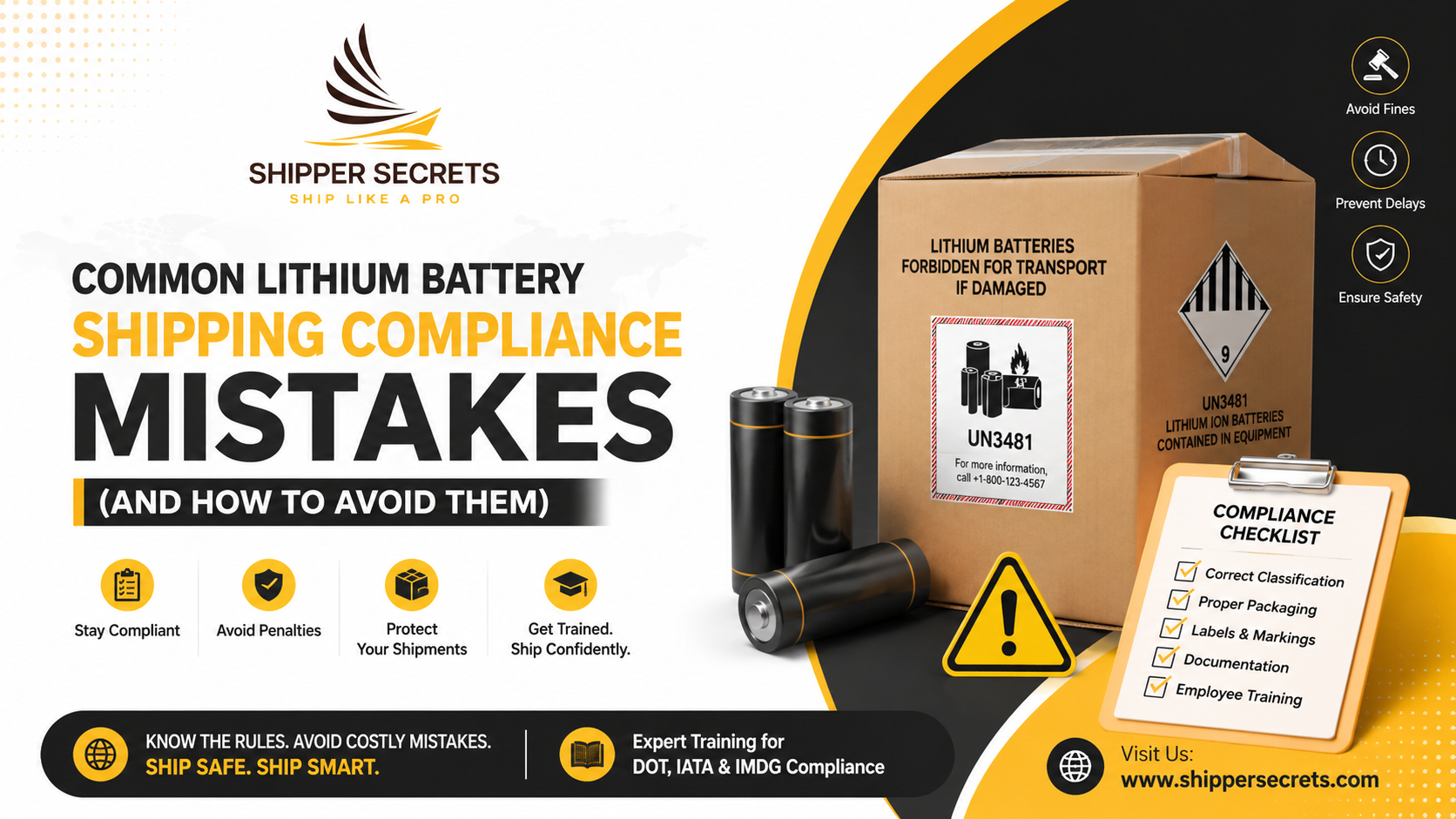
Lithium batteries power nearly every modern electronic device, from smartphones and laptops to electric vehicles and medical equipment. While these batteries have transformed industries, they are also classified as Dangerous Goods because damaged or improperly shipped batteries can overheat, catch fire, or explode.
Every year, thousands of shipments are delayed, rejected, or fined because of simple compliance mistakes. Many businesses assume shipping lithium batteries is straightforward until a carrier refuses a shipment or regulatory authorities impose penalties.
Whether you're shipping by air (IATA), ground (DOT), or sea (IMDG), understanding common compliance mistakes can save your company significant time and money.
In this guide, we'll cover the most frequent lithium battery shipping errors and explain how proper training can help you remain compliant.
Why Lithium Battery Compliance Matters
Lithium battery regulations exist primarily to reduce transportation risks.
Non-compliant shipments may result in:
-
Shipment rejection
-
Regulatory fines
-
Delayed deliveries
-
Carrier suspension
-
Product recalls
-
Increased transportation costs
-
Serious safety incidents
International and domestic authorities continuously update regulations to improve transportation safety, making regular compliance training essential.
1. Using the Wrong UN Number
One of the most common compliance mistakes is selecting the incorrect UN number.
Different battery types require different classifications.
|
Battery Type |
UN Number |
|
Lithium-ion Batteries |
UN3480 |
|
Lithium-ion Batteries Contained in Equipment |
UN3481 |
|
Lithium Metal Batteries |
UN3090 |
|
Lithium Metal Batteries Contained in Equipment |
UN3091 |
Using the wrong UN number may result in shipment rejection and regulatory violations.
2. Incorrect Battery Classification
Many shippers mistakenly classify batteries based solely on product appearance.
Proper classification depends on:
-
Battery chemistry
-
Watt-hour rating
-
Lithium content
-
Packaging configuration
-
Transport mode
Misclassification is one of the leading causes of carrier delays.
3. Improper Packaging
Packaging requirements are among the most overlooked aspects of lithium battery transportation.
Common packaging mistakes include:
-
Loose batteries inside the box
-
Inadequate cushioning
-
Poor outer packaging
-
Exposed battery terminals
-
Mixing damaged and undamaged batteries
Packaging must prevent:
-
Short circuits
-
Battery movement
-
Crushing
-
Accidental activation
Using UN-approved packaging where required significantly reduces transportation risks.
4. Missing or Incorrect Labels
Many shipments are rejected because labels are missing or improperly displayed.
Common labeling errors include:
-
Missing Lithium Battery Mark
-
Wrong UN number
-
Missing Class 9 Hazard Label
-
Incorrect Cargo Aircraft Only label
-
Damaged labels
Labels must remain visible throughout transportation and comply with applicable regulations.
5. Incomplete Shipping Documentation
Documentation errors frequently delay shipments.
Required documents may include:
-
Shipper's Declaration for Dangerous Goods
-
Air Waybill
-
Commercial Invoice
-
Packing List
-
UN38.3 Test Summary
-
Emergency contact information
Even small documentation errors can result in carrier refusal.
6. Ignoring State of Charge (SoC) Requirements
Many businesses overlook battery charge restrictions.
For many air shipments involving standalone lithium-ion batteries, regulations require batteries to be shipped at 30% State of Charge (SoC) or lower. Failure to comply may lead to shipment rejection and increased safety risks.
7. Shipping Damaged or Defective Batteries
Damaged batteries present one of the highest transportation risks.
Warning signs include:
-
Swollen batteries
-
Leaking electrolyte
-
Cracked casing
-
Burn marks
-
Recalled batteries
Such batteries require specialized handling and are often prohibited from standard transport.
8. Employees Lack Dangerous Goods Training
Many compliance failures happen because employees haven't received proper training.
Personnel involved in:
-
Packaging
-
Documentation
-
Shipping
-
Freight forwarding
-
Warehouse operations
should receive training appropriate to the transport regulations they work under.
Proper training significantly reduces human error.
9. Using Outdated Regulations
Lithium battery shipping regulations change regularly.
Businesses relying on outdated procedures may unknowingly violate current requirements.
Review updates for:
-
IATA Dangerous Goods Regulations
-
DOT Hazardous Materials Regulations
-
IMDG Code
Regular refresher training helps organizations stay compliant.
10. Failing to Maintain Compliance Records
Many companies focus only on shipment preparation but forget compliance documentation.
Maintain records for:
-
Employee training
-
Shipping documents
-
Inspection reports
-
Packaging certifications
-
Internal audits
These records simplify regulatory inspections and demonstrate compliance.
Best Practices to Avoid Lithium Battery Shipping Mistakes
Follow these best practices:
-
Verify battery classification before shipping.
-
Use the correct UN number.
-
Select approved packaging.
-
Protect terminals from short circuits.
-
Apply all required labels.
-
Complete documentation accurately.
-
Verify State of Charge requirements.
-
Train shipping personnel regularly.
-
Keep current with regulatory updates.
-
Conduct routine compliance audits.
How Professional Training Helps
Lithium battery shipping regulations are complex, and mistakes can be expensive.
Professional training teaches employees how to:
-
Classify lithium batteries correctly
-
Understand IATA, DOT, and IMDG requirements
-
Prepare compliant shipping documents
-
Package batteries safely
-
Apply required labels and marks
-
Prevent costly compliance violations
Organizations that invest in certified dangerous goods training improve operational efficiency while reducing regulatory risks.
Why Choose Shipper Secrets?
At Shipper Secrets, we provide industry-recognized training designed for shippers, freight forwarders, manufacturers, distributors, warehouse teams, and logistics professionals.
Our online courses cover:
-
DOT Lithium Battery Shipping Training
-
IATA Lithium Battery Shipping Training
-
IMDG Lithium Battery Shipping Training
-
Dangerous Goods Compliance
-
Shipping Documentation
-
Packaging Requirements
-
Regulatory Updates
Whether you're new to lithium battery shipping or need refresher certification, our courses help ensure your team ships confidently and compliantly.
👉https://shippersecrets.com/online-training-faq/
Frequently Asked Questions
What is the most common lithium battery shipping mistake?
Using the wrong UN number, improper packaging, incomplete documentation, and incorrect labeling are among the most frequent compliance errors.
Do all lithium battery shipments require Dangerous Goods training?
Anyone responsible for preparing, packaging, documenting, or offering lithium batteries for transport should receive appropriate training based on applicable regulations.
Why are lithium batteries regulated?
Lithium batteries can generate excessive heat and may cause fires if damaged or improperly transported, making them regulated as dangerous goods.
What happens if my shipment is non-compliant?
Your shipment may be delayed, rejected, fined, or subject to regulatory enforcement depending on the severity of the violation.
How often should lithium battery shipping training be updated?
Training should be refreshed according to the applicable regulatory requirements and whenever significant rule changes occur.
Final Thoughts
Lithium battery shipping compliance is more than checking a box—it is essential for protecting people, cargo, and your business. By avoiding common mistakes such as incorrect classification, improper packaging, labeling errors, and outdated documentation, you can reduce shipment delays, avoid costly penalties, and build trust with carriers and customers. Investing in ongoing training and staying current with DOT, IATA, and IMDG regulations is the most effective way to maintain compliance and keep your supply chain moving safely.
until it's confirmed otherwise.
📞 Contact Us
📍 868 Cardiff Road, Naperville, IL 60565
📞 708.275.8418
🌐 Get in touch with our logistics experts for reliable shipping and freight solutions. 🚚✈️📦
Learn More About Lithium Battery Transport

 English
 Arabic
 French
 Spanish
 Portuguese
 Deutsch
 Turkish
 Dutch
Dutch
 Italiano
 Romaian
 Portuguese (Brazil)
 Greek
Greek