


Role of Digital Drafting in Modern Woodworking Projects
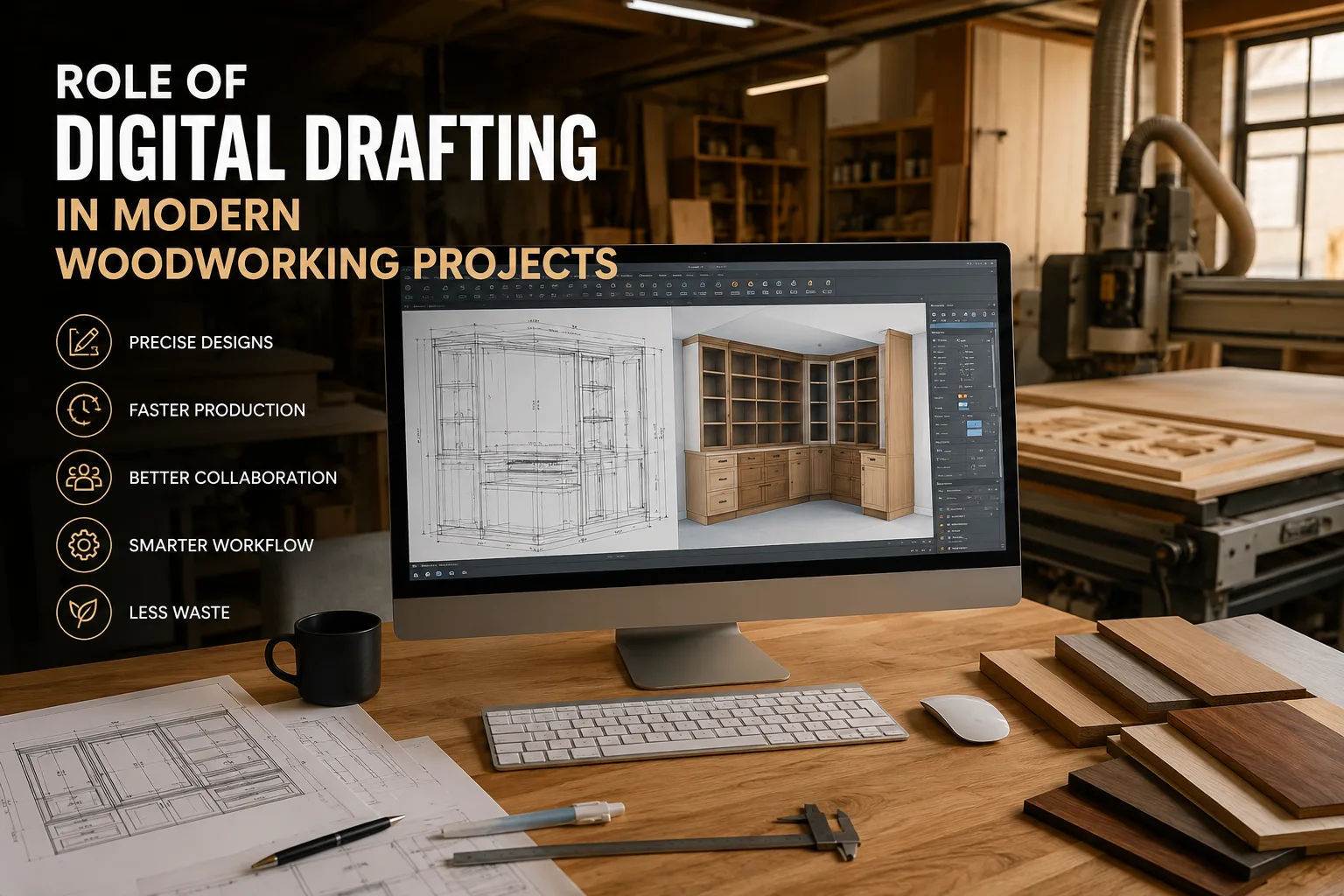
Woodworking has always been a craft built on precision, creativity, and attention to detail. While traditional hand-drawn sketches once formed the foundation of every project, today's woodworking industry has embraced digital drafting as a smarter and more efficient approach. Whether it's custom cabinetry, architectural millwork, furniture design, or commercial interiors, digital drafting helps bridge the gap between an idea and a finished product.
Modern drafting software allows woodworkers, architects, and manufacturers to visualize designs, identify potential issues before production, and create accurate shop drawings that reduce costly mistakes. As woodworking projects become more customized and complex, digital drafting has become an essential part of delivering quality results on time and within budget.
What Is Digital Drafting in Woodworking?
Digital drafting is the process of creating technical drawings using computer-aided design (CAD) software instead of traditional paper-based methods. These drawings include detailed dimensions, material specifications, assembly instructions, and construction details that guide every stage of production.
Unlike hand sketches, digital drawings can be edited quickly, shared instantly with project stakeholders, and integrated with CNC machines and other manufacturing technologies. This streamlined workflow significantly improves communication and minimizes errors throughout the project lifecycle. Digital shop drawings have become the backbone of modern millwork production because they translate design concepts into fabrication-ready instructions.
Why Digital Drafting Matters in Modern Woodworking
Improved Accuracy
One of the biggest advantages of digital drafting is precision. Every measurement, angle, and joint can be defined with exceptional accuracy. This minimizes fabrication errors and ensures every component fits perfectly during installation.
Precise drafting is especially valuable for custom woodworking projects where even minor measurement discrepancies can lead to expensive rework.
Faster Design Revisions
Client preferences often evolve during a project. With digital drafting, modifications can be made in minutes instead of redrawing entire plans from scratch.
This flexibility helps designers respond quickly to change requests without delaying production schedules.
Better Collaboration
Woodworking projects usually involve multiple professionals, including architects, interior designers, contractors, fabricators, and installers.
Digital drafting creates a shared reference that everyone can review, reducing misunderstandings and ensuring every stakeholder works from the same set of approved drawings.
Enhancing Visualization Before Production
Realistic 3D Models
Modern drafting software allows designers to create realistic 3D representations of woodworking projects. Clients can visualize cabinetry, furniture, shelving, and architectural millwork before manufacturing begins.
This makes it easier to evaluate:
- Overall proportions
- Material selections
- Finish options
- Functional layouts
- Design aesthetics
Early visualization reduces uncertainty and increases client confidence before fabrication starts.
Detecting Design Conflicts Early
Digital models make it easier to identify potential clashes between woodworking elements and other building systems such as plumbing, HVAC, or electrical installations.
Resolving these issues during the design phase prevents expensive modifications later during installation.
Supporting CNC Manufacturing
Today's woodworking industry increasingly relies on CNC machines for cutting, drilling, routing, and shaping wood components.
Digital drafting plays a critical role by producing accurate drawings and production data that integrate seamlessly with CNC workflows. Well-prepared digital drawings reduce manual interpretation, improve manufacturing consistency, and help automate fabrication processes.
The result is:
- Faster production
- Consistent quality
- Reduced material waste
- Improved production efficiency
Reducing Material Waste
Material costs continue to rise, making efficient planning more important than ever.
Digital drafting helps optimize material usage by:
- Calculating accurate dimensions
- Producing optimized cutting layouts
- Eliminating duplicate measurements
- Reducing unnecessary offcuts
Better planning means fewer mistakes and greater sustainability throughout the production process.
Improving Project Documentation
Woodworking projects require extensive documentation for manufacturing, installation, and quality control.
Digital drafting generates detailed:
Shop Drawings
These include fabrication details, joinery methods, hardware locations, and assembly instructions.
Material Schedules
Comprehensive lists specify wood species, panel sizes, hardware, finishes, and accessories.
Installation Drawings
Installers receive precise instructions that simplify on-site assembly and minimize installation errors.
Clear documentation improves communication between design teams, manufacturers, and installers while reducing project delays.
Supporting Custom Woodworking Projects
Customization has become one of the defining trends in modern woodworking.
Clients increasingly request:
- Built-in storage
- Luxury cabinetry
- Retail displays
- Reception desks
- Feature walls
- Hospitality interiors
Every custom project has unique dimensions and functional requirements.
Digital drafting allows designers to create tailored solutions without sacrificing accuracy or production efficiency. Even highly intricate joinery and decorative details can be documented with exceptional precision.
Saving Time Across Every Stage
Digital drafting accelerates nearly every phase of a woodworking project.
Instead of manually updating multiple drawings, designers can revise digital models that automatically reflect changes across related views and documentation.
Time savings occur during:
- Initial design
- Client approvals
- Shop drawing preparation
- Manufacturing
- Installation
- Future revisions
This efficiency enables businesses to complete more projects while maintaining high quality standards.
The Growing Importance of Professional Drafting Services
Many woodworking companies now partner with specialized Millwork Drafting Services Providers to handle complex drafting requirements. Experienced professionals produce fabrication-ready drawings that comply with industry standards, improve collaboration, and help reduce costly production errors.
Outsourcing drafting also allows woodworking businesses to focus on craftsmanship, manufacturing, and customer service while ensuring their technical documentation remains accurate and up to date.
Future Trends in Digital Woodworking
Digital drafting continues to evolve alongside new technologies.
Emerging innovations include:
BIM Integration
Building Information Modeling (BIM) improves coordination between millwork, architecture, structural systems, and mechanical services, making large-scale construction projects more efficient.
Cloud-Based Collaboration
Teams can review drawings, approve revisions, and share updates from virtually anywhere, improving project coordination.
Automation and Smart Manufacturing
Digital drafting increasingly connects directly with automated production systems, enabling faster and more consistent manufacturing while reducing manual intervention.
Conclusion
Digital drafting has transformed modern woodworking from a largely manual planning process into a highly accurate, collaborative, and technology-driven workflow. From improving precision and reducing material waste to enabling CNC manufacturing and simplifying project coordination, digital drafting delivers measurable benefits throughout every stage of production.
As woodworking projects continue to demand greater customization and efficiency, adopting digital drafting is no longer simply an advantage—it has become a practical necessity. Businesses that embrace these digital workflows are better positioned to deliver high-quality craftsmanship, streamline operations, and meet the growing expectations of today's clients.

 Arabic
 French
 Spanish
 Portuguese
 Deutsch
 Turkish
 Dutch
Dutch
 Italiano
 Russian
 Romaian
 Portuguese (Brazil)
 Greek
Greek