


Horizontal vs. Vertical Bamboo Flooring: Grain, Stability, and Visual Appeal
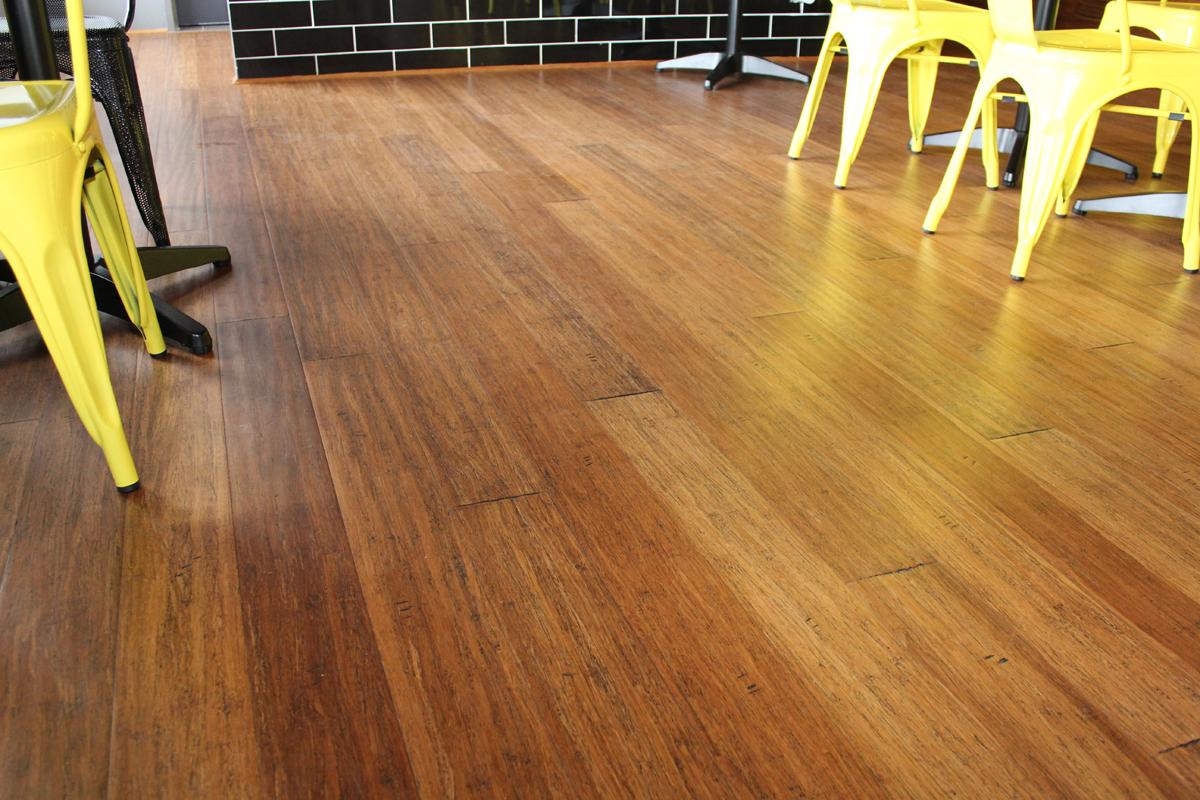
Choosing the perfect flooring for a residential or commercial space involves balancing aesthetic desires with practical performance needs. Among sustainable building materials, bamboo has secured a prominent position due to its rapid renewability, impressive durability, and distinct natural beauty. However, when exploring bamboo options, buyers quickly encounter structural terminology that can be confusing: horizontal and vertical.
These terms do not refer to how the planks are laid out on the subfloor. Instead, they describe how the bamboo stalks are cut, oriented, and laminated together during the manufacturing process. Understanding the distinctions between horizontal and vertical bamboo flooring—specifically regarding their grain patterns, structural stability, and overall visual appeal—is essential for making an informed design and architectural decision.
The Manufacturing Split: How the Grain is Formed
To appreciate the differences between these two styles, it helps to understand how a round, hollow bamboo culm becomes a flat, solid flooring plank. Bamboo is a fast-growing grass, not a tree. Because it lacks the wide trunk of an oak or maple, it cannot be sawn into wide boards in a traditional sawmill. Instead, the manufacturing process requires processing the bamboo into smaller components before assembling them into a final product.
For both horizontal and vertical flooring, the process begins by slicing the mature bamboo stalks lengthwise into thin strips. These strips are boiled or steamed to remove starches and sugars, a step that protects the material from insects and fungal decay. Once dried, the treatment of these strips diverges, creating two entirely different structural compositions.
Horizontal Bamboo Construction
In horizontal construction, the strips are laid flat, face-to-face, in three or more layers. The wide surfaces of the bamboo strips are stacked horizontally before being bonded together under immense pressure using specialized adhesives.
Because the strips are laid flat, the natural characteristics of the bamboo stalk are preserved on the surface of the plank. The most prominent feature of horizontal bamboo is the visible growth rings, known as nodes or knuckles. These are the distinct horizontal bands that appear at regular intervals along a bamboo stalk. When laminated horizontally, these nodes create a classic, easily identifiable pattern that instantly signals the material's botanical origin.
Vertical Bamboo Construction
Vertical construction takes a completely different approach. Instead of laying the strips flat, the manufacturers turn the strips on their narrow edges. These vertical strips are aligned side-by-side, standing upright, and then compressed and glued together.
By turning the strips sideways, the wide face of the bamboo strip is hidden inside the core of the plank, and only the narrow edge is visible on the surface. This eliminates the wide, distinctive node marks found in horizontal flooring. The resulting plank features a tightly packed series of fine, linear lines running parallel down the length of the board.
Visual Appeal and Interior Design Integration
The choice between horizontal and vertical bamboo heavily influences the visual energy and atmosphere of a room. Each style aligns with different interior design aesthetics, from traditional and rustic to minimalist and modern.
The Organic Texture of Horizontal Bamboo
Horizontal bamboo flooring delivers an organic, exotic visual appeal. The presence of the dark node marks breaks up the linear flow of the wood, creating a varied, rhythmic pattern across the floor. This style is often favored by designers who want the floor to be a distinct design element rather than a neutral backdrop.
The wide grain pattern of horizontal bamboo showcases the natural growth variations of the grass. It works exceptionally well in spaces aiming for a tropical, bohemian, or traditional aesthetic. In residential settings, horizontal bamboo brings warmth and textural interest to living rooms, bedrooms, and entryways where the unique character of the material can be fully appreciated.
The Clean Minimalism of Vertical Bamboo
Vertical bamboo flooring offers a stark contrast with its clean, uniform, and highly contemporary look. The fine, narrow lines create a consistent texture that mimics the straight grain lines of premium rift-sawn hardwoods. Because the prominent knuckle marks are absent, the floor presents a smooth, uninterrupted surface.
This linear simplicity makes vertical bamboo a favorite for modern architectural projects, minimalist interiors, and Scandinavian design schemes. It excels at making smaller rooms feel longer or wider, as the continuous parallel lines guide the eye seamlessly across the space. Furthermore, the uniform appearance of vertical bamboo makes it highly suitable for commercial environments, offices, and upscale retail spaces where a sleek, sophisticated, and less distracting flooring surface is desired.
Structural Stability and Performance Characteristics
Beyond visual differences, the structural orientation of the bamboo strips impacts how the flooring behaves under everyday stresses, changes in humidity, and physical impacts.
Hardness and Indentation Resistance
When comparing standard horizontal and vertical bamboo flooring, their hardness levels are relatively similar, typically registering around 1,300 to 1,400 on the Janka hardness scale. This places them on par with traditional domestic hardwoods like northern red oak and white oak.
However, the vertical orientation provides a slight advantage in terms of surface pressure distribution. Because the strips are compressed sideways, the surface consists of multiple dense edges packed together. While both types resist everyday scratches and dents well, vertical bamboo can sometimes hide minor micro-scratches better due to its busy, fine-lined grain pattern, whereas the broader expanses of horizontal grain may show surface wear more clearly under direct light.
Dimensional Stability and Environmental Response
Like all natural wood and grass products, bamboo is hygroscopic, meaning it absorbs and releases moisture from the surrounding environment. When humidity levels rise, the material expands; when humidity drops, it contracts.
Structural stability refers to how well a plank resists warping, cupping, or gapping during these environmental shifts. The way the strips are oriented plays a significant role here:
-
Horizontal Planks: The horizontal layering creates a wider surface area per strip. While highly stable, the broad face of the strips can be slightly more susceptible to cupping (where the edges of the plank rise higher than the center) if exposed to prolonged high moisture from subfloor humidity.
-
Vertical Planks: The edge-grain orientation of vertical bamboo provides excellent dimensional stability across the width of the plank. Because the strips are narrow and tightly compressed side-by-side, the internal forces counteract each other effectively, reducing the likelihood of lateral expansion and contraction.
Regardless of the style chosen, proper job-site acclimation and maintaining a consistent indoor relative humidity between 35% and 55% are crucial practices for ensuring long-term performance.
Beyond Flooring: The Expanding Bamboo Architecture
The manufacturing techniques that produce horizontal and vertical grain profiles are not limited to indoor flooring. The same principles apply to architectural panels, plywood, veneer, and outdoor applications. Designers frequently utilize vertical bamboo panels for cabinetry and wall cladding to match vertical flooring, creating a cohesive, linear interior environment.
For exterior applications, the material undergoes an even more intensive transformation. Processes involving thermal alteration and extreme density compression allow for the creation of durable bamboo decking, which provides an eco-friendly alternative to traditional tropical hardwoods for outdoor spaces. While outdoor decking relies on a different manufacturing method known as strand-woven or fused bamboo to withstand exterior elements, the fundamental appreciation for bamboo's structural integrity began with the development of classic horizontal and vertical interior planks.
Color Variations: Natural vs. Carbonized
Both horizontal and vertical bamboo flooring are available in two primary natural color tones, achieved through processing rather than stains.
Natural Blonde
Often referred to as "natural," this tone preserves the pale, creamy yellow hue of the raw bamboo grass. Natural horizontal flooring displays light tan node marks, while natural vertical flooring looks like a clean, bright, wheat-colored surface. This color choice maximizes light reflection, making spaces feel bright, airy, and open.
Carbonized Amber
To achieve a deeper, darker tone without applying topical stains, manufacturers use a process called carbonization. The bamboo strips are placed in a pressurized steam oven, which caramelizes the natural sugars inside the plant fibers. This changes the color from a light blonde to a rich, warm amber or caramel tone that runs completely through the thickness of the material.
It is important to note that the carbonization process slightly softens the bamboo fibers, reducing the overall Janka hardness by roughly 10% to 15%. In horizontal carbonized flooring, the node marks become a darker, darker brown, creating a striking contrast. In vertical carbonized flooring, the result is a rich, uniform, warm brown surface with delicate, darker linear streaks.
Installation and Maintenance Considerations
When it comes to installation, horizontal and vertical bamboo flooring are identical. Both types are typically manufactured with standard tongue-and-groove profiles or modern click-lock systems, allowing them to be nailed down, glued down, or floated depending on the subfloor type and the specific product specifications.
Maintenance routines also remain uniform across both grain styles. Keeping the floors free of grit and dirt through regular sweeping or vacuuming with a soft brush attachment is the most effective way to prevent surface scratches. When mopping is necessary, using a damp microfiber mop with a pH-neutral cleaner designed specifically for hard-surface floors ensures the finish remains protected without introducing excessive moisture to the seams.
Summary of Key Differences
To assist in deciding which style best suits a project, the core distinctions can be summarized across three main categories:
-
Grain Structure: Horizontal features wide, expressive grain patterns with prominent, visible growth nodes. Vertical features fine, narrow, parallel lines with a uniform texture and no visible growth nodes.
-
Design Alignment: Horizontal fits traditional, rustic, bohemian, and exotic design themes where natural character is celebrated. Vertical aligns perfectly with modern, minimalist, Scandinavian, and sleek commercial aesthetics.
-
Structural Behavior: Horizontal offers excellent stability but possesses a broader face area per strip. Vertical provides exceptional dimensional stability across the width due to its dense edge-grain configuration.
Ultimately, choosing between horizontal and vertical bamboo flooring is less about one being structurally superior to the other and more about selecting the correct visual language and performance characteristics for a specific space. Both options deliver a durable, sustainable, and high-performing hard surface that honors the unique properties of one of the world's most versatile natural resources.
About Bothbest
Bothbest is a professional manufacturer and exporter of bamboo flooring and bamboo decking in China. With over two decades of experience, the factory produces high-quality horizontal, vertical, and strand-woven bamboo products, supplying reliable, eco-friendly, and durable building materials to international residential and commercial markets.

 English
 Arabic
 French
 Spanish
 Deutsch
 Turkish
 Dutch
Dutch
 Italiano
 Russian
 Romaian
 Portuguese (Brazil)
 Greek
Greek