


Papernapkinfactory Questions: Can I Get Custom Printed Napkins Fast Without Sacrificing Print Sharpness
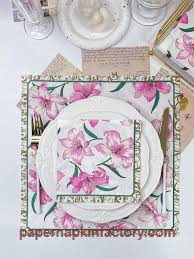
The need for customized event supplies often arises suddenly. A corporate event date moves forward. A wedding planner finalizes details late. A birthday celebration requires a last-minute personal touch. In these situations, the demand for custom printed napkins fast becomes urgent. The supplier who can deliver within a tight timeframe wins the order. However, speed introduces risks. A rushed production process may compromise print sharpness, color accuracy, or material integrity. A napkin that arrives quickly but looks faded or feels flimsy fails to enhance the event. The guest experience relies on the details. Therefore, the buyer must actively manage quality while accepting a compressed schedule. Papernapkinfactory, a specialist in printed napkin production with a dedicated facility, addresses this dual requirement. What specific strategies can a buyer employ to ensure the quality of custom printed napkins fast orders?
The first step toward quality in a fast order is precise specification. Ambiguity is the enemy of accuracy. The buyer must provide clear instructions regarding the desired size, number of plies, and color requirements. A napkin described simply as "red" could mean crimson, scarlet, or maroon. The supplier's interpretation may not match the event's theme. Providing a Pantone color reference eliminates this uncertainty. Similarly, the design file must meet technical requirements. A low-resolution image, suitable for web use, will print poorly on paper. The buyer should supply print-ready files in PDF or AI format, with embedded fonts and a minimum resolution of 300 DPI. This clarity prevents delays and reduces the chance of errors. The extra minutes spent preparing a detailed spec sheet save hours of back-and-forth communication.
Material selection affects both quality and production speed. Different paper grades have different availability. A standard 2-ply tissue paper may be readily available and quick to print. A premium 3-ply, embossed napkin with a special texture may require a longer setup. If the primary goal is speed, the buyer might choose a material that the supplier keeps in stock. The supplier should state the available stock levels for different paper types. The buyer should select a design that suits that material. A highly intricate, full-bleed design printed on a textured paper may not produce the sharpest result within a short production window. A simpler design with a solid background and bold text often prints faster and looks clearer.
The printing technology used in the production process directly influences speed and quality. Flexographic printing, the traditional method for paper napkins, requires custom printing plates. Plate production takes time. Once the plates are ready, the press runs efficiently. Digital printing, conversely, uses no plates. It prints directly from a digital file. This eliminates plate-making time, significantly reducing setup and allowing for faster order turnaround. The print quality, particularly for gradient colors or fine details, can be superior with digital technology. However, not all suppliers possess this capability. A buyer needing custom printed napkins fast should confirm whether the manufacturer uses digital printing for short-run, quick orders. This technology provides both speed and high-definition output.
Proofing provides a crucial quality checkpoint. The fast order does not eliminate the need for a physical or digital proof. A digital proof, sent by email, allows the buyer to check the layout, text, and color balance on screen. However, screen colors are not always accurate. A physical press proof, printed on the actual napkin paper, offers the most reliable representation. The buyer can check the material, absorbency, and print quality. In a truly urgent order, the supplier might combine the proofing and production stages. They may print a sample on the production line at the start of the run. If the buyer approves the sample, the production continues. If not, adjustments are made immediately. This method saves the time of a separate proofing step while still providing a quality check.
The production timeline requires a realistic understanding of the manufacturing process. Printing, cutting, folding, and packaging take time. A one-day turnaround is possible, but only if the entire process runs smoothly. The buyer should ask the supplier about their standard production time for a rush order. The key is to identify the production bottlenecks. The bottleneck might be the printing plates, the press availability, or the packaging station. The buyer can then work with the supplier to address the bottleneck. For instance, choosing a common napkin size and a simple folding pattern might speed up the production. The supplier's experience in managing rush orders is a valuable asset.
The supplier's own quality control systems provide the final guarantee. A reliable manufacturer inspects the printed napkins at critical points. They check the color consistency from the first sheet to the last. They verify the cut size and folding accuracy. They examine the packaging for damage. These inspections occur regardless of the order's urgency. In a rush order, the supplier may assign an experienced quality control supervisor to monitor the entire run. The supervisor ensures the quality remains steady even under production pressure. The buyer can request a report or a video of the final inspection for high-value orders.
The cost of a fast order often reflects the expedited service. A supplier may charge a premium for priority scheduling, overtime, or expedited shipping. The buyer should accept that paying for speed is reasonable. Compromising on quality to save a small percentage of the cost is a false economy. A poorly printed napkin detracts from a carefully planned event. The financial loss from a disappointed client or a damaged brand image far outweighs the cost of a quality product. Therefore, the buyer should focus on value for money, defined as receiving a product that meets the required specifications within the required time.
The process of ordering custom printed napkins fast is a partnership between the buyer and the supplier. The buyer defines the requirements, provides clear files, and chooses the right material. The supplier applies the appropriate technology, maintains rigorous quality control, and communicates the progress. Both parties share the goal of a successful delivery. FuRong, with its established production facility and experience, provides a practical pathway for such orders. You may explore product options and ordering guidelines through the manufacturer's platform; a visit to https://www.papernapkinfactory.com/ offers a view of available configurations and services. The need for speed does not necessitate a compromise on quality. Does your ordering process for custom printed napkins include all the checks needed to maintain quality under tight deadlines?

 English
 Arabic
 French
 Spanish
 Portuguese
 Turkish
 Dutch
Dutch
 Italiano
 Russian
 Romaian
 Portuguese (Brazil)
 Greek
Greek