


Navigating the Modern Landscape of Content Verification
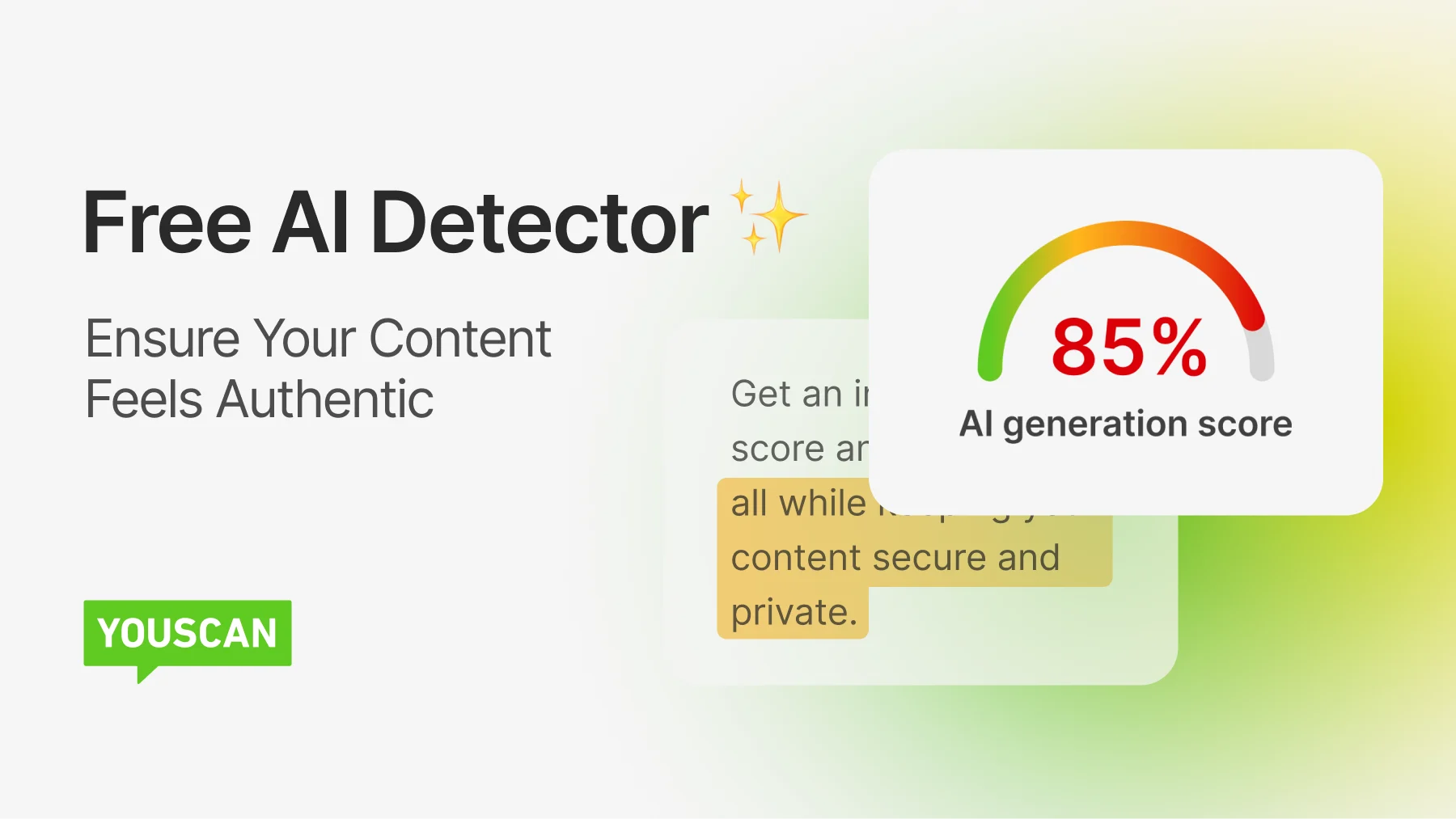
The rise of generative artificial intelligence has fundamentally shifted how we create and consume information, making it increasingly necessary to understand the tools that distinguish human writing from machine-generated output. In this rapidly evolving digital era, an ai detector acts as a crucial barrier against misinformation and synthetic content. By examining linguistic patterns, statistical probability, and stylistic fingerprints, these systems provide a window into the origins of a document. Whether for academic integrity or editorial credibility, having a reliable mechanism to verify the source of text is no longer just an option; it is a vital requirement for maintaining the sanctity of human-generated work.
The Science Behind Machine Detection
At its core, detection technology does not operate on intuition but on sophisticated mathematical modeling. To understand these systems, we must look at the technical metrics that power them.
Understanding Perplexity and Burstiness
Perplexity measures how predictable a sequence of words is. Because large language models (LLMs) function as prediction engines, they prioritize the most statistically likely next word, resulting in lower perplexity scores. Human writing, conversely, is characterized by higher perplexity due to the unpredictable and creative nature of our word choices.
"Burstiness" refers to the rhythm of sentence structure. A human writer will naturally vary the length and cadence of their sentences to create a specific flow. In contrast, AI models often produce a more uniform rhythmic structure, which detection algorithms can easily flag as synthetic.
Stylometric Pattern Matching
Beyond simple prediction, these tools analyze stylometric patterns. This involves breaking down a text into its core components:
-
Average sentence length.
-
The frequency and placement of punctuation.
-
The ratio of "function" words (such as "the," "is," or "and") to more complex vocabulary.
By analyzing these granular details, algorithms can create a "stylistic fingerprint" of the text, comparing it against vast datasets of both human and machine-generated content to identify anomalies.
Why Accuracy Remains a Challenge
Despite their sophisticated algorithms, it is vital to remember that no system is infallible. The landscape of detection is fraught with complexities that users must understand to make informed decisions.
Is there a single, perfect tool for identifying synthetic content? No, there is no tool that provides 100% accuracy. Because AI models are constantly evolving—becoming more nuanced and human-like—detection technology is often in a reactive cycle, constantly updating its methods to catch up with the latest generation of language models. Relying on a single result as "proof" can be dangerous.
Can human writing be mistakenly flagged as AI-generated? Yes, this is known as a false positive. Human writing, especially when it is formal, structured, or uses standardized corporate phrasing, can sometimes look remarkably like machine output. Non-native English speakers are particularly susceptible to being incorrectly flagged because their patterns might lean toward the standardized structures that AI models often replicate.
Implementing Best Practices for Content Assessment
When you utilize an ai checker, the goal should be to gather additional data rather than to find a definitive, binary answer. Treat these tools as one part of a multi-faceted assessment process.
Contextual Review
Always review the flagged text within its broader context. Look for specific indicators such as:
-
Logical Consistency: Does the argument flow logically, or is it repetitive and hollow?
-
Fact-Checking: Are the cited sources accurate, or does the text contain "hallucinated" information?
-
The "Human" Element: Does the text contain personal anecdotes, unique perspectives, or highly specific regional nuances that an LLM would struggle to replicate accurately?
The Role of Transparency
In professional and academic settings, the best defense against integrity concerns is transparency. If you have utilized AI as a brainstorming partner or a drafting aid, disclose its role. Using tools that provide a detailed breakdown of the writing process, such as version history in document editors, provides much stronger evidence of human authorship than a simple detection score ever could.
The Future of Verification Technology
As we look toward the future, the arms race between generative AI and detection software will likely intensify. Researchers are exploring advanced techniques, including cryptographic watermarking, where an AI model is designed to embed an invisible, statistically detectable pattern into its word choices at the moment of creation.
This hidden seal of authenticity could fundamentally change the landscape, moving us from probabilistic "guessing" to deterministic identification. However, until such standards are universally adopted across all major AI platforms, human oversight remains the most important component of the review process.
Frequently Asked Questions
Are AI detection results considered legal proof of misconduct? No, these tools provide probabilistic assessments, not definitive proof. They estimate the likelihood of AI involvement based on patterns, and they should never be used as the sole basis for high-stakes disciplinary actions or legal decisions.
How can I reduce the chance of false positives on my own work? Focus on developing a unique voice. Incorporate personal experiences, specific domain knowledge, and diverse sentence structures. When writing becomes formulaic, it naturally begins to resemble the patterns found in large language models.
What should I do if my work is flagged as AI-generated? Do not panic. If you know the work is human-authored, gather evidence of your writing process. This includes draft notes, research materials, and the version history of your document. Use these to demonstrate the evolution of your ideas from initial concept to final polish.
Is it possible to "trick" an AI detector? While some users attempt to bypass detectors by manually rephrasing text or injecting random errors, this is not a sustainable practice. The most effective way to ensure your work is seen as human is to write with authentic intent, depth, and original insight—elements that are inherently difficult for a prediction engine to replicate.

 English
 Arabic
 French
 Spanish
 Portuguese
 Turkish
 Dutch
Dutch
 Italiano
 Russian
 Romaian
 Portuguese (Brazil)
 Greek
Greek