


How to Become a Pilot in India: A Complete Roadmap to DGCA Exams, Training Fees, and a Successful Aviation Career
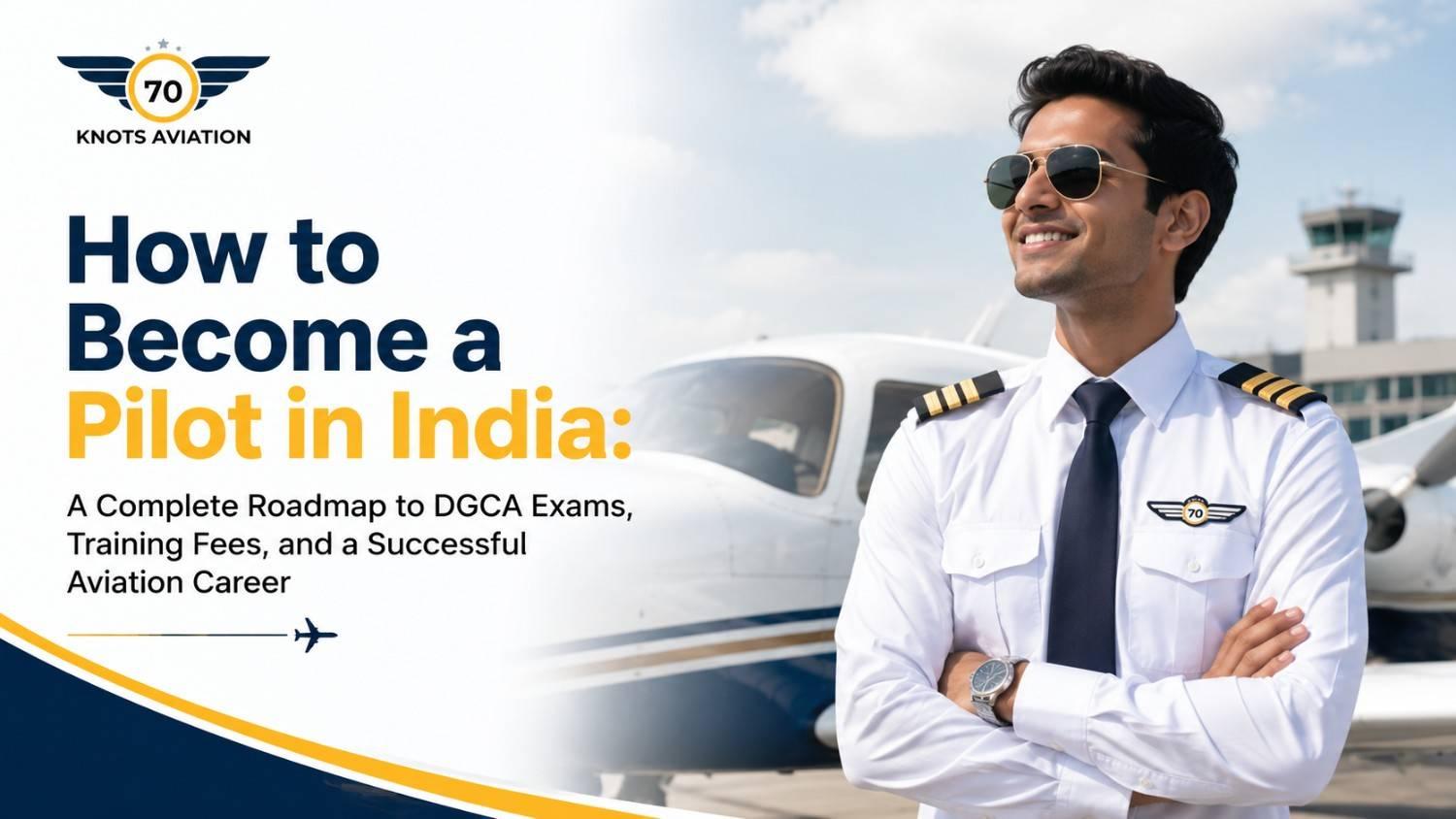
Flying an aircraft is a dream shared by thousands of students across India. Over the past few years, the aviation industry has witnessed remarkable growth due to increasing passenger traffic, expanding airline fleets, and the development of modern airports. This rapid expansion has created a strong demand for professionally trained pilots, making aviation one of the most rewarding career choices for young aspirants.
However, many students still have questions about how to become a pilot in India. They often wonder about the eligibility criteria, the role of DGCA, the cost of pilot training, the duration of the course, and the career opportunities available after obtaining a Commercial Pilot Licence (CPL). Without proper guidance, it can become difficult to understand the complete process.
Every aspiring pilot must complete DGCA-approved training, pass the required examinations, fulfill medical requirements, and gain practical flying experience before becoming eligible to work with an airline. Along with determination and discipline, choosing the right aviation academy also plays an important role in building a successful career.
Institutes such as 70 Knots Aviation help aspiring pilots understand every stage of their aviation journey through structured learning, professional mentorship, and comprehensive DGCA exam preparation. With the right guidance and consistent effort, students can confidently move toward achieving their dream of becoming commercial pilots.
Why Choose Aviation as a Career in India?
India is becoming one of the world's fastest-growing aviation markets. Every year, millions of passengers travel by air, encouraging airlines to expand their operations and introduce new domestic and international routes.
As the aviation industry grows, the requirement for qualified pilots also continues to increase. Airlines regularly recruit trained professionals who possess strong theoretical knowledge, excellent flying skills, and a valid Commercial Pilot Licence.
Some of the major advantages of choosing aviation as a career include:
- Excellent career growth opportunities
- Attractive salary packages
- Opportunity to travel across India and internationally
- Continuous learning and professional development
- Respectable and rewarding profession
- Opportunity to work with leading domestic and international airlines
Students who begin planning their aviation career early can build a strong foundation and prepare themselves for long-term success.
How to Become a Pilot in India?
Understanding how to become a pilot in India begins with knowing the complete training process. Becoming a commercial pilot requires dedication, patience, and systematic preparation.
The journey generally includes the following stages:
Complete Your 10+2 Education
Students should complete their higher secondary education with Physics and Mathematics from a recognized board.
These subjects help students understand:
- Basic aviation principles
- Aircraft performance
- Flight calculations
- Navigation concepts
- Meteorological basics
Students who have not studied Physics and Mathematics can still become eligible by completing these subjects through recognized educational programs accepted by DGCA.
Meet the DGCA Eligibility Criteria
Before starting professional pilot training, candidates must satisfy the eligibility requirements established by the Directorate General of Civil Aviation (DGCA).
The eligibility generally includes:
- Educational qualification
- Minimum age requirement
- Medical fitness
- Identity and documentation requirements
- Successful completion of DGCA examinations
Meeting these requirements early helps students avoid unnecessary delays during training.
Clear DGCA Medical Examinations
Medical fitness is one of the most important aspects of becoming a pilot. Every commercial pilot must maintain good physical and mental health to ensure safe aircraft operations.
Students usually complete two levels of medical examinations.
Class 2 Medical
This examination allows students to begin their aviation training. It evaluates general health conditions and determines whether the candidate is medically fit for flight training.
Class 1 Medical
Class 1 Medical Certification is mandatory before obtaining a Commercial Pilot Licence.
The examination evaluates:
- Vision
- Hearing
- Cardiovascular health
- Neurological health
- Overall physical fitness
Completing medical examinations at the beginning of training helps students avoid interruptions later in their aviation journey.
Select the Right Aviation Academy
Choosing the right training institute is one of the biggest decisions in a pilot's career.
Students should compare institutes based on:
- DGCA recognition
- Instructor experience
- Ground school quality
- Student success rate
- Training facilities
- Modern teaching methods
- Career guidance
- Student support
Students searching for the Best Pilot Training Institute in Guwahati for Future Pilots should carefully evaluate the quality of education, faculty expertise, infrastructure, and student-focused learning environment before making a decision.
Professional academies like 70 Knots Aviation focus on building strong theoretical knowledge while helping students prepare confidently for professional aviation careers.
Build a Strong Foundation Through Ground School
Before entering the cockpit, every aspiring pilot must understand the theory behind aviation.
Ground school teaches students important aviation subjects that form the backbone of commercial pilot training.
Topics include:
- Air Navigation
- Air Regulations
- Aviation Meteorology
- Technical General
- Technical Specific
- Flight Planning
- Aircraft Systems
- Aviation Safety
A strong theoretical foundation makes practical flight training easier and improves overall confidence during examinations.
DGCA Exam Preparation: The Foundation of Every Successful Pilot
One of the most important stages in becoming a commercial pilot is clearing the DGCA examinations. These exams evaluate whether a student has the theoretical knowledge required to begin professional flying training. A strong understanding of aviation concepts not only helps students clear the examinations but also prepares them for practical flight operations.
Many students believe that passing the DGCA exams depends only on memorising answers. In reality, success comes from understanding concepts, maintaining discipline, and following a structured study plan.
Professional DGCA exam preparation allows students to study each subject in detail while developing confidence before appearing for the examinations.
Important Subjects Covered in DGCA Examinations
The DGCA syllabus is designed to prepare future pilots with essential aviation knowledge.
Air Navigation
Air Navigation teaches students how aircraft travel safely from one destination to another.
Students learn about:
- Navigation charts
- Flight planning
- Route calculations
- Compass systems
- Position fixing
- Radio navigation
Understanding navigation helps pilots operate aircraft safely under different flying conditions.
Aviation Meteorology
Weather plays a major role in aviation safety.
This subject helps students understand:
- Wind systems
- Cloud formations
- Rainfall and storms
- Temperature changes
- Pressure systems
- Weather forecasting
Pilots use weather information before every flight to make safe operational decisions.
Air Regulations
Every pilot must understand aviation rules before entering the cockpit.
Air Regulations include:
- Aviation laws
- Flight rules
- Pilot responsibilities
- Aircraft documentation
- Safety procedures
- International aviation standards
This subject ensures that pilots always operate according to DGCA guidelines.
Technical General
Technical General introduces students to aircraft systems and how they function.
Students study:
- Aircraft engines
- Fuel systems
- Hydraulic systems
- Electrical systems
- Flight instruments
- Aircraft controls
A good understanding of aircraft systems helps pilots identify and respond to technical situations effectively.
Technical Specific
Technical Specific focuses on the aircraft used during training.
Students learn about:
- Aircraft limitations
- Cockpit instruments
- Aircraft operating procedures
- System operations
- Performance calculations
This knowledge becomes valuable during practical flight training.
Smart Tips for DGCA Exam Preparation
Preparing for DGCA examinations becomes much easier when students follow a systematic learning approach.
Some effective preparation techniques include:
- Create a realistic daily study timetable.
- Divide subjects into smaller learning goals.
- Revise concepts regularly instead of studying only before exams.
- Solve previous years' DGCA question papers.
- Take mock tests frequently.
- Focus on understanding concepts rather than memorising answers.
- Discuss difficult topics with experienced instructors.
- Maintain handwritten notes for quick revision.
Students who remain consistent throughout their preparation usually perform better than those who study only during the last few weeks.
Professional academies such as 70 Knots Aviation provide structured DGCA exam preparation through experienced instructors, concept-based learning, regular assessments, and student-focused guidance. Their systematic approach helps students build confidence while preparing for aviation examinations.
Flight Training: Turning Knowledge into Practical Skills
After completing ground school and clearing the required theoretical examinations, students begin practical flying training.
This is the stage where aspiring pilots apply classroom knowledge inside the cockpit.
Flight training usually includes:
- Aircraft familiarisation
- Taxiing practice
- Straight and level flying
- Climbing and descending
- Take-off techniques
- Landing procedures
- Radio communication
- Cross-country navigation
- Solo flying
- Emergency handling exercises
Every flying lesson improves the student's confidence, decision-making ability, and aircraft handling skills.
Students must successfully complete the minimum flying hours prescribed by DGCA before becoming eligible for a Commercial Pilot Licence.
The total duration of flight training depends on several factors such as:
- Weather conditions
- Aircraft availability
- Instructor scheduling
- Student performance
- Flying frequency
Regular flying sessions help students complete their training efficiently while improving practical skills.
Commercial Pilot Licence (CPL): Your Gateway to Professional Aviation
After completing flying hours, clearing DGCA examinations, and meeting medical requirements, students become eligible to apply for a Commercial Pilot Licence (CPL).
The licensing process generally includes:
- Verification of flying records
- Submission of training documents
- Medical certification
- DGCA documentation
- Licence approval
Receiving a CPL is one of the biggest milestones in a pilot's career. It officially allows candidates to work as professional pilots in commercial aviation.
Once licensed, students can begin applying for airline cadet programs, charter companies, corporate aviation, flying clubs, and other aviation opportunities.
Understanding Pilot Training Fees in India
Financial planning is an important part of every aviation career. Before starting training, students and parents should understand the overall pilot training fees in India.
The total training cost varies depending on several factors, including:
- Flight training organisation
- Training location
- Aircraft used
- Number of flying hours
- Fuel prices
- Course duration
- Additional training requirements
Different academies may have different fee structures based on the facilities and training programs they offer.
Average Cost of Commercial Pilot Training
The overall pilot training fees in India include several components. Understanding these expenses helps students and parents prepare financially before beginning the training process.
Ground Training Fees
Ground school is the first stage of professional pilot training. Students attend classroom sessions to understand aviation theory, DGCA subjects, navigation, aircraft systems, meteorology, and aviation regulations.
The fee for ground training varies depending on the academy, the course duration, faculty experience, and learning resources provided.
Flying Training Fees
Flying training forms the largest portion of the total training cost.
Students receive practical instruction on aircraft under the supervision of qualified flight instructors. The overall cost depends on several factors, such as:
- Type of aircraft used
- Number of flying hours completed
- Fuel prices
- Aircraft maintenance
- Airport operational charges
Since practical flying requires significant resources, this becomes the biggest investment during pilot training.
Medical Examination Fees
Every aspiring commercial pilot must complete DGCA-approved medical examinations before and during training.
These examinations include:
- Class 2 Medical
- Class 1 Medical
Medical certification ensures that candidates meet the physical and mental fitness standards required for safe aircraft operations.
DGCA Examination Fees
Students are also required to pay examination fees while appearing for various DGCA papers.
These examinations evaluate theoretical knowledge and ensure that candidates understand aviation concepts before progressing further.
Commercial Pilot Licence Processing Fees
After completing flying hours and clearing examinations, students apply for their Commercial Pilot Licence.
Additional expenses include:
- Licence documentation
- Verification charges
- DGCA processing fees
- Administrative formalities
Although these costs are comparatively smaller, they form an important part of the overall pilot training fees in India.
Students should always compare training quality, instructor experience, infrastructure, and career guidance instead of choosing an academy only on the basis of fees.
How Long Does It Take to Become a Pilot in India?
The time required to become a commercial pilot depends on the student's dedication, training schedule, and successful completion of every stage.
On average, most students complete their training within 18 to 24 months after joining a professional aviation academy.
The overall timeline generally includes:
- Completing ground school
- DGCA exam preparation
- Clearing DGCA examinations
- Medical certification
- Flight training
- Required flying hours
- Commercial Pilot Licence documentation
Some students may complete the process earlier, while others may require additional time because of weather conditions, aircraft availability, examination schedules, or personal learning pace.
Regular study habits, consistent flying practice, and proper mentorship help students complete their journey efficiently.
Read more about Best Pilot Training Institute in Guwahati for Future Pilots at :
https://70knotsaviation.com/blog/best-pilot-training-institute-in-guwahati/

 English
 Arabic
 French
 Spanish
 Portuguese
 Deutsch
 Turkish
 Italiano
 Russian
 Romaian
 Portuguese (Brazil)
 Greek
Greek