


Vendor Risk Assessment: A Complete Guide to Managing Supplier Risk
Businesses today rely heavily on third-party vendors for manufacturing, logistics, technology, consulting, and procurement. While outsourcing improves efficiency and reduces operational costs, it also exposes organizations to financial, operational, legal, cybersecurity, and compliance risks. Choosing the wrong supplier can lead to supply chain disruptions, financial losses, reputational damage, and regulatory penalties. This is why vendor risk assessment has become a critical component of modern business risk management.
A vendor risk assessment is the process of evaluating a supplier's financial health, operational capability, regulatory compliance, cybersecurity posture, and overall business stability before and during the business relationship. It enables organizations to identify potential risks early, make informed vendor selection decisions, and continuously monitor supplier performance.
Banks, NBFCs, insurance companies, manufacturers, retailers, healthcare providers, and large enterprises increasingly rely on AI-powered risk intelligence platforms to automate vendor risk assessments and strengthen supply chain resilience.
What is Vendor Risk Assessment?
Vendor risk assessment is a structured process used to identify, evaluate, and manage the risks associated with third-party vendors or suppliers. It helps businesses determine whether a vendor can reliably deliver products or services while meeting financial, operational, legal, and compliance requirements.
A comprehensive vendor risk assessment typically reviews:
- Financial stability
- Business reputation
- Regulatory compliance
- Operational capability
- Cybersecurity controls
- Legal and litigation history
- Business continuity planning
- Management and ownership structure
The objective is to minimize potential disruptions and ensure long-term supplier reliability.
Why is Vendor Risk Assessment Important?
Conducting a thorough vendor risk assessment provides several business advantages.
Reduces Supply Chain Risk
Identify financially unstable or unreliable suppliers before entering into contracts.
Protects Business Continuity
Reliable vendors help minimize production delays and operational disruptions.
Ensures Regulatory Compliance
Verify that suppliers comply with applicable legal, environmental, and industry regulations.
Improves Procurement Decisions
Procurement teams can compare vendors using objective risk indicators.
Protects Brand Reputation
Avoid partnerships with vendors involved in fraud, legal disputes, or unethical business practices.
Key Components of Vendor Risk Assessment
A complete vendor risk assessment examines multiple aspects of supplier performance.
Financial Assessment
Evaluate:
- Revenue growth
- Profitability
- Debt obligations
- Liquidity
- Cash flow
- Creditworthiness
Financially healthy suppliers are more likely to deliver consistent services.
Compliance Assessment
Review tax registrations, statutory filings, certifications, and regulatory compliance.
Operational Assessment
Analyze production capacity, service quality, infrastructure, and business continuity plans.
Legal Assessment
Check litigation records, regulatory actions, and contractual disputes.
Cybersecurity Assessment
Assess information security policies, data protection measures, and cybersecurity controls where applicable.
Management Evaluation
Review ownership structure, directors, promoters, and leadership experience.
How Vendor Risk Assessment Works
Organizations generally follow a structured assessment process.
Step 1: Vendor Identification
Identify suppliers that meet procurement and business requirements.
Step 2: Data Collection
Gather financial statements, company registrations, certifications, compliance records, and operational information.
Step 3: Risk Evaluation
Analyze financial, operational, legal, cybersecurity, and compliance risks.
Step 4: Risk Scoring
Assign a risk rating based on predefined evaluation criteria.
Step 5: Continuous Monitoring
Monitor vendor performance and receive alerts when significant risk changes occur.
Benefits of Vendor Risk Assessment
Better Supplier Selection
Choose vendors based on verified business intelligence rather than assumptions.
Reduced Financial Exposure
Avoid working with financially unstable suppliers.
Improved Compliance
Ensure suppliers meet industry regulations and internal governance standards.
Stronger Business Relationships
Build long-term partnerships with reliable vendors.
Enhanced Operational Efficiency
Reduce procurement delays and improve supply chain performance.
Technology Transforming Vendor Risk Assessment
Modern vendor risk assessment solutions use advanced technologies to improve accuracy.
Artificial Intelligence (AI)
AI analyzes large datasets to identify hidden supplier risks and financial anomalies.
Machine Learning
Machine learning continuously refines supplier risk models based on historical and real-time data.
Predictive Analytics
Forecast supplier performance and identify potential disruptions before they occur.
Business Intelligence
Interactive dashboards provide a consolidated view of vendor financial health, compliance, and operational performance.
Automation
Automate document verification, risk scoring, alerts, and ongoing supplier monitoring.
Why Businesses Choose Credhive
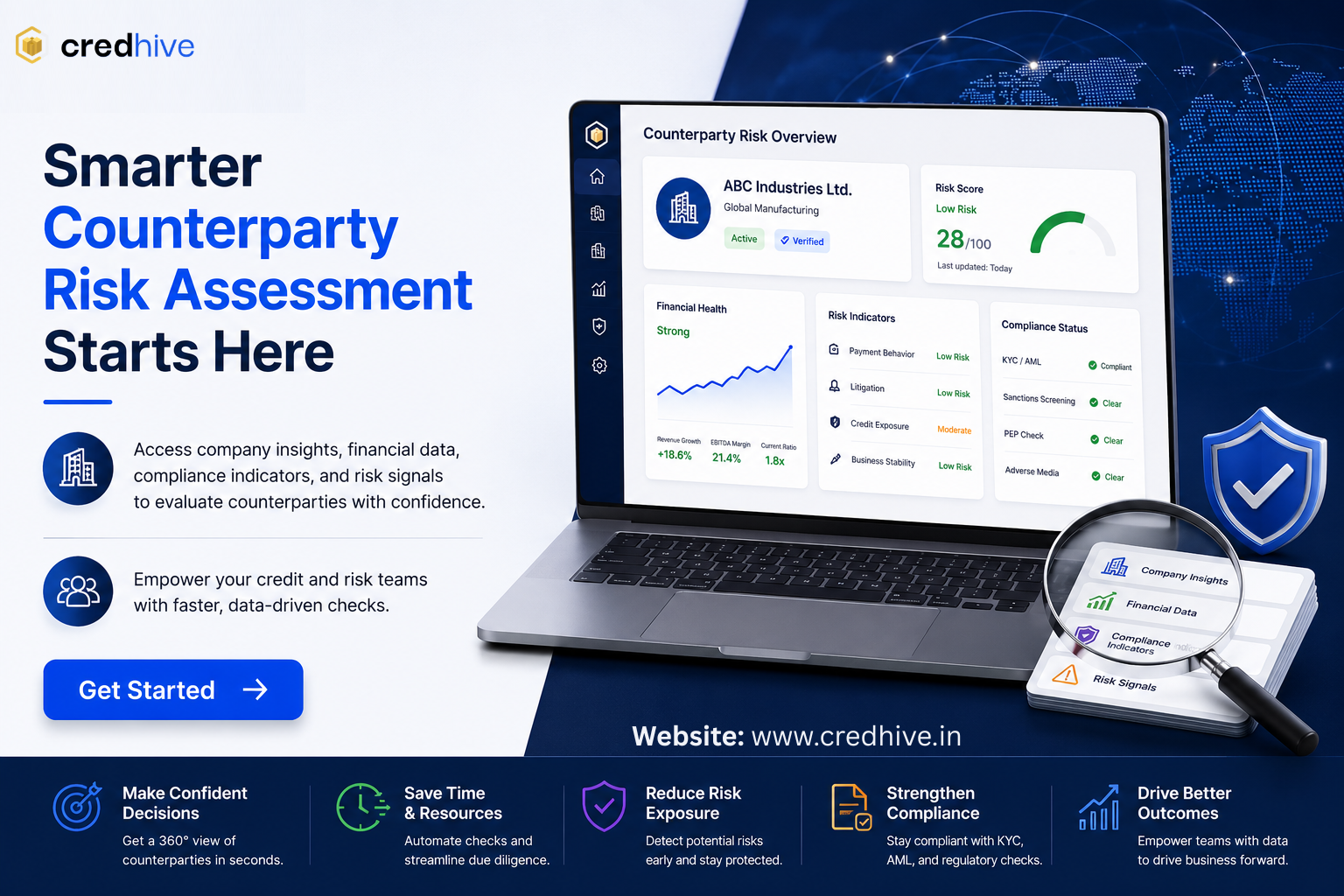
Effective vendor risk assessment requires verified data, continuous monitoring, and intelligent risk analysis. Credhive offers an AI-powered Risk Intelligence platform that enables banks, NBFCs, fintech companies, manufacturers, procurement teams, and enterprises to evaluate vendors with confidence. Through its advanced Credit Decision Engine, Business Information Reports, Portfolio Monitoring, Vendor Risk Assessment tools, Early Warning Signals, MCA filings, GST data, financial statements, litigation records, compliance insights, and director linkages, Credhive provides a comprehensive view of supplier health. Its predictive analytics, automated alerts, and real-time monitoring help organizations reduce vendor risk, strengthen procurement decisions, improve regulatory compliance, and build more resilient supply chains.
Best Practices for Effective Vendor Risk Assessment
Verify Business Information
Use trusted sources to validate company registration, financial records, and compliance status.
Perform Regular Reviews
Assess vendor performance periodically rather than only during onboarding.
Monitor High-Risk Vendors Continuously
Track financial changes, litigation, compliance issues, and operational risks in real time.
Standardize Risk Evaluation
Use consistent scoring criteria across all vendors.
Leverage AI-Powered Insights
Adopt predictive analytics and automation to identify emerging supplier risks early.
Conclusion
Vendor risk assessment is an essential process for organizations seeking to build secure, reliable, and resilient supply chains. By evaluating supplier financial health, operational capability, legal compliance, and business stability, companies can reduce procurement risks and make better business decisions.
Modern AI-powered vendor risk assessment platforms provide real-time monitoring, predictive analytics, and automated risk intelligence that significantly improve traditional supplier evaluations. Businesses that invest in intelligent vendor risk assessment solutions are better positioned to strengthen supplier relationships, reduce financial and operational risks, improve compliance, and support sustainable long-term growth.

 English
 Arabic
 French
 Spanish
 Portuguese
 Deutsch
 Turkish
 Dutch
Dutch
 Russian
 Romaian
 Portuguese (Brazil)
 Greek
Greek