


Local SEO Checklist: How to Dominate "Near Me" Searches
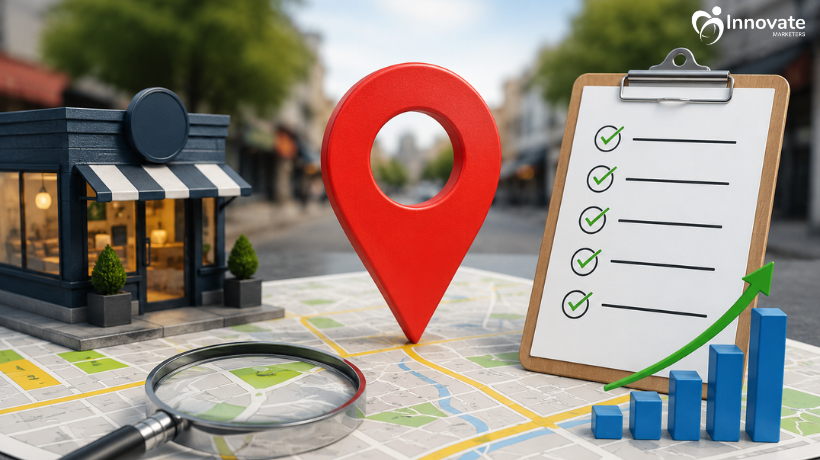
If you run a business with a physical location or a defined service area, "near me" searches are some of the most valuable traffic you can capture. These searches come from people who are ready to buy, book, or visit — today. Winning that visibility isn't about luck; it's about following a proven local SEO checklist consistently.
Below is a complete, actionable checklist to help your business dominate "near me" results in 2026. If managing all of this feels overwhelming, partnering with a professional SEO Service can help you execute this checklist correctly and consistently, without pulling your team away from day-to-day operations.
Why "Near Me" Searches Matter So Much
"Near me" searches have exploded over the past several years, driven by mobile usage and voice search. When someone types "coffee shop near me" or asks a smart assistant "where's the nearest plumber," Google relies on a mix of relevance, distance, and prominence to decide who shows up. Businesses that optimize for these factors consistently outrank competitors who ignore local SEO altogether.
The good news: local SEO is one of the most controllable areas of digital marketing. Unlike broad national SEO, where you're competing against thousands of websites, local SEO gives smaller businesses a real chance to rank at the top — even against larger competitors — simply by being more relevant and better optimized for their specific area.
1. Claim and Optimize Your Google Business Profile
Your Google Business Profile (formerly Google My Business) is the single most important asset for local visibility. Make sure you:
-
Claim and verify your listing
-
Use your exact business name (no keyword stuffing)
-
Select accurate primary and secondary categories
-
Add complete address, phone number, and service area details
-
Upload high-quality photos regularly
-
Write a keyword-rich but natural business description
-
Keep hours updated, including holiday hours
An optimized profile is often the deciding factor in whether you appear in the coveted "Local 3-Pack" at the top of search results.
2. Ensure NAP Consistency Everywhere
NAP stands for Name, Address, and Phone number. Google cross-checks this information across the web to validate your business's legitimacy. Inconsistent NAP data — even small differences like "St." vs. "Street" — can hurt your rankings.
Audit your NAP across:
-
Your website
-
Google Business Profile
-
Social media profiles
-
Online directories (Yelp, Bing Places, Apple Maps)
-
Industry-specific citation sites
3. Build Local Citations and Directory Listings
Citations are mentions of your business on other websites, even without a link. The more consistent, high-quality citations you have, the more Google trusts your business's location and legitimacy. Focus on:
-
General directories (Yelp, Yellow Pages, BBB)
-
Industry-specific directories
-
Local chamber of commerce and community sites
4. Optimize Your Website for Local Keywords
Your website needs to speak the same language as your customers' searches. This means incorporating location-based keywords naturally throughout your site:
-
Include city/neighborhood names in title tags and headers
-
Create dedicated location pages if you serve multiple areas
-
Add local keywords to meta descriptions and image alt text
-
Mention nearby landmarks or service areas in your content
This is also where working with an experienced SEO Service pays off — proper keyword mapping and on-page optimization require ongoing research and testing to stay ahead of algorithm changes.
5. Earn and Manage Customer Reviews
Reviews are a major local ranking factor and directly influence whether searchers choose your business over a competitor. Prioritize:
-
Actively requesting reviews from happy customers
-
Responding to every review, positive or negative
-
Using keywords naturally in your responses when appropriate
-
Monitoring review platforms beyond just Google (Facebook, industry-specific sites)
A steady stream of recent, positive reviews signals to both Google and potential customers that your business is active, trustworthy, and worth choosing.
6. Create Location-Specific Content
Publishing content tailored to your local audience helps establish relevance and authority. Consider:
-
Blog posts about local events, news, or community involvement
-
Case studies or testimonials from local clients
-
Guides related to your industry that reference your service area
This kind of content naturally attracts local backlinks and social shares, both of which reinforce your local relevance.
7. Optimize for Mobile and Voice Search
Most "near me" searches happen on mobile devices, and many are voice-activated. Make sure your site:
-
Loads quickly on mobile (aim for under 3 seconds)
-
Has a responsive, easy-to-navigate design
-
Uses natural, conversational language that matches voice queries
-
Includes clear calls-to-action like "call now" or "get directions"
8. Build Local Backlinks
Backlinks from other local businesses, news outlets, or community organizations strengthen your site's authority in a specific geographic area. Look for opportunities such as:
-
Sponsoring local events or charities
-
Partnering with complementary local businesses
-
Getting featured in local news or blogs
-
Joining local business associations
9. Use Schema Markup
Structured data (schema markup) helps search engines understand your business information more precisely. Implementing LocalBusiness schema can improve how your listing appears in search results, including rich snippets that show ratings, hours, and address directly in the SERP.
10. Track, Measure, and Adjust
Local SEO isn't a one-time project — it requires ongoing monitoring. Track:
-
Local keyword rankings
-
Google Business Profile insights (calls, direction requests, clicks)
-
Website traffic from local search
-
Conversion rates from local visitors
Regular audits help you spot opportunities and fix issues before they impact your visibility.
Final Thoughts
Dominating "near me" searches takes a coordinated strategy across your Google Business Profile, website, citations, reviews, and content. Each element reinforces the others, and consistency over time is what separates businesses that dominate local search from those that get left behind.
If you'd rather focus on running your business while experts handle the technical details, an experienced SEO Service can implement and manage this entire checklist for you — helping you capture more local customers without the guesswork.

 English
 Arabic
 French
 Spanish
 Deutsch
 Turkish
 Dutch
Dutch
 Italiano
 Russian
 Romaian
 Portuguese (Brazil)
 Greek
Greek