


Quality Control Strategies That Reduce Rework and Project Costs
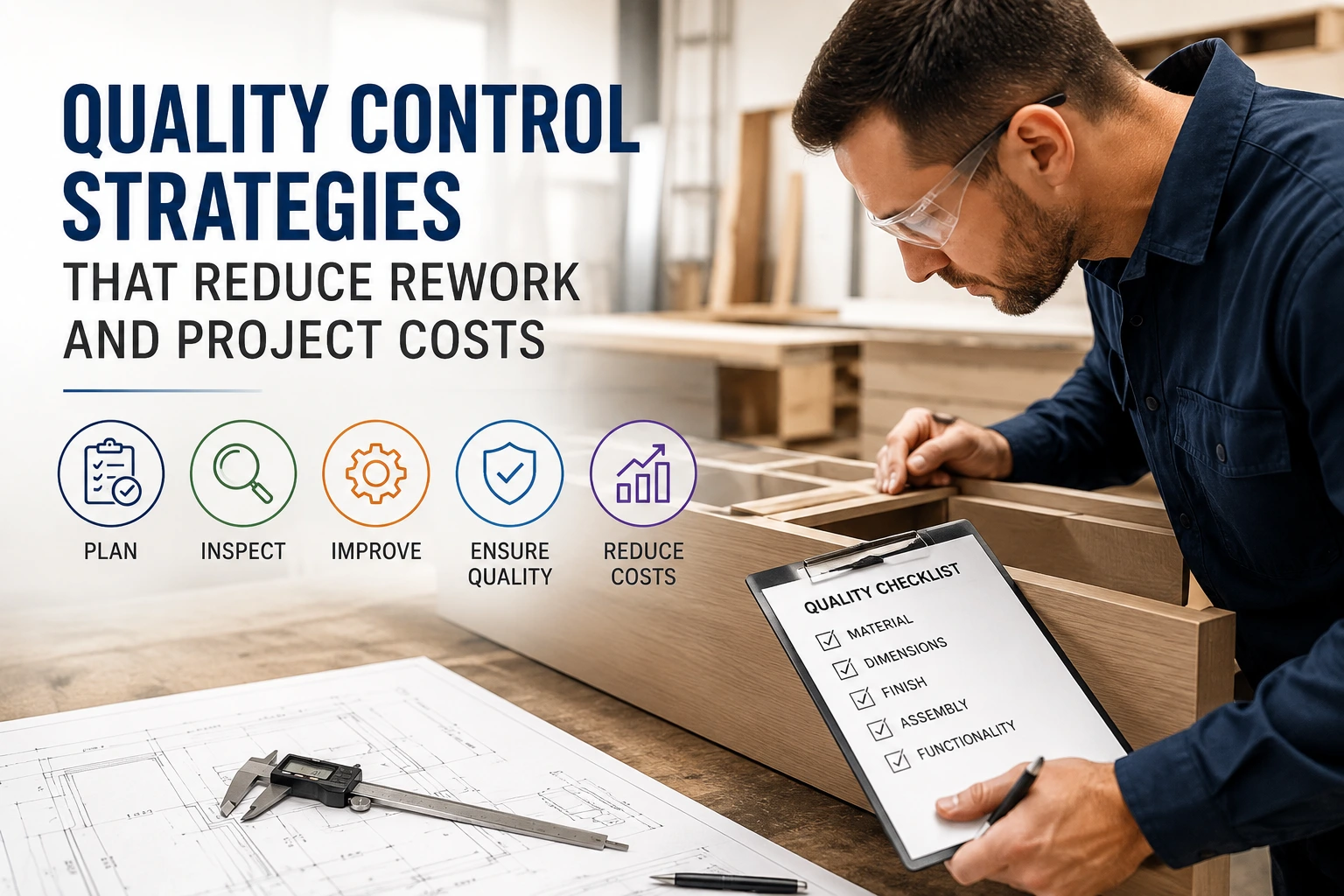
In construction and manufacturing, every mistake has a price. A misplaced measurement, an overlooked specification, or poor communication between teams can quickly turn into expensive rework, project delays, and dissatisfied clients. That's why quality control is no longer just a final inspection—it has become an ongoing process that influences every phase of a project.
By implementing the right quality control strategies, businesses can improve productivity, minimize waste, and protect their profit margins. Whether you're managing commercial construction, custom fabrication, or interior fit-outs, proactive quality management helps deliver projects on time and within budget.
Why Quality Control Matters
Quality control ensures that work meets project specifications, industry standards, and customer expectations before problems become costly. Rather than fixing mistakes after installation or production, quality-focused teams identify potential issues early.
The benefits include:
- Lower labor costs from fewer repairs
- Reduced material waste
- Improved project schedules
- Better customer satisfaction
- Stronger company reputation
- Increased profitability
Industry research consistently shows that early error detection costs significantly less than correcting problems during fabrication or after installation. Investing in preventive quality measures pays dividends throughout the project lifecycle.
Common Causes of Rework
Before improving quality, it's important to understand what typically causes rework.
Incomplete Design Documentation
Missing dimensions, unclear specifications, or inconsistent drawings leave room for interpretation, increasing the likelihood of fabrication or installation errors.
Poor Communication
Miscommunication between architects, designers, contractors, and fabricators often results in work being completed incorrectly.
Inadequate Inspections
Waiting until the end of a project to inspect quality allows small mistakes to become expensive problems.
Last-Minute Design Changes
Frequent revisions without proper documentation create confusion and increase the risk of outdated information reaching production teams.
Quality Control Strategies That Make a Difference
1. Establish Clear Quality Standards
Every project should begin with documented quality expectations. These standards should include:
- Material specifications
- Dimensional tolerances
- Installation requirements
- Industry compliance standards
- Inspection procedures
Clear expectations eliminate ambiguity and provide measurable benchmarks throughout the project.
2. Improve Documentation Accuracy
Accurate documentation is the foundation of successful project execution. Detailed drawings, coordinated plans, and comprehensive specifications help every stakeholder understand exactly what needs to be built.
Many firms strengthen this process by working with professional <a href="https://shalindesigns.com/architectural-millwork-design-and-drafting-services/">architectural millwork services</a> that produce detailed drafting packages, reducing inconsistencies before fabrication begins. Well-prepared shop drawings improve coordination between architects, contractors, and manufacturers, significantly reducing the likelihood of costly revisions. Accurate fabrication-ready documentation is widely recognized as one of the most effective ways to reduce RFIs, revisions, and production errors.
3. Conduct Quality Checks at Every Stage
Instead of relying on one final inspection, implement multiple checkpoints throughout the project.
For example:
Design Phase
- Verify drawings
- Review specifications
- Confirm measurements
Production Phase
- Inspect materials
- Check fabrication accuracy
- Validate dimensions
Installation Phase
- Confirm alignment
- Verify finishes
- Test functionality
Breaking inspections into stages makes it easier to identify and correct issues before they escalate.
4. Standardize Processes
Standard operating procedures (SOPs) help ensure consistency across projects.
Standardization may include:
- Inspection checklists
- Material handling procedures
- Documentation templates
- Approval workflows
- Installation guidelines
Consistent processes reduce human error and improve accountability.
5. Invest in Employee Training
Even the best quality management systems depend on skilled people.
Regular training should cover:
- Updated industry standards
- New construction techniques
- Equipment operation
- Quality inspection methods
- Safety procedures
Well-trained employees identify potential issues earlier and produce higher-quality work from the beginning.
6. Use Digital Project Management Tools
Modern construction teams increasingly rely on digital platforms to manage documentation and quality workflows.
These tools help by:
- Tracking revisions
- Managing inspections
- Sharing updated drawings
- Recording quality issues
- Monitoring corrective actions
Having one centralized source of project information reduces confusion and minimizes costly communication errors.
7. Encourage Early Collaboration
Projects perform better when architects, engineers, fabricators, and installers communicate early.
Collaborative planning helps:
- Resolve design conflicts
- Clarify specifications
- Coordinate schedules
- Prevent fabrication errors
The earlier issues are discovered, the less expensive they are to resolve.
Measuring Quality Control Success
Quality initiatives should be evaluated using measurable performance indicators.
Useful metrics include:
- Rework percentage
- Material waste
- Inspection pass rates
- Number of RFIs
- Change order frequency
- Schedule adherence
- Customer satisfaction
Tracking these indicators helps organizations continuously improve their processes.
The Financial Impact of Better Quality Control
Reducing rework has a direct impact on project profitability.
Organizations that strengthen quality control often experience:
- Lower labor expenses
- Reduced material consumption
- Faster project completion
- Improved resource utilization
- Higher client retention
Instead of spending money fixing preventable mistakes, businesses can invest those resources into growth and innovation.
Building a Culture of Quality
Successful quality control isn't simply a checklist—it's a mindset embraced by every member of the project team.
Leadership should encourage:
- Open communication
- Continuous improvement
- Accountability
- Preventive problem-solving
- Knowledge sharing
When quality becomes part of daily operations rather than an afterthought, projects become more predictable, efficient, and profitable.
Conclusion
Rework remains one of the biggest hidden costs in construction and manufacturing, but it is largely preventable with the right quality control strategies. Clear documentation, standardized processes, regular inspections, skilled personnel, and early collaboration all contribute to smoother project execution and lower overall costs.
Organizations that prioritize quality from planning through installation not only reduce costly errors but also strengthen client relationships and improve long-term business performance. By focusing on prevention instead of correction, companies can consistently deliver projects that meet expectations while protecting both schedules and budgets.

 English
 Arabic
 French
 Spanish
 Deutsch
 Turkish
 Dutch
Dutch
 Italiano
 Russian
 Romaian
 Portuguese (Brazil)
 Greek
Greek