


The Ultimate Blueprint: Engine Cleaner and Degreaser Formulation Manufacturing Guide
The automotive and industrial maintenance sector is experiencing unprecedented growth. Among all the maintenance chemicals on the market, heavy-duty engine cleaners and degreasers remain the highest in demand. From professional auto detailing shops to industrial manufacturing plants, there is a constant need for chemical formulas that can strip away baked-on grease, road grime, and carbon deposits without destroying the underlying surfaces.
If you are a chemical manufacturer, startup entrepreneur, or blending professional looking to enter this profitable niche, you cannot rely on guesswork. Succeeding in this industry requires a highly structured Engine Cleaner and Degreaser Formulation Manufacturing Guide.
Let’s dive into the science of what makes a high-performance industrial degreaser and how you can manufacture a market-ready product.
The Anatomy of a Powerful Engine Degreaser
An effective engine cleaner does not rely on a single aggressive ingredient. Instead, it is a finely balanced system where multiple chemical agents work synergistically. A professional manufacturing setup focuses on blending four primary chemical pillars:
1. Advanced Surfactant Systems
Surfactants reduce surface tension, allowing the cleaning solution to wet the surface completely and penetrate microscopic layers of dirt. Professional formulations typically blend anionic surfactants (like LABSA or SLES) for high-foaming action with non-ionic surfactants (like alcohol ethoxylates) for superior emulsification of heavy grease.
2. High-Solvency Organic Solvents
Water alone cannot dissolve petroleum-based sludge. Industrial degreasers use targeted organic solvents—ranging from traditional aliphatic hydrocarbons to modern, eco-friendly citrus-based terpenes (D-Limonene)—to chemically break down oil structures so they can be easily rinsed away.
3. Alkaline Builders
Alkaline agents like caustic soda or silicates raise the pH level of the solution. High pH values are vital for saponifying grease and breaking the bond between heavy carbon deposits and metal engine blocks.
4. Emulsifiers and Stabilizers
Once the grease is broken down, emulsifiers ensure it remains suspended in the water mixture. This prevents the oil from re-depositing onto the clean engine surfaces during the rinsing process.
Challenges in Commercial Manufacturing
When scaling from a laboratory sample to a mass-production batch (like a 100 kg or 1,000 kg blend), manufacturers face critical formulation hurdles:
-
Phase Separation: Combining heavy oils, solvents, and water-based surfactants frequently leads to separation if the emulsification system isn't precisely calculated.
-
Corrosion Control: High-alkaline cleaners can discolor or corrode aluminum engine components if appropriate corrosion inhibitors (like metal silicates) are omitted.
-
Regulatory Compliance: Modern industrial sectors require biodegradable profiles, specific VOC limits, and predictable flashpoints for safety.
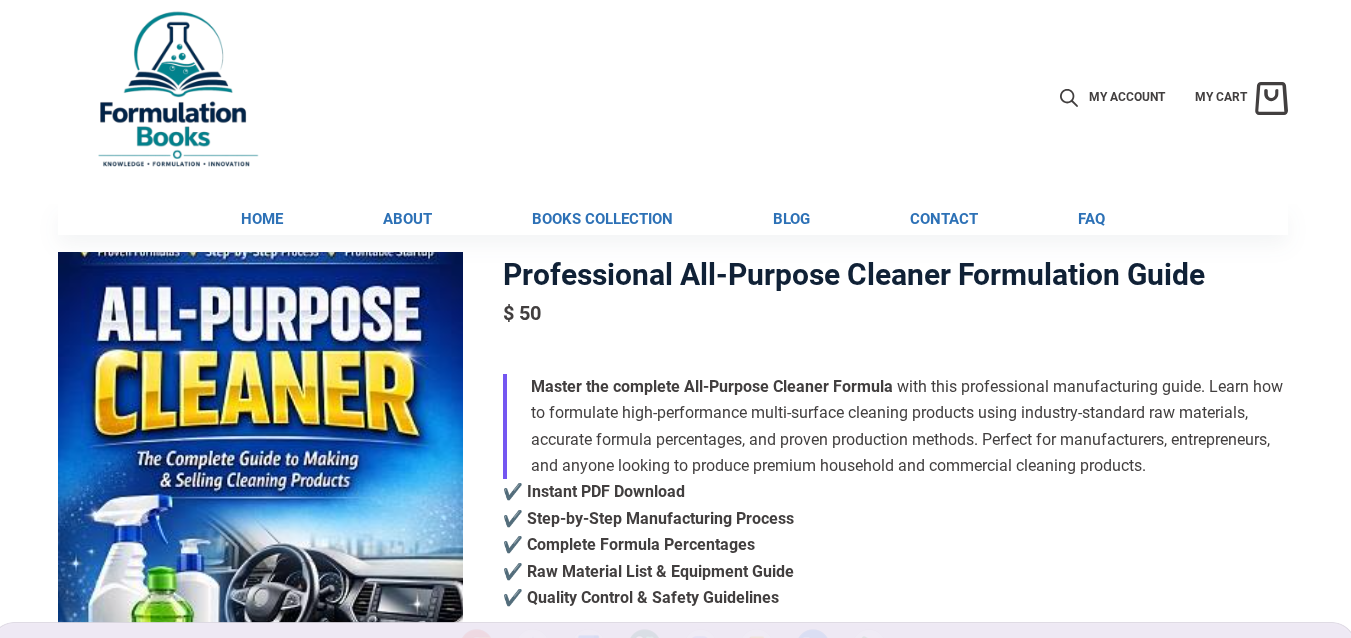
To bypass these trial-and-error roadblocks, utilizing field-tested industrial master formulas is highly recommended. For an all-encompassing resource on compounding commercial-grade chemical solutions across multiple categories, referencing a comprehensive is an invaluable asset for your production lab.
5 Steps to Successfully Launching Your Cleaning Product
If your goal is commercial manufacturing, follow this roadmap to ensure market success:
-
Define Your Target Market: Decide whether you are manufacturing a ready-to-use (RTU) spray for consumer auto care or a highly concentrated water-dilutable formula for industrial plants.
-
Secure Raw Materials: Partner with reliable chemical distributors to source high-purity surfactants, builders, and chelating agents.
-
Optimize Blending Sequences: Always follow precise addition sequences (e.g., neutralizing acids, adding stabilizers, and dissolving builders at correct temperatures) to ensure absolute stability.
-
Conduct Performance Testing: Test your product against real-world mechanical soils, measuring parameters like rinseability, foam stability, and degreasing speed.
-
Standardize Safety Protocols: Engine cleaners require strict safety compliance. Ensure your packaging features clear safety data sheets (SDS), safety handling directions, and correct PPE warnings.
Final Thoughts
Entering the chemical manufacturing space requires technical accuracy, but the financial rewards are immense. By establishing a rigorous Engine Cleaner and Degreaser Formulation Manufacturing Guide within your production facility, you guarantee batch consistency, unmatched quality, and excellent performance that keeps industrial clients coming back.
Investing in proven, professional blending guidelines is the fastest way to save thousands on wasted raw materials and accelerate your path to market profitability. Ready to scale your blending operation? Start with verified formulations today!

 English
 Arabic
 Spanish
 Portuguese
 Deutsch
 Turkish
 Dutch
Dutch
 Italiano
 Russian
 Romaian
 Portuguese (Brazil)
 Greek
Greek