


Engine Cleaner and Degreaser Formulation Manufacturing Guide
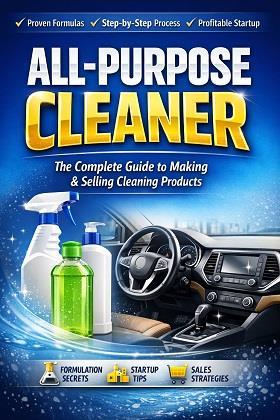
Engine cleaning products play a vital role in the automotive maintenance industry. Over time, vehicle engines accumulate grease, lubricants, dust, fuel residue, coolant stains, and carbon deposits that can affect both appearance and maintenance efficiency. While ordinary cleaners may remove light dirt, they are often ineffective against heavy oil and grease. This is why manufacturers develop specialized engine cleaners and degreasers using carefully balanced chemical formulations. If you are interested in producing high-quality automotive cleaning products, the Engine Cleaner and Degreaser Formulation Manufacturing Guide is an excellent resource for understanding formulation techniques, ingredient selection, and manufacturing processes.
What Is an Engine Cleaner and Degreaser?
An engine cleaner and degreaser is a specially formulated chemical product designed to remove stubborn grease, engine oil, grime, and other contaminants from engine compartments and mechanical equipment. These products are widely used in automotive workshops, detailing centers, service stations, and industrial maintenance facilities because they provide fast and effective cleaning without excessive manual scrubbing.
A quality engine cleaner is formulated to clean efficiently while remaining compatible with common engine materials such as aluminum, steel, painted surfaces, rubber hoses, and plastic covers.
Why Is a Formulation Guide Important?
Manufacturing an effective cleaning product requires more than mixing a few chemicals together. Every ingredient must perform a specific function while remaining compatible with the rest of the formulation. An unbalanced formula may separate during storage, leave unwanted residues, or fail to remove grease effectively.
A professional formulation guide helps manufacturers understand:
-
Raw material selection
-
Ingredient compatibility
-
Mixing procedures
-
Product stability
-
Performance testing
-
Manufacturing safety
-
Packaging recommendations
-
Quality control methods
This technical knowledge reduces development time and increases the likelihood of producing a successful commercial product.
How Does an Engine Degreaser Work?
Engine degreasers work by breaking down heavy oil and grease so they can be rinsed or wiped away. Specialized surfactants and solvents penetrate stubborn deposits, allowing contaminants to lift away from metal and plastic surfaces.
A professional formulation often contains:
-
Surfactants
-
Solvent systems
-
Emulsifiers
-
Corrosion inhibitors
-
Foam control agents
-
pH regulators
-
Preservatives
-
Fragrance additives
When properly combined, these ingredients create a cleaner that delivers strong degreasing performance without damaging engine components.
Where Are Engine Cleaners Used?
Professional engine cleaners have applications far beyond personal vehicles. They are used anywhere machinery and engines require regular maintenance.
Common industries include:
-
Automotive detailing
-
Vehicle repair workshops
-
Commercial fleet maintenance
-
Heavy equipment servicing
-
Agricultural machinery maintenance
-
Construction equipment cleaning
-
Marine engine maintenance
-
Manufacturing facilities
-
Industrial maintenance departments
-
Equipment rental companies
Keeping engines clean improves maintenance efficiency and helps technicians identify leaks, worn components, and other mechanical issues more easily.
Benefits of Professional Formulations
A properly developed engine cleaner offers several advantages over basic cleaning products. Manufacturers that invest in professional formulations can produce products with improved performance and greater customer satisfaction.
Major benefits include:
-
Powerful grease removal
-
Fast cleaning action
-
Reduced manual effort
-
Excellent material compatibility
-
Stable shelf life
-
Consistent cleaning performance
-
Professional-quality results
-
Increased product reliability
These characteristics make high-quality engine cleaners valuable for both commercial and consumer markets.
Manufacturing Best Practices
Successful automotive chemical production requires attention to detail throughout the manufacturing process.
Recommended practices include:
-
Choosing high-quality raw materials.
-
Measuring ingredients accurately.
-
Following the correct mixing sequence.
-
Monitoring product pH.
-
Conducting stability testing.
-
Evaluating cleaning efficiency.
-
Testing compatibility on multiple surfaces.
-
Performing quality inspections before packaging.
Consistent manufacturing procedures help ensure every batch meets the desired quality standards.
Who Should Use This Guide?
The formulation manufacturing guide is suitable for professionals working in automotive chemical production, including:
-
Chemical manufacturers
-
Product development laboratories
-
Auto detailing brands
-
Startup businesses
-
Industrial formulators
-
Car care product suppliers
-
Technical consultants
-
Research and development teams
Whether producing products for local markets or large-scale commercial distribution, the guide provides valuable information that supports successful product development.
Conclusion
Manufacturing a reliable engine cleaner and degreaser requires scientific knowledge, carefully selected ingredients, and proven formulation methods. A professional formulation guide provides the technical foundation needed to create products that effectively remove grease while protecting engine components from unnecessary damage. By understanding formulation chemistry, quality control, and production techniques, manufacturers can develop high-performance automotive cleaning products that meet industry standards and satisfy customer expectations. Investing in the right formulation knowledge is an important step toward building a successful automotive chemical business.

 English
 Arabic
 French
 Spanish
 Portuguese
 Deutsch
 Dutch
Dutch
 Italiano
 Russian
 Romaian
 Portuguese (Brazil)
 Greek
Greek