


What Is Einstein's IQ? Exploring the Genius Behind the Theory of Relativity
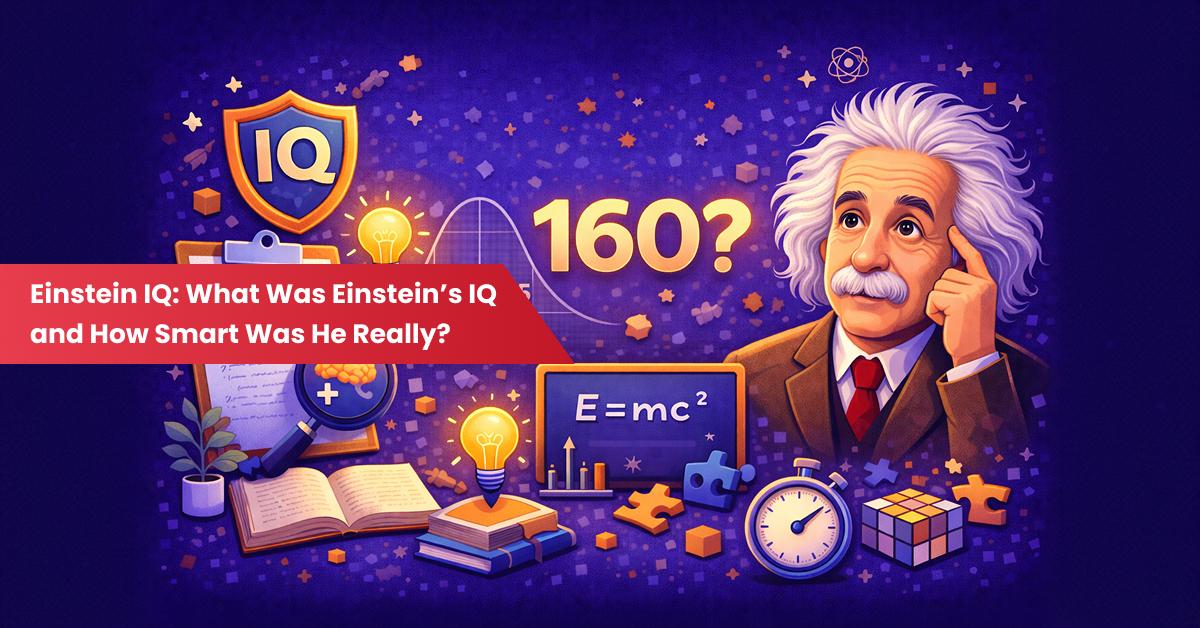
Few names are as closely associated with intelligence as Albert Einstein. His groundbreaking discoveries transformed modern physics and changed the way humanity understands space, time, gravity, and the universe itself. Because of his extraordinary achievements, many people ask the same question: what is Einstein's IQ?
The truth is more fascinating than many expect. Although Einstein is widely regarded as one of the greatest scientific minds in history, there is no official record of his IQ score. Instead, historians and researchers have estimated what his IQ might have been based on his accomplishments, reasoning ability, and contributions to science.
In this article, we will explore what is Einstein's IQ, why there is no verified score, how experts estimate his intelligence, and why his genius extended far beyond a simple number.
Who Was Albert Einstein?
Albert Einstein was a theoretical physicist born in Germany in 1879. He became one of the most influential scientists of all time after developing the Theory of Relativity, which revolutionized physics and reshaped scientific thinking.
Einstein also made significant contributions to quantum theory, statistical mechanics, and cosmology. In 1921, he received the Nobel Prize in Physics for explaining the photoelectric effect, an achievement that helped lay the foundation for modern quantum mechanics.
Today, Einstein's name has become synonymous with brilliance, making it natural for people to wonder about his intelligence quotient.
What Is IQ?
Before answering what is Einstein's IQ, it is important to understand what IQ actually measures.
IQ stands for Intelligence Quotient. It is a standardized score designed to estimate cognitive abilities compared to the general population. Modern IQ tests typically evaluate several areas, including:
-
Logical reasoning
-
Mathematical thinking
-
Pattern recognition
-
Verbal comprehension
-
Working memory
-
Processing speed
-
Spatial reasoning
Most IQ tests are designed so that the average score is 100. Scores above 130 are generally considered gifted, while scores above 145 are exceptionally rare.
Although IQ provides useful information about certain cognitive abilities, it does not measure creativity, emotional intelligence, leadership, artistic talent, or wisdom.
What Is Einstein's IQ?
The simple answer is that nobody knows with certainty.
Albert Einstein never took a modern standardized IQ test, and there is no documented IQ score from his lifetime.
Despite countless websites claiming that Einstein had an IQ of 160 or 180, there is no historical evidence supporting these exact figures.
Instead, experts estimate his IQ based on his scientific achievements and intellectual abilities.
Most estimates place Einstein's IQ somewhere between 160 and 190, although these numbers remain educated guesses rather than verified facts.
Because he was never formally tested, any published IQ score should be viewed as speculation.
Why There Is No Official IQ Score
Many people assume famous historical figures were tested, but standardized IQ testing was still developing during Einstein's early career.
Modern intelligence testing became more refined during the twentieth century, but Einstein never completed one of today's professionally validated assessments.
As a result, historians rely on indirect evidence, including:
-
His academic achievements
-
His scientific discoveries
-
His mathematical reasoning
-
His problem-solving ability
-
His original thinking
-
His published research
These accomplishments strongly suggest exceptional intelligence, but they cannot produce an exact IQ number.
Why Experts Estimate Einstein's IQ Above 160
Several factors explain why researchers believe Einstein's intelligence was extraordinarily high.
Revolutionary Thinking
Einstein did not simply solve existing scientific problems.
He fundamentally changed the questions scientists were asking.
His Theory of Special Relativity challenged long-standing assumptions about space and time.
Later, General Relativity completely transformed humanity's understanding of gravity.
Developing ideas that reshape an entire scientific discipline requires exceptional reasoning abilities.
Exceptional Mathematical Ability
Although Einstein often collaborated with mathematicians, his ability to apply advanced mathematics to physical problems was remarkable.
He combined mathematical reasoning with physical intuition in ways few scientists had ever achieved.
Creative Problem Solving
One reason Einstein stands apart from many brilliant scientists is his creativity.
He frequently used thought experiments instead of laboratory experiments.
For example, he imagined riding alongside a beam of light to explore how light behaves.
These imaginative exercises eventually led to revolutionary scientific discoveries.
Creativity is not directly measured by IQ tests, yet it played a major role in Einstein's success.
Lifelong Curiosity
Einstein remained intensely curious throughout his life.
Rather than accepting conventional explanations, he constantly questioned accepted scientific ideas.
This willingness to challenge established thinking contributed significantly to his groundbreaking work.
Did Einstein Consider IQ Important?
Interestingly, Einstein himself placed little emphasis on intelligence scores.
He believed imagination, curiosity, persistence, and independent thinking were often more valuable than memorization or academic performance.
One of his most famous observations reflects this philosophy:
"Imagination is more important than knowledge."
This statement highlights his belief that creativity drives discovery.
Although IQ measures reasoning ability, imagination often determines how those abilities are applied.
Einstein Was Not a Perfect Student
A common myth claims Einstein struggled badly in school.
This story is largely inaccurate.
Einstein performed well in mathematics and physics from a young age.
However, he sometimes disagreed with teachers because he disliked rigid educational systems and preferred independent learning.
His academic record shows strong performance in subjects that interested him.
The myth probably survives because it creates an inspiring story about overcoming obstacles.
While Einstein certainly faced challenges, he demonstrated remarkable intellectual ability throughout his education.
Comparing Einstein's Estimated IQ With Other Famous Figures
Since what is einstein's iq remains an estimate, comparisons are also speculative.
Common estimated IQ ranges include:
-
Albert Einstein: 160 to 190
-
Isaac Newton: 190
-
Leonardo da Vinci: 180 to 220
-
Nikola Tesla: 160 to 310
-
Stephen Hawking: Around 160
It is important to remember that none of these historical estimates can be verified with certainty.
Many famous individuals never completed standardized IQ tests.
Therefore, these numbers should be viewed as approximations rather than established facts.
Does a High IQ Guarantee Success?
Einstein's life demonstrates that intelligence alone is not enough.
Many people with very high IQs never make revolutionary discoveries.
Success also depends on factors such as:
-
Curiosity
-
Motivation
-
Creativity
-
Persistence
-
Opportunity
-
Education
-
Collaboration
Einstein spent years refining his theories before they gained widespread acceptance.
His achievements required enormous dedication as well as exceptional intelligence.
What Made Einstein Different?
Several qualities distinguished Einstein from other highly intelligent individuals.
Independent Thinking
Einstein often questioned ideas that other scientists accepted without hesitation.
This independence allowed him to discover entirely new ways of understanding physical reality.
Deep Concentration
He was known for spending long periods thinking through difficult problems.
Complex scientific questions often require sustained focus rather than quick answers.
Intellectual Humility
Despite his fame, Einstein frequently admitted when he did not know something.
He welcomed discussion and debate because he valued learning more than appearing correct.
Passion for Discovery
Einstein pursued science because he genuinely enjoyed understanding nature.
His motivation came from curiosity rather than recognition.
This passion helped sustain decades of groundbreaking research.
Why People Continue Asking What Is Einstein's IQ
The question what is Einstein's IQ remains popular because Einstein has become a universal symbol of genius.
People often use his name to represent extraordinary intelligence.
Knowing his estimated IQ seems like an easy way to understand just how brilliant he was.
However, reducing Einstein's accomplishments to a single number overlooks the qualities that truly made him exceptional.
His imagination, creativity, perseverance, and willingness to challenge conventional thinking played just as important a role as raw intellectual ability.
Can Modern IQ Tests Measure Someone Like Einstein?
Modern IQ tests measure many aspects of reasoning and cognitive ability very well.
However, they cannot fully capture groundbreaking originality.
Einstein's greatest strength may not have been solving standard problems faster than others.
Instead, he excelled at creating entirely new ways of thinking about reality.
Scientific innovation often requires qualities beyond those measured by traditional IQ tests.
These include:
-
Creative insight
-
Scientific intuition
-
Intellectual courage
-
Long-term perseverance
-
Original problem formulation
These characteristics helped Einstein change the course of scientific history.
Final Thoughts
When asking what is Einstein's IQ, the most accurate answer is that no one knows for certain. Albert Einstein never completed a modern standardized IQ test, so there is no official score recorded in history. Most researchers estimate his IQ to have been between 160 and 190 based on his extraordinary scientific achievements, but these figures remain educated guesses rather than verified facts.
More importantly, Einstein's legacy reminds us that intelligence is far more than a number. His revolutionary ideas emerged from a combination of exceptional reasoning, relentless curiosity, creative imagination, and years of dedicated work. These qualities allowed him to reshape modern physics and leave an enduring impact on humanity's understanding of the universe.
Whether his IQ was 160, 180, or another value entirely, Einstein's true genius cannot be fully captured by a test score. His life demonstrates that curiosity, creativity, and persistence are just as essential as intellectual ability. That is why Albert Einstein continues to inspire scientists, students, and innovators around the world more than a century after his greatest discoveries.

 English
 Arabic
 French
 Spanish
 Portuguese
 Deutsch
 Turkish
 Dutch
Dutch
 Italiano
 Russian
 Romaian
 Greek
Greek