


Traumatic Brain Injury Care & Coma Nursing in Greater Noida & Dwarka
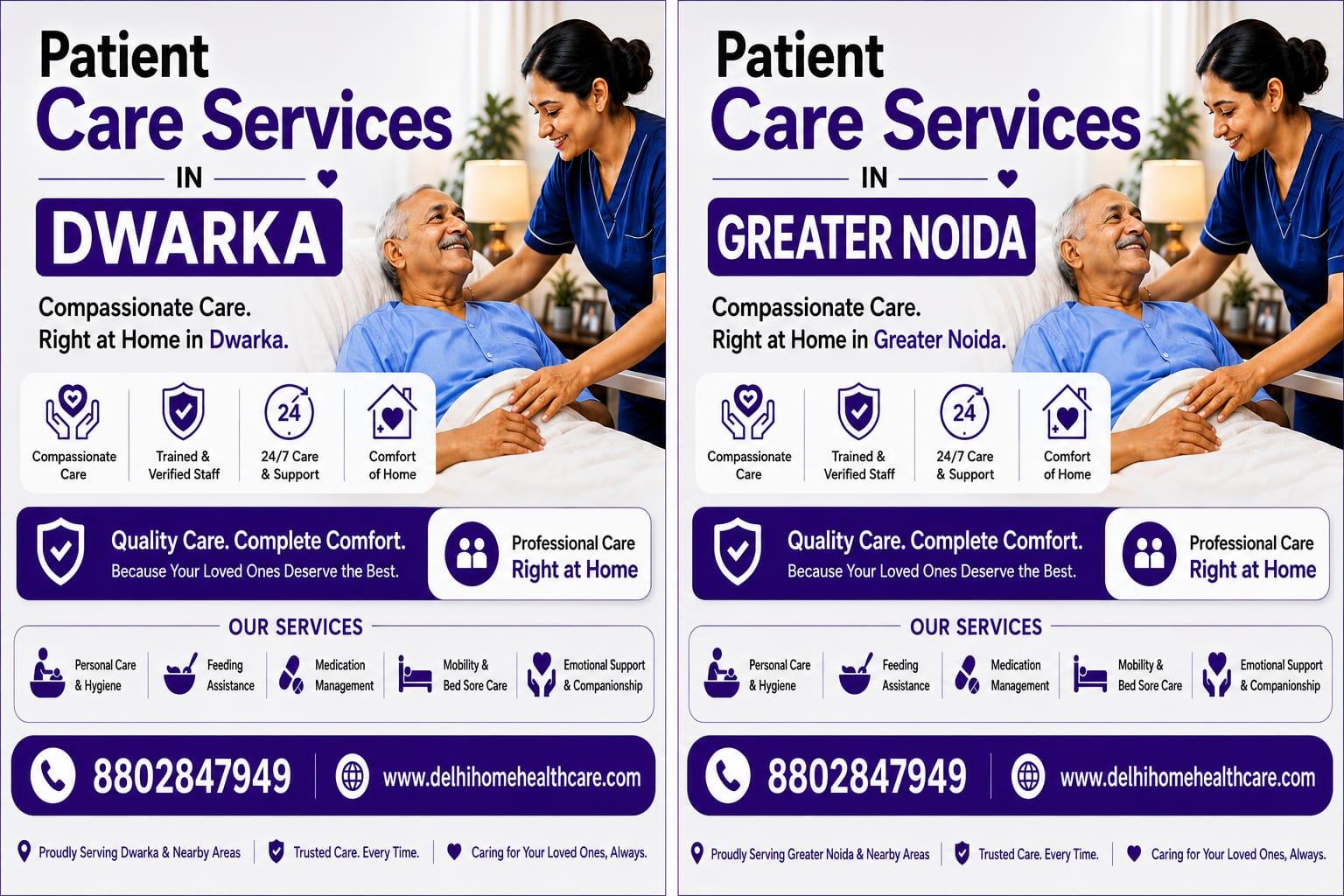
360° Comprehensive Traumatic Brain Injury (TBI) Rehabilitation, Semi-Comatose Care & Neuro-Nursing Manual for Greater Noida, Dwarka Delhi, and Delhi NCR
An exhaustive clinical, neurological, and operational nursing guide covering post-traumatic brain injury recovery, semi-comatose patient management, Glasgow Coma Scale (GCS) tracking, tracheostomy & enteral feeding care, passive joint mobilization, and 24/7 neuro-attendant services across Greater Noida, Dwarka Delhi, and the National Capital Region.
Table of Comprehensive Contents
- 1. The Spectrum of Traumatic Brain Injury & Long-Term Neurological Recovery
- 2. Clinical & Biological Advantages of In-Home Neuro-Rehabilitation
- 3. Specialized Care Tiers: From Glasgow Coma Monitoring to Functional Retraining
- 4. Essential Neuro-Nursing Protocols: Airway Clearance, Tube Care & Skin Safety
- 5. Regional Operational Focus: Greater Noida vs. Dwarka Delhi
- 6. TBI Caregiver Cost Structure & Financial Budgeting in Delhi NCR
- 7. Frequently Asked Questions (FAQs) & Agency Vetting Framework
1. The Spectrum of Traumatic Brain Injury & Long-Term Neurological Recovery
A Traumatic Brain Injury (TBI)—resulting from high-impact road traffic accidents, accidental falls, or sports-related cranial trauma—causes sudden disruptions to normal brain architecture and neural function. Depending on the force and location of impact, TBI ranges from moderate concussions to severe diffuse axonal injury, intracranial hemorrhage, or prolonged coma. Families face immense emotional, financial, and logistical stress when managing a relative recovering from brain trauma.
While neurosurgical interventions and acute intensive care unit (ICU) management stabilize primary intracranial pressures and brain swelling, true neuro-plastic recovery and physical retraining span several months. Prolonged hospital ICU stays after medical stabilization expose semi-comatose or tracheostomized TBI patients to institutional delirium, high daily bed charges, and multi-drug resistant hospital-acquired infections (HAIs).
Transitioning to a structured, clinical-grade home healthcare setup provides a quiet, sterile, and personalized recovery environment. Certified neuro-nurses and trained patient care attendants manage mechanical airways, track consciousness levels via the Glasgow Coma Scale (GCS), enforce strict infection control, and assist with passive physical therapy directly at the patient's bedside.
2. Clinical & Biological Advantages of In-Home Neuro-Rehabilitation
Managing a TBI or semi-comatose patient at home through professional nursing care offers vital medical, physiological, and emotional advantages:
Complete Elimination of Hospital Superbug Exposure
TBI patients with tracheostomy tubes, central lines, Foley catheters, or PEG feeding tubes are highly vulnerable to opportunistic hospital pathogens. A sanitized home setting drastically reduces risks of ventilator-associated pneumonia (VAP) and catheter-associated urinary tract infections (CAUTIs).
Enhanced Neuro-Plasticity in Familiar Domestic Surroundings
The human brain rewires damaged neural pathways more effectively when sensory stimulation comes from familiar family voices, ambient home sounds, and gentle touch. Restful home environments reduce agitation, lowers stress hormones, and support gradual cognitive awakening.
100% Undivided One-on-One Nursing Vigilance
Hospital floor or ICU nurses split duties among multiple complex beds. In a home care setup, a dedicated critical care GNM/B.Sc nurse focuses 100% of their working hours on a single patient, ensuring instant attention to airway blockages, sudden spikes in intracranial pressure, or fever episodes.
Substantial Financial Optimization for Long-Term Recovery
Maintaining a TBI patient in a tertiary hospital room for months can drain family savings. Establishing a clinical-grade home ICU package cuts daily expenses by up to 70% without compromising medical equipment quality or nursing oversight.
3. Specialized Care Tiers: From Glasgow Coma Monitoring to Functional Retraining
TBI home care plans are structured around the patient's consciousness level and motor impairment status:
3.1 Semi-Comatose & Low Glasgow Coma Scale (GCS) Nursing
For patients in vegetative states or minimally conscious states (GCS score 3 to 8), critical care nurses focus on baseline physiological stabilization:
- Continuous GCS Evaluation: Assessing Eye, Verbal, and Motor responses daily to detect subtle improvements or neurological deterioration.
- Airway & Suction Management: Maintaining clear breathing passages via sterile tracheal suctioning, nebulization, and oxygen delivery.
- Vital Sign Logging: Monitoring Blood Pressure, Pulse, SpO2, and temperature every 2 to 4 hours.
3.2 Agitated / Post-Traumatic Amnesia Stage Care
As TBI patients emerge from coma, they often experience severe confusion, agitation, disorientation, and restlessness. Caregivers handle this phase by keeping the environment quiet, enforcing soft limb restraints if prescribed to prevent tube dislodgement, and speaking in calm, reassuring tones.
3.3 Functional Motor Retraining & ADL Rehabilitation
For patients regaining motor consciousness, caregivers support physical therapy routines, walker-assisted gait training, range-of-motion joint exercises, and re-learning basic activities of daily living (ADLs) like swallowing and dressing.
4. Essential Neuro-Nursing Protocols: Airway Clearance, Tube Care & Skin Safety
Caring for a TBI patient requires disciplined clinical routines to prevent life-threatening secondary complications:
1. Tracheostomy Care & Sterile Airway Suctioning
Nurses perform shallow or deep tracheal suctioning using electric suction pumps to remove mucus plugs, clean inner cannulas daily, change holding ties safely, and monitor stoma sites for redness or infection.
2. Enteral Nutrition (Ryle's Tube / PEG Tube) Management
Administering prescribed high-protein liquid nutrition, checking tube placement before every feed, measuring gastric residual volumes, and flushing lines with sterile warm water to prevent clogs.
3. Pressure Sore (Bedsore) Prevention Protocol
Immobile TBI patients lack the ability to shift body weight. Caregivers enforce mandatory 2-hourly body turning schedules, manage alternating pressure air mattresses, keep skin dry, and apply zinc oxide barrier creams to bony prominences.
5. Regional Operational Focus: Greater Noida vs. Dwarka Delhi
Delivering prompt, reliable TBI home nursing across NCR’s vast residential sectors requires strong localized caregiver networks and fast response capabilities:
Reliable Brain Injury Care in Greater Noida
Greater Noida features wide residential sectors, independent villas, and large gated townships in Sector Alpha, Beta, Gamma, Delta, Omega, Zeta, Techzone, Pari Chowk, and Greater Noida West (Noida Extension). Multi-generational families in these spacious homes frequently require full-time live-in caretakers. Through specialized patient care services in greater noida provided by Delhi home healthcare services, families receive background-verified attendants and registered nurses who manage daily hygiene, tracheostomy care, and vital monitoring in close coordination with regional neurosurgical departments.
Dedicated Solutions in Dwarka, Delhi
Dwarka is one of Delhi's largest planned sub-cities, comprising Sectors 1 to 23, DDA societies, and luxury apartment complexes. Working professionals across Dwarka need dependable caregivers to assist brain injury patients without disrupting daily work routines. Through our specialized patient care services in dwarka delhi, we deploy flexible 12-hour day/night staff and 24-hour live-in caretakers to ensure continuous family peace of mind and professional support.
6. TBI Caregiver Cost Structure & Financial Budgeting in Delhi NCR
Transparent pricing helps families plan long-term neuro-rehabilitation with complete financial clarity. Below is an estimated rate overview across Greater Noida, Dwarka, and Delhi NCR:
| Service Category | Caregiver Scope & Skills | Shift Duration | Approximate Price Range (INR) |
|---|---|---|---|
| Non-Medical Neuro Attendant | Bathing, Diaper Change, 2-Hr Position Turning, Feeding Support | 12-Hour Shift | ₹800 – ₹1,200 per day |
| 24/7 Live-In Neuro Attendant | Round-the-clock ADL Care, Night Hygiene, Position Turning | 24-Hour Live-In | ₹22,000 – ₹32,000 per month |
| Semi-Trained ANM Nurse | Ryle's Tube Feeding, Oral Drugs, Basic Dressing, Vital Log | 12-Hour / 24-Hour | ₹1,400 – ₹2,200 per day |
| Registered GNM / B.Sc Critical Neuro Nurse | Tracheostomy Suctioning, GCS Tracking, Catheter Care, IV Lines | 12-Hour / 24-Hour | ₹1,800 – ₹3,500 per day |
7. Frequently Asked Questions (FAQs) & Agency Vetting Framework
Essential Vetting Checklist Before Hiring an Agency
- Mandatory Police & Background Check: Confirm that caregivers undergo complete Aadhaar verification, address checks, and local police clearance.
- Neuro-ICU Skill Matching: Ensure nurses have documented experience in managing tracheostomies, GCS tracking, and enteral feeding tubes.
- Uninterrupted Replacement Guarantee: Verify that the agency guarantees a qualified replacement caregiver within 2 to 4 hours if primary staff takes leave.
- Emergency Preparedness: Confirm that nurses are trained in BLS (Basic Life Support) and rapid emergency escalation.
Frequently Asked Questions (FAQs)
Q1. Can a semi-comatose TBI patient awaken and recover at home?
A: Yes. Neuroplasticity allows damaged brain circuits to form new neural connections over time. Consistent sensory input, dedicated neuro-nursing, and familiar family interactions significantly support cognitive awakening.
Q2. How quickly can a TBI nurse or caregiver be deployed in Greater Noida or Dwarka?
A: Verified patient care attendants or registered home nurses can typically be deployed to family residences within 4 to 8 hours of receiving an inquiry.
Q3. What is the role of a 24/7 live-in nurse for a brain injury patient?
A: A live-in nurse handles sterile airway suctioning, tube feedings, GCS evaluations, medication timing, position changes to prevent bedsores, catheter care, and emergency response.
Conclusion: Restoring Neurological Health, Dignity, and Peace of Mind at Home
Navigating traumatic brain injury recovery requires skilled clinical precision, continuous vigilance, and deep family support. By choosing professional home healthcare, you ensure that your loved one receives hospital-standard attention right in the warmth of home.
Whether you require patient care services in greater noida or trusted patient care services in dwarka delhi, professional home care delivers exact, dependable support. Connect with verified brain injury care experts today to arrange a personalized recovery plan.
Contact Delhi Home Healthcare Services
📞 Phone: 8802847949 / 7011181480
🌐 Website: https://delhihomehealthcare.com/
📍 Office Address: Block A, G001, Royal Avenue Apartment, Sarfabad, Sector 73, Noida, Uttar Pradesh 201307
📍 Our Services: Traumatic Brain Injury Care, Coma Patient Nursing, Neuro-Rehabilitation, Home Patient Care, Home Nursing, Elder Care, Patient Attendant Services, and 24×7 Home Healthcare Services across Delhi NCR, Greater Noida, and Dwarka.

 English
 Arabic
 French
 Spanish
 Portuguese
 Deutsch
 Dutch
Dutch
 Italiano
 Russian
 Romaian
 Portuguese (Brazil)
 Greek
Greek