


Accounts Receivable Outsourcing Firm: Building a More Efficient Payment Collection Process
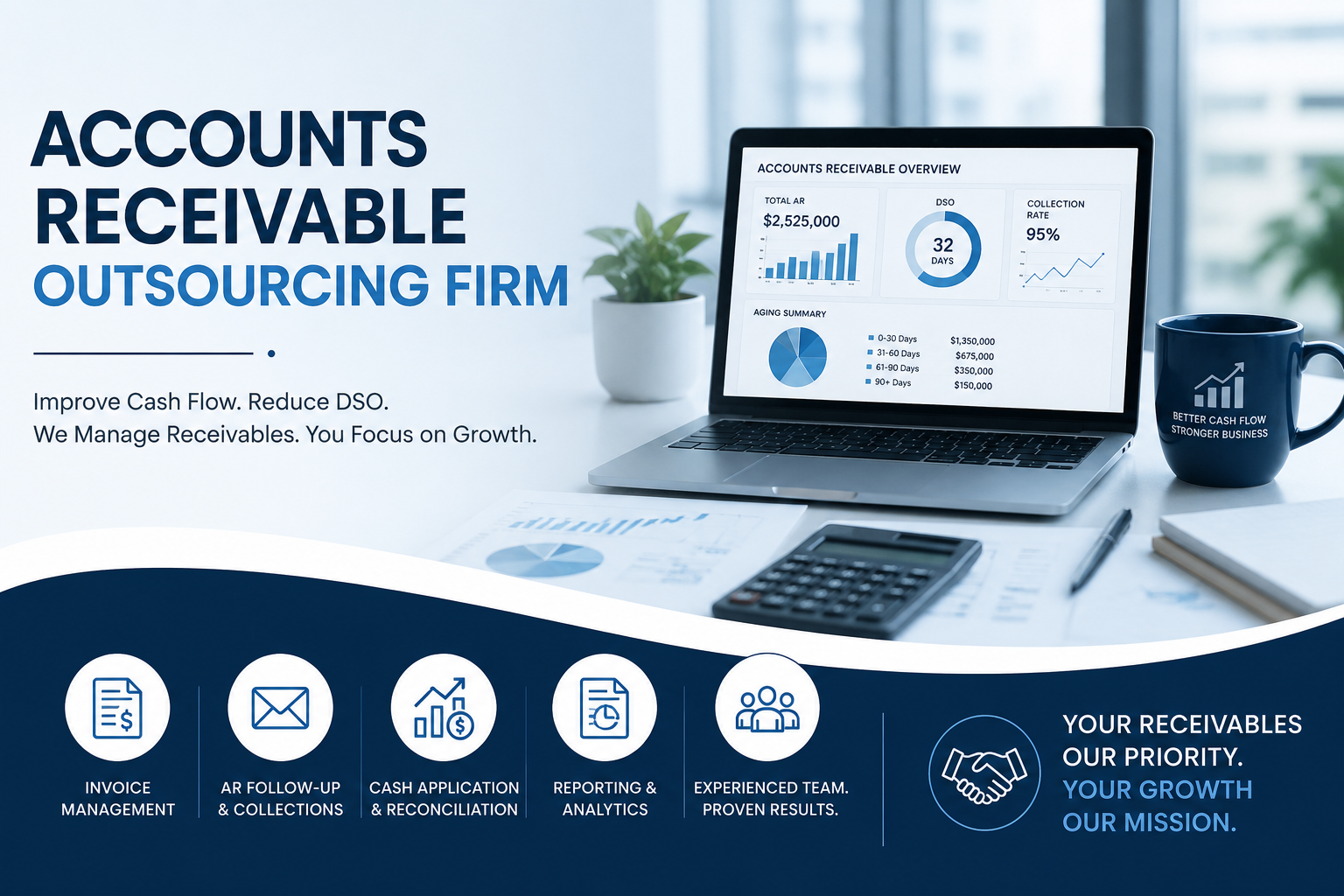
Managing customer payments becomes increasingly difficult as a company grows. More customers mean more invoices, payment records, questions, and follow-ups for the accounting department to handle. An Accounts Receivable Outsourcing Firm can provide specialized support for these activities, helping U.S. businesses manage billing, payment posting, account reconciliation, collections, and reporting more efficiently. With a structured receivables process in place, companies can reduce administrative pressure, improve financial visibility, and spend more time focusing on customers and business development.
Why Efficient Accounts Receivable Management Matters
Accounts receivable is closely connected to a company's cash flow.
When a business sells on credit, it records revenue even though the customer may not pay immediately. The difference between earning revenue and receiving cash can create financial pressure if outstanding invoices continue to grow.
For example, a company may have strong monthly sales but still struggle to pay its own expenses because a large portion of its revenue remains tied up in unpaid invoices.
Effective receivables management helps reduce this uncertainty by keeping track of what customers owe and when payments are expected.
What Is Accounts Receivable Outsourcing?
Accounts receivable outsourcing means assigning selected financial responsibilities to an external service provider rather than handling everything internally.
Depending on the company's requirements, an outsourcing partner may manage:
- Customer invoicing
- Invoice verification
- Payment posting
- Account reconciliation
- Aging reports
- Payment reminders
- Collection follow-ups
- Billing dispute tracking
- Customer account maintenance
- Receivables reporting
The business can choose which responsibilities to outsource.
Some organizations need complete accounts receivable management, while others only need additional support during busy periods.
The Challenges of Managing Receivables In-House
An internal finance team can manage accounts receivable effectively when transaction volumes are manageable.
Problems often arise when the business expands.
More customers create more invoices. More invoices create more payments to track. More payments create more opportunities for discrepancies.
At the same time, accounting employees may already be responsible for payroll, accounts payable, reconciliations, tax support, and financial reporting.
This can result in:
- Delayed invoice processing
- Missed payment reminders
- Increasing overdue balances
- Unresolved customer disputes
- Inaccurate account records
- Limited reporting
- Poor cash flow visibility
Outsourcing can provide additional capacity without placing all of these responsibilities on a small internal team.
Improving the Invoicing Process
The collection process starts with the invoice.
If an invoice is delayed, incorrect, or missing important information, payment may be delayed as well.
A professional receivables process can help ensure that invoices contain the information customers need, including:
- Customer details
- Invoice number
- Description of products or services
- Amount due
- Payment terms
- Due date
- Payment instructions
- Relevant purchase order information
Accurate invoices reduce unnecessary questions and can make it easier for customers to process payments.
Keeping Customer Accounts Accurate
Accurate customer records are essential for effective accounts receivable management.
Every payment should be applied to the appropriate account and invoice. Credits, adjustments, and disputed charges should also be recorded correctly.
Without accurate records, a customer may appear to have an outstanding balance even after making a payment.
This can lead to unnecessary collection calls and customer frustration.
Regular reconciliation helps identify these issues and keeps financial records aligned with actual transactions.
Managing Aging Receivables
An accounts receivable aging report shows how long customer invoices have remained outstanding.
A typical report may separate invoices into categories such as:
- Current
- 1–30 days past due
- 31–60 days past due
- 61–90 days past due
- More than 90 days past due
This information helps management determine where collection efforts should be focused.
A current invoice may only require normal monitoring, while an invoice that has been overdue for several months may need immediate attention.
Why Consistent Follow-Up Matters
Customers can miss payment deadlines for many reasons.
Sometimes an invoice is overlooked. In other cases, the customer's accounts payable department may be waiting for approval or additional documentation.
Consistent follow-up can bring these issues to light.
An outsourced team can establish a schedule for payment reminders and follow-up communication based on the company's policies.
The objective is to encourage timely payment without damaging the customer relationship.
Handling Payment Disputes
Disputes are one of the common reasons invoices remain unpaid.
A customer may question:
- The amount billed
- The quantity delivered
- The agreed price
- The payment terms
- A service charge
- A purchase order
- The quality or completion of a service
Leaving disputes unresolved can keep invoices outstanding for weeks or months.
A structured process helps identify disputed invoices and ensures that the appropriate internal department receives the information needed to resolve them.
How Outsourcing Supports Cash Flow
Accounts receivable outsourcing does not guarantee that every customer will pay immediately, but it can improve the process surrounding collections.
Better invoice management, timely reminders, accurate account records, and regular aging reports can help businesses identify problems sooner.
Management can also use receivables information when preparing cash flow forecasts.
Knowing which invoices are current and which are significantly overdue provides a more realistic view of expected cash inflows.
Reducing Administrative Costs
Hiring additional full-time employees is one way to address growing accounting workloads, but it isn't always the most flexible option.
Recruitment, salaries, benefits, training, software, and equipment all add to the cost of expanding an internal department.
Outsourcing allows businesses to obtain specialized support based on their actual needs.
For a small business, this may mean outsourcing the entire receivables function. A larger company may outsource selected processes while keeping financial management and strategic decisions in-house.
The Role of Automation
Technology can make accounts receivable processes more efficient.
Modern accounting systems can support:
- Electronic invoicing
- Automated reminders
- Online payment processing
- Bank feeds
- Payment matching
- Customer account updates
- Aging reports
- Receivables dashboards
Automation reduces repetitive manual work and allows accounting professionals to focus on exceptions and issues that require judgment.
However, businesses should still have people reviewing important transactions and unusual account activity.
When Is Outsourcing a Good Option?
Businesses should consider outsourcing when their existing process is no longer keeping pace with operational needs.
Some signs include:
- A growing number of overdue invoices
- Increasing customer disputes
- Delayed billing
- Accounting employees working excessive hours
- Difficulty preparing accurate receivables reports
- Uncertainty about expected cash inflows
- Rapid customer growth
- Limited internal accounting resources
These challenges can become more expensive if they are ignored.
Selecting an Accounts Receivable Outsourcing Partner
Choosing a provider requires careful evaluation.
Experience
Look for a company that understands your type of business and its billing requirements.
Service Scope
Make sure you understand exactly which accounts receivable responsibilities will be handled.
Technology
The provider should be comfortable with your accounting software and financial systems.
Reporting
Ask what reports will be provided and how frequently they will be delivered.
Security
Customer and financial information must be handled securely, with appropriate access controls.
Communication
A clear communication process makes it easier to resolve urgent issues and customer disputes.
Measuring the Results
A successful outsourcing arrangement should produce measurable improvements.
Businesses can track:
- Days Sales Outstanding
- Overdue invoice percentage
- Average collection period
- Number of disputed invoices
- Invoice processing time
- Payment posting accuracy
- Collection activity
Reviewing these indicators regularly can show whether the receivables process is becoming more efficient.
Beyond Collections: Financial Visibility
One of the less obvious benefits of strong accounts receivable management is better financial insight.
Payment patterns can tell businesses a great deal about their customers.
If certain customers consistently pay late, management may need to review their payment terms. If invoice disputes frequently involve the same issue, the billing process may need improvement.
These insights can help companies make better operational and financial decisions.
Supporting Long-Term Business Growth
As businesses grow, financial processes need to grow with them.
An accounts receivable system that works for 50 customers may not work as effectively for 500.
Outsourcing can provide additional capacity while allowing management to focus on growth rather than constantly solving administrative problems.
A scalable process can also make seasonal increases in invoice volume easier to manage.
Final Thoughts
An Accounts Receivable Outsourcing Firm can help U.S. businesses create a more consistent and efficient approach to managing customer payments. From invoice preparation and payment posting to account reconciliation, aging analysis, dispute management, and collection follow-ups, professional support can reduce the workload placed on internal accounting teams.
The real value of outsourcing goes beyond completing routine tasks. A well-managed receivables function provides better information about outstanding balances, expected cash inflows, and customer payment behavior.
For businesses experiencing growth, increasing invoice volumes, or persistent collection challenges, outsourcing accounts receivable can provide the additional expertise and capacity needed to build a stronger financial operation while keeping internal teams focused on higher-value responsibilities.

 Arabic
 French
 Spanish
 Portuguese
 Deutsch
 Turkish
 Dutch
Dutch
 Italiano
 Russian
 Romaian
 Portuguese (Brazil)
 Greek
Greek