


A Beginner’s Guide to Building a Career in Aviation After Class 12
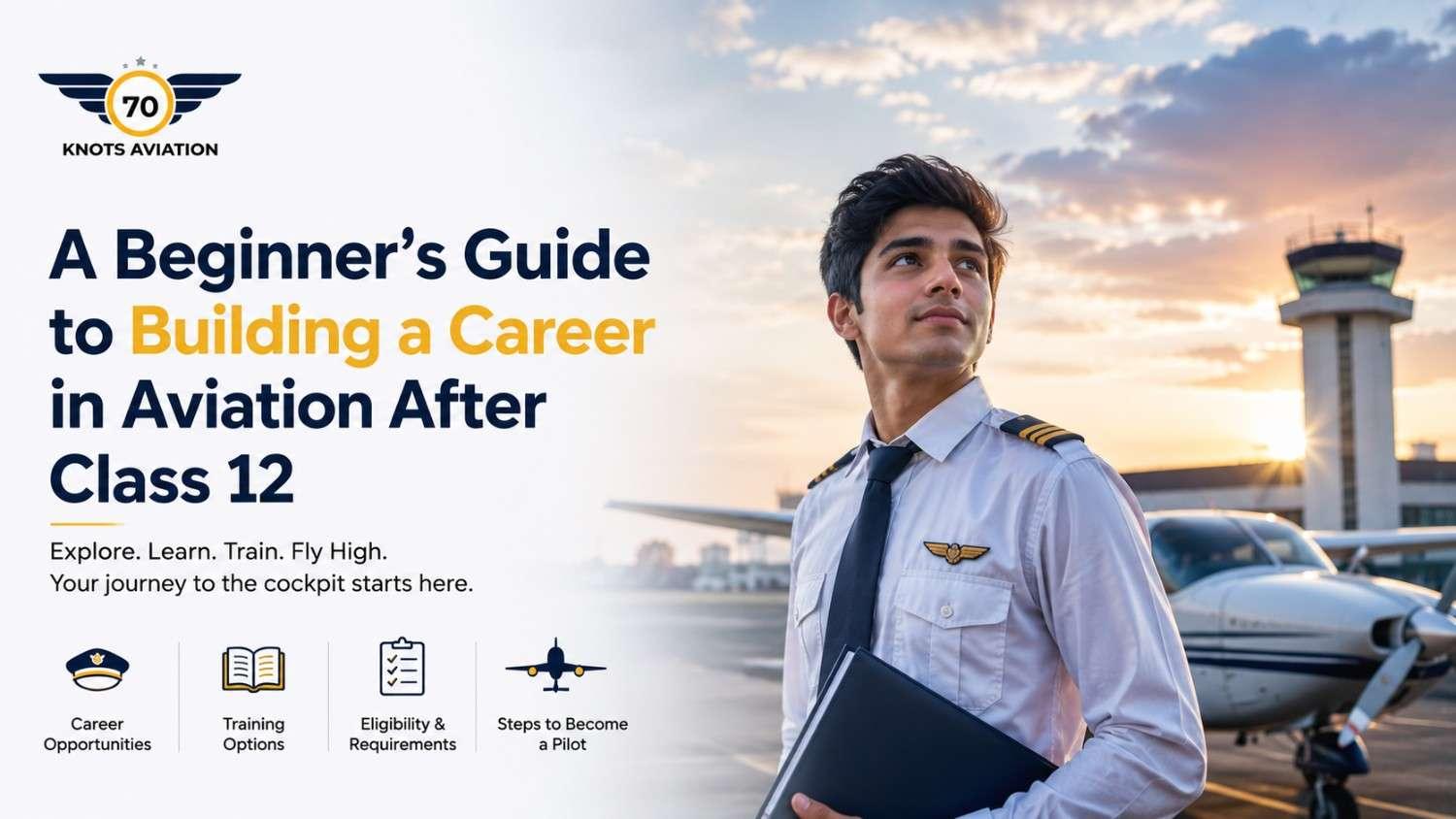
Choosing a career after Class 12 can feel overwhelming, especially when a student has a strong interest in aviation. The aviation industry offers several professional paths, but becoming a pilot remains one of the most exciting options for students who enjoy technology, travel, responsibility, and a fast-paced working environment.
However, entering professional aviation requires careful planning. Students need to understand eligibility requirements, medical standards, examinations, ground training, flight training, licensing, and the financial commitment involved. Having a clear roadmap before enrolling in a course can prevent confusion and help students make better decisions.
For students interested in flying professionally, the journey starts with understanding what the industry expects from an aspiring pilot. From academic preparation to practical training, every stage contributes to building the knowledge and skills needed for a responsible aviation career.
Table of Contents
- Why Aviation Is an Attractive Career After Class 12
- Understanding the Pilot Career Path
- Eligibility and Preparation Before Training
- The Importance of DGCA Ground Training
- Preparing for Aviation Examinations
- Understanding the Financial Side of Pilot Training
- Choosing the Right Aviation Training Environment
- Skills That Can Help Future Pilots
- What Students Should Know About Flight Training
- Planning a Long-Term Aviation Career
- Frequently Asked Questions
Why Aviation Is an Attractive Career After Class 12
Aviation attracts students for many reasons. Some are fascinated by aircraft and technology, while others are interested in travelling, professional responsibility, and the unique working environment associated with commercial aviation.
A pilot's career, however, should not be viewed simply as an opportunity to travel around the world. Professional flying requires discipline, technical knowledge, concentration, communication, and the ability to make responsible decisions. Pilots work within strict operational and safety procedures, which makes the profession both rewarding and demanding.
Students who are comfortable with structured learning and are willing to maintain consistent study habits may find aviation education particularly interesting. The career also requires continuous learning because pilots must remain familiar with procedures, regulations, aircraft systems, and operational practices.
For this reason, students should explore aviation as a professional discipline rather than choosing it only because the profession appears exciting from the outside.
Understanding the Pilot Career Path
One of the first questions students ask is How to become a pilot after completing school. The answer depends on the type of pilot career a student wants to pursue, but the overall journey involves several important stages.
The process generally begins with checking educational and other eligibility requirements. Students should also understand the applicable medical standards and complete the required medical assessments before making major financial commitments to training.
Once the initial requirements are understood, students can begin the academic and practical stages of training. Ground classes introduce important aviation subjects, while flight training allows students to develop practical flying skills under appropriate supervision.
The journey is not necessarily identical for every student. Training duration can be affected by factors such as weather conditions, aircraft availability, student performance, examination schedules, and the operational capacity of the training organisation.
This is why students should focus on understanding the complete pathway rather than expecting every aspiring pilot to follow exactly the same timeline.
Eligibility and Preparation Before Training
Before joining a pilot training program, students should carefully review the eligibility criteria applicable to their intended licence. Educational qualifications are important, but they are only one part of the preparation process.
Students should also think about their personal strengths. Mathematics and analytical reasoning can be useful because aviation training involves calculations, navigation concepts, aircraft performance, and other technical areas.
English communication is another important skill. Aviation uses standardised communication procedures, and future pilots need to understand technical information clearly. Developing strong reading, listening, and communication habits during school can therefore be beneficial later.
Medical fitness should also be considered early. Instead of waiting until after enrolling in expensive training, students can investigate the relevant medical requirements beforehand. This can provide greater clarity and help families plan the next stage with confidence.
The Importance of DGCA Ground Training
Flight training may be the part of pilot education that attracts the most attention, but theoretical preparation is equally important. Ground training introduces students to the knowledge required to understand how aircraft operate and how pilots make decisions during different stages of flight.
Subjects may include navigation, meteorology, air regulations, aircraft-related knowledge, and communication procedures. Each subject contributes to a broader understanding of aviation operations.
For example, meteorology is not simply about memorising weather terminology. A future pilot needs to understand how weather conditions can affect visibility, route planning, aircraft performance, and operational decisions.
Similarly, navigation involves more than learning formulas. Students need to understand how pilots determine position, direction, distance, time, and other factors relevant to flight planning.
A structured aviation academy in india can help students develop this foundation through organised lessons, revision, assessments, and instructor guidance.
Students should therefore treat ground training as an essential part of their aviation education rather than something to complete quickly before moving into the cockpit.
Preparing for Aviation Examinations
Aviation examinations require consistent preparation. Students who postpone studying until the final stage may find it difficult to manage multiple technical subjects at once.
Preparing for DGCA Pariksha can become more manageable when students follow a structured study routine. Instead of memorising information without understanding it, students should focus on learning the underlying concepts.
Regular revision is particularly useful for technical subjects. A student may understand a topic during a classroom session but forget important details several weeks later. Short, repeated revision sessions can help reinforce that knowledge.
Practice questions can also reveal weak areas. For example, if a student consistently struggles with a particular navigation calculation, identifying the problem early allows additional practice before the examination.
Mock tests can provide another useful learning opportunity. They allow students to practise working under time limits and become familiar with the pressure of answering technical questions within a fixed period.
Understanding the Financial Side of Pilot Training
Financial planning is one of the most important parts of preparing for an aviation career. Families often want to know the expected Pilot training cost in india before deciding whether professional pilot training is financially practical.
The total expense can vary considerably. Factors such as the training organisation, location, aircraft type, number of flying hours, accommodation, examinations, medical assessments, study materials, and additional training requirements can influence the overall amount.
Students should therefore avoid comparing institutes using only one advertised fee. A lower headline price does not necessarily mean that the complete training journey will cost less.
A practical approach is to ask for a detailed breakdown of expected expenses. Families should understand which services are included in the quoted fee and which costs may need to be paid separately.
For example, if a student requires additional flying hours to meet training objectives, that expense may affect the final budget. Accommodation and transportation can also become significant costs for students who relocate for training.
Creating a realistic financial plan before joining can reduce stress later and allow the student to focus more effectively on training.
Choosing the Right Aviation Training Environment
The learning environment can influence how comfortably a student adapts to aviation education. An institute should provide more than a classroom and a syllabus. Students benefit from structured teaching, experienced instructors, appropriate study resources, and opportunities to clarify difficult concepts.
When comparing training options, students should ask practical questions. How are classes structured? How are doubts handled? Are students regularly assessed? What kind of study support is available? How clearly are fees and training requirements explained?
These questions can reveal more about an institute than promotional claims.
Students should also consider whether the institute encourages professional habits. Punctuality, preparation, accurate record-keeping, communication, and disciplined study are all valuable qualities in aviation.
The goal should not simply be to pass examinations. Students should aim to develop knowledge that can support them throughout their professional journey.
Skills That Can Help Future Pilots
Technical knowledge is essential, but successful pilots also need strong professional and personal skills. These abilities can be developed gradually during school and training.
- Communication: Clear communication is essential for understanding instructions and working effectively with other aviation professionals.
- Decision-making: Pilots need to assess information carefully and make responsible operational decisions.
- Discipline: Aviation requires consistent attention to procedures, schedules, safety, and preparation.
- Situational awareness: Pilots must remain aware of aircraft, weather, navigation, surroundings, and operational conditions.
These skills are not developed overnight. Students can begin building them through classroom participation, practical exercises, teamwork, and regular self-assessment.
What Students Should Know About Flight Training
Flight training is where theoretical knowledge begins to connect with practical aviation. Students learn how to apply concepts from their ground classes while operating an aircraft under the supervision of qualified instructors.
The early stages can feel challenging because students must manage several tasks simultaneously. They may need to monitor instruments, communicate appropriately, follow procedures, maintain situational awareness, and respond to instructor guidance.
Progress can vary from one student to another. Some students may become comfortable with certain procedures quickly, while others may require additional practice. This is normal and should not automatically be interpreted as a lack of ability.
Consistent practice and constructive feedback are important. Students should learn from mistakes rather than becoming discouraged by them. Aviation training is designed to build competence progressively.
The relationship between classroom learning and flight practice is also important. When students understand the reason behind a procedure, they are often better prepared to apply it correctly in practical situations.
Learning From Different Aviation Markets
Students researching pilot training often compare options across different cities before deciding where to study. For example, searches for Best DGCA CPL Classes in Hyderabad show that students are actively evaluating training opportunities beyond their immediate location.
Comparing different locations can be useful because training environments, facilities, costs, and accessibility may vary. However, students should avoid assuming that a particular city automatically offers better training.
The more useful approach is to compare the actual training program. Curriculum, instructor experience, academic support, transparency, learning resources, and the overall student experience should receive greater attention than the name of the city.
A student living in Delhi may find a suitable option locally, while another student may decide that training elsewhere better matches their requirements. The right choice depends on individual circumstances.
Planning a Long-Term Aviation Career
Students should begin thinking about their long-term career goals before completing their training. Understanding the difference between obtaining a licence and becoming a competitive aviation professional is important.
A licence provides an essential foundation, but aviation careers also depend on experience, performance, professional behaviour, technical knowledge, and the opportunities available in the industry.
Students should therefore focus on becoming well-rounded aviation professionals. Maintaining strong academic performance, developing communication skills, learning from instructors, and understanding safety principles can all contribute to long-term professional development.
It is also important to remain realistic about employment. No responsible training provider can guarantee a specific airline job simply because a student completes a course. Career opportunities depend on multiple factors, including qualifications, market conditions, employer requirements, and individual performance.
Students who approach training with realistic expectations are better prepared to handle both the challenges and opportunities that come with an aviation career.
Building the Right Mindset for Aviation
Aviation demands patience and consistency. Students may encounter difficult subjects, challenging examinations, unexpected delays, or areas of flight training that require additional practice. Developing a positive but realistic mindset can help them handle these situations.
Instead of comparing their progress constantly with other students, aspiring pilots should focus on their own learning objectives. One student may perform strongly in navigation while another may initially find meteorology easier. Progress should be measured by improvement and competence rather than competition alone.
Students should also become comfortable asking questions. Aviation is a technical field, and misunderstanding an important concept can create problems later. Asking an instructor to explain a difficult topic from another perspective is a sign of responsible learning.
Over time, these habits can help students become more confident, disciplined, and prepared for the professional responsibilities associated with flying.
Frequently Asked Questions
1. Is aviation a good career option after Class 12?
Aviation can be a rewarding career for students who have an interest in flying, technical subjects, discipline, communication, and professional responsibility. However, students should understand the training requirements and financial commitment before making a decision.
2. What should students do before starting pilot training?
Students should check the applicable eligibility criteria, understand medical requirements, research training organisations, evaluate the financial commitment, and become familiar with the overall pilot training pathway.
3. Why is ground training important for aspiring pilots?
Ground training provides the theoretical foundation needed for aviation examinations and practical flying. It helps students understand subjects such as navigation, meteorology, regulations, communication, and aircraft-related knowledge.
4. How should students prepare for DGCA examinations?
Students should follow a consistent study schedule, understand concepts instead of relying entirely on memorisation, practise questions, revise regularly, and use mock tests to identify weak areas.
5. Is pilot training expensive in India?
Pilot training requires a significant financial investment, but the total amount varies depending on the training organisation, flying requirements, location, accommodation, examinations, medical expenses, and other factors. A detailed cost breakdown should be obtained before enrolling.
6. What skills are important for a future pilot?
Communication, discipline, decision-making, situational awareness, technical understanding, teamwork, and the ability to remain focused are important qualities for aspiring pilots.
7. Should students compare pilot training institutes?
Yes. Comparing faculty, curriculum, academic support, training structure, facilities, fees, and transparency can help students identify an option that matches their requirements.
8. Does completing pilot training guarantee an airline job?
No. Completing the required training and licensing pathway does not guarantee employment with a particular airline. Career opportunities depend on qualifications, experience, market conditions, employer requirements, and individual performance.
Conclusion
Building a career in aviation after Class 12 requires more than enthusiasm for aircraft. Students need a clear understanding of eligibility requirements, medical standards, ground training, examinations, flight training, financial planning, and professional development.
From learning aviation fundamentals to preparing for DGCA Pariksha, every stage contributes to the development of a capable aviation professional. Students should take time to research their options, understand the complete training pathway, and choose an educational environment that supports their long-term goals.
The aviation industry rewards preparation, discipline, technical knowledge, and responsible decision-making. With realistic expectations and consistent effort, students can approach their pilot training journey with greater confidence and a clearer understanding of what lies ahead.

 English
 Arabic
 French
 Spanish
 Portuguese
 Deutsch
 Turkish
 Dutch
Dutch
 Italiano
 Russian
 Romaian
 Greek
Greek