


Real Estate Token Development: Where Your Development Budget Goes
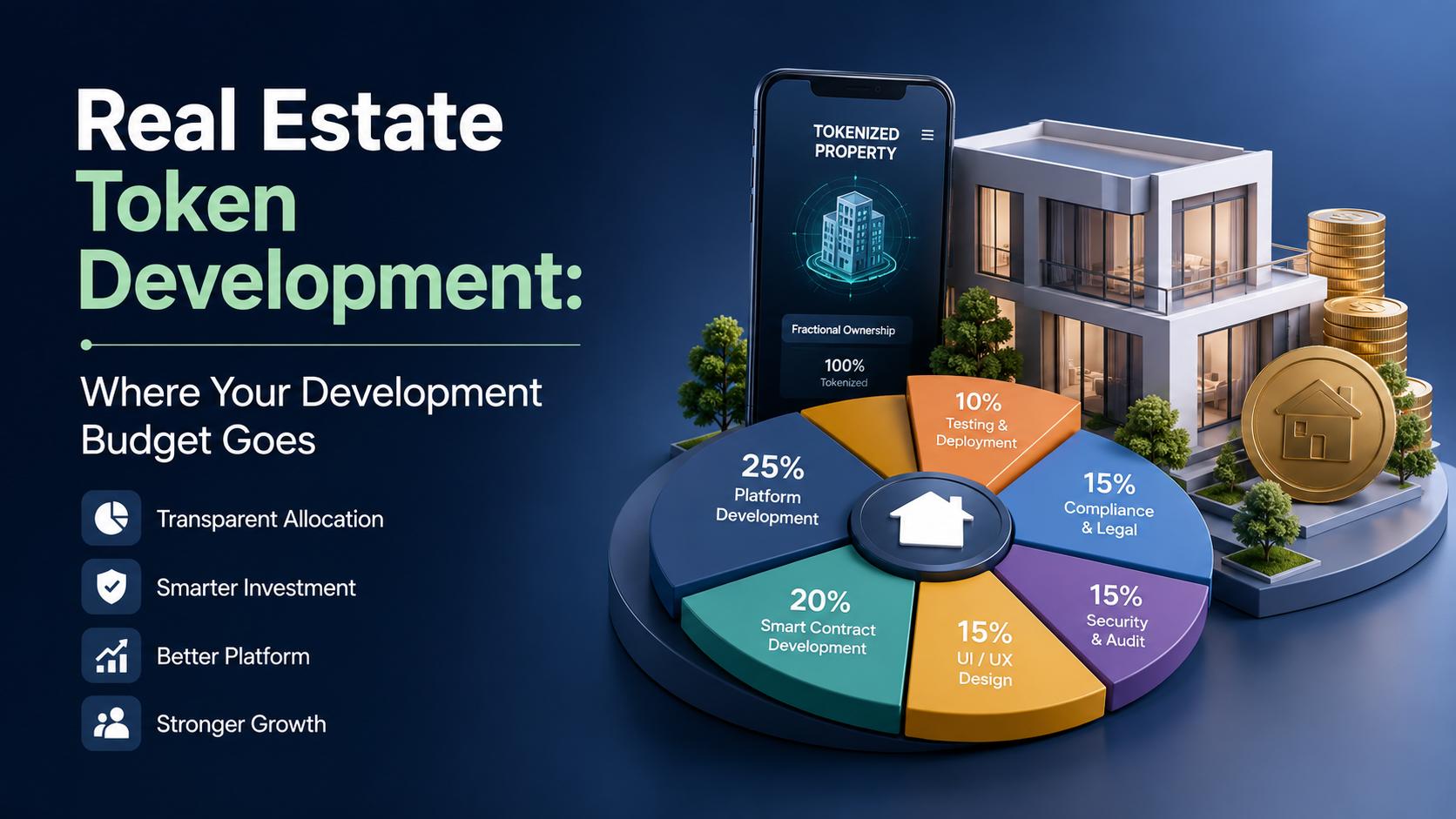
Real estate token development has become an important consideration for property businesses, investment firms, asset managers, and entrepreneurs looking to introduce blockchain-based ownership models. Instead of handling property participation only through conventional structures, tokenization can represent ownership rights, revenue interests, or other financial claims through digital tokens.
However, launching a real estate tokenization project involves much more than creating a token contract. The development budget usually covers several technical, legal, financial, security, and operational areas. The final cost depends on the type of property being tokenized, the token model, blockchain network, platform features, compliance requirements, integrations, and the level of customization required.
For companies planning real estate token development, understanding where the money goes can make budgeting easier. A well-planned budget helps businesses decide which features should be included in the first release and which can be introduced later. This article explains the major areas that usually consume a development budget and the methods companies can use to manage those expenses.
1. Property Tokenization Model
The first part of the budget goes toward deciding how the real estate asset will be represented digitally. Different properties can require different token structures depending on ownership rights, investor participation, revenue distribution, and legal arrangements.
A commercial building, residential property, hotel, rental portfolio, or development project may not use the same token model. The development team needs to understand the asset structure before deciding how tokens should represent investor interests.
Method: Define the Asset Structure First
Companies can begin by documenting the property value, ownership arrangement, investor rights, income model, transfer conditions, and token supply. This information provides a foundation for the technical architecture.
A real estate tokenization company may also review whether the project involves direct ownership, shares in a legal entity that owns the property, revenue participation, debt-based interests, or another structure. Making this decision early can prevent expensive changes during later development stages.
2. Smart Contract Development
Smart contracts form an important part of real estate token development. They can manage token issuance, ownership records, transfers, investor restrictions, distributions, and other predefined functions.
The budget depends on the number and complexity of smart contracts required. A simple token contract may require less development work than a system containing investor verification rules, transfer restrictions, dividend distribution, voting functions, and automated compliance checks.
Method: Separate Contract Functions
A development team can divide smart contract requirements into separate functions before coding begins. Typical components may include token issuance, token transfers, investor eligibility, distribution management, administrative controls, and emergency functions.
The contracts should also go through testing before deployment. Smart contract corrections after deployment can become expensive, particularly when the token has already been distributed to investors.
3. Blockchain Network Selection
The blockchain network selected for the project also affects the development budget. Different networks have different transaction costs, development environments, technical requirements, and ecosystem support.
A company may consider networks such as Ethereum, Polygon, BNB Chain, Avalanche, or other compatible blockchain environments. The choice should depend on transaction requirements, investor accessibility, token standards, wallet support, and expected activity.
Method: Compare Networks Before Development
Instead of selecting a network based only on popularity, businesses can compare transaction costs, developer resources, supported standards, wallet compatibility, infrastructure requirements, and long-term operating expenses.
For projects expecting frequent token transfers or a large investor base, transaction economics can have a significant impact on overall platform expenses.
4. Investor Platform Development
The investor-facing platform is another major part of the budget. Investors need an interface where they can register, complete verification, view available properties, purchase tokens, monitor holdings, receive distributions, and access transaction information.
Real estate tokenization platform development may include web applications, investor dashboards, property pages, portfolio sections, transaction history, wallet connectivity, and account management.
Method: Prioritize Investor Functions
Businesses can begin with the functions investors need most frequently. Registration, identity verification, property information, token purchase, wallet management, portfolio tracking, and transaction history are common starting points.
Additional functions such as secondary trading, automated reporting, voting, referral systems, and portfolio analytics can be introduced based on the project's requirements.
5. Issuer and Administrator Dashboard
Property owners and platform administrators require a separate interface for managing tokenized assets. This dashboard may allow authorized users to add properties, create offerings, manage token supplies, review investors, monitor transactions, distribute returns, and generate reports.
A real estate asset tokenization company may also require different administrator roles. For example, compliance staff may need access to investor verification while financial administrators manage distributions.
Method: Use Role-Based Access
Role-based access can divide administrative permissions according to job responsibilities. This reduces unnecessary access to sensitive platform functions and makes administrative activity easier to monitor.
The number of roles and dashboard functions directly affects development effort, so companies should define administrator responsibilities before development begins.
6. KYC and AML Integration
Real estate tokenization projects often involve investment activities, which can require identity verification and compliance procedures depending on the jurisdiction and legal structure.
KYC and AML functionality may include identity document verification, address verification, sanctions screening, investor classification, transaction monitoring, and compliance records.
Method: Integrate External Verification Providers
Rather than developing every verification function internally, businesses can integrate established identity and compliance services through APIs. This approach can reduce development work and provide access to specialized verification infrastructure.
The actual requirements depend on the jurisdiction, asset structure, investor category, and regulatory framework applicable to the project.
7. Wallet and Payment Integration
Investors need a way to receive, hold, and transfer tokens. This makes wallet integration another budget consideration. The platform may support external wallets, custodial wallets, or both.
Payment processing can also require additional development. Some projects may accept cryptocurrency, while others may require bank transfers, card payments, stablecoins, or other payment methods.
Method: Select Payment Options Based on Investors
A platform intended for institutional investors may have different payment requirements from one designed for individual investors. Businesses should identify the preferred payment methods before development to avoid unnecessary integrations.
Wallet recovery, transaction tracking, deposit confirmation, withdrawal controls, and transaction status notifications may also add to the development cost.
8. Property Management and Data Integration
A real estate tokenization platform may need to display detailed property information. This can include property valuation, rental income, occupancy information, location data, ownership records, financial statements, and investment terms.
If this information comes from external systems, APIs may be required to connect the platform with property management, accounting, valuation, or financial reporting systems.
Method: Identify Required Data Sources
Businesses can list every external data source required by the platform and classify them according to importance. Only the data needed for the first release should be integrated initially.
This approach helps control development expenses while leaving room for additional integrations as the platform grows.
9. Security and Smart Contract Auditing
Security testing represents another significant budget category. Tokenization platforms manage financial assets, investor information, wallet addresses, and transaction records, making security an important development consideration.
Testing may include smart contract audits, penetration testing, API testing, access control testing, wallet security reviews, and vulnerability assessments.
Method: Test in Multiple Stages
Security checks should not be postponed until the final stage. Developers can conduct unit testing during development, integration testing after modules are connected, and external security reviews before production deployment.
Smart contract auditing may also be performed by an independent security firm. The cost depends on contract complexity, code volume, blockchain network, and audit scope.
10. Legal and Compliance Expenses
Legal work can represent a considerable portion of the overall real estate tokenization budget. Tokenized property interests can involve securities laws, property laws, investment regulations, tax considerations, company structures, and investor protection requirements.
A legal team may review token rights, ownership structures, offering documents, investor agreements, jurisdictional restrictions, and transfer rules.
Method: Establish the Legal Structure Before Coding
Companies can first determine where the asset will be held, who owns the property, what the token represents, who can purchase it, and how investors receive returns.
Once the legal structure is established, developers can create platform functions that support those requirements. This reduces the possibility of rebuilding technical components later.
11. Secondary Market Features
Some real estate tokenization projects include secondary trading features that allow eligible investors to transfer or trade tokens after the initial offering.
A secondary marketplace can require order management, trading interfaces, wallet integration, transaction records, eligibility checks, pricing information, and settlement functions.
Method: Launch Trading in a Later Phase
If secondary trading is not necessary for the first release, businesses can postpone it. An initial platform can focus on property onboarding, investor registration, token issuance, and primary sales.
Adding marketplace functionality later can reduce the initial development budget and give the business time to evaluate actual investor demand.
12. Mobile Application Development
A mobile application can provide investors with access to portfolios, property offerings, transaction records, notifications, and account information through smartphones.
Developing separate native applications for Android and iOS generally requires more resources than maintaining a web application. Cross-platform frameworks can be considered when the project requires mobile access without maintaining two completely separate codebases.
Method: Start With the Web Platform
For businesses working with a limited initial budget, a responsive web platform can provide broad device access. Mobile applications can then be introduced after user requirements become clearer.
This approach can help allocate more of the initial budget toward compliance, security, smart contracts, and investor functions.
13. Testing and Quality Assurance
Quality assurance covers the testing of the complete platform rather than individual components alone. Developers need to check registration, KYC, token purchases, wallet transactions, property listings, administrative functions, payments, notifications, and reporting.
Method: Create Realistic User Scenarios
Testing teams can simulate different user journeys, such as a new investor registering, completing verification, purchasing tokens, receiving distributions, and transferring eligible tokens.
Testing different transaction outcomes and failure conditions is also useful because blockchain transactions and external payment services can behave differently under various conditions.
14. Maintenance and Post-Launch Costs
The development budget does not end when the platform goes live. Ongoing expenses may include hosting, blockchain transaction fees, security monitoring, software updates, API subscriptions, compliance updates, technical support, and infrastructure management.
A real estate tokenization development company may offer ongoing maintenance packages covering bug fixes, security updates, performance monitoring, and feature improvements.
Method: Create a Separate Operating Budget
Companies should maintain a separate budget for post-launch operations. This prevents the entire development budget from being spent before the platform enters production.
The operating budget can include infrastructure, third-party services, security audits, support, compliance reviews, and future feature development.
15. Development Team and Project Management
The development team itself accounts for a substantial part of the budget. A tokenization project may require blockchain developers, backend developers, frontend developers, UI designers, QA specialists, security professionals, DevOps engineers, and project managers.
The required team size depends on project complexity. A basic token issuance platform may require fewer specialists than a platform supporting multiple properties, investor categories, compliance systems, payments, wallets, and secondary trading.
Method: Choose the Team According to Project Scope
Businesses should first define the required product features and then select the appropriate team structure. Working with a real estate tokenization platform development company can provide access to several technical roles through one development arrangement.
Companies comparing Top real estate tokenization companies or Best real estate tokenization companies should examine their previous tokenization projects, technical capabilities, security practices, blockchain experience, and post-launch support rather than comparing prices alone.
16. How to Control the Overall Development Budget
The total cost of real estate token development depends on the combination of technology, compliance, design, integrations, security, and operational requirements. There is no single development price that applies to every project.
A practical way to manage expenses is to divide the project into phases. The first phase can cover the legal model, property structure, token design, blockchain selection, investor registration, KYC, wallet connection, token issuance, and basic administration.
The second phase can introduce additional payment options, analytics, mobile applications, property management integrations, automated distributions, and advanced investor functions. A later phase can add secondary trading, multi-jurisdiction support, and other specialized features.
This phased method gives businesses more control over spending while allowing them to validate the platform before committing to a larger feature set.
Conclusion
Real estate token development involves several budget categories, including token design, smart contracts, blockchain infrastructure, investor dashboards, administrator tools, KYC and AML systems, wallets, payment integrations, security audits, legal work, testing, maintenance, and development resources. The final investment depends on the property structure, target investors, jurisdiction, platform functions, blockchain network, and number of integrations required. Businesses can manage costs by defining the legal model early, prioritizing important investor functions, selecting suitable technology, testing throughout development, and releasing additional features in phases. For companies planning a complete real estate tokenization project, working with an experienced development partner can also simplify coordination between technical and business requirements. Blockchain App Factory provides Real estate tokenization development services for businesses looking to create blockchain-based property investment platforms and tokenized real estate solutions.
FAQs
1. What is real estate token development?
Real estate token development is the process of creating blockchain-based tokens that represent ownership interests, investment rights, revenue participation, or other claims connected with real estate assets.
2. What factors affect real estate token development costs?
Major factors include smart contract complexity, blockchain selection, platform features, KYC and AML requirements, payment and wallet integrations, security testing, legal requirements, UI design, and the size of the development team.
3. Does every real estate tokenization project need a marketplace?
No. A marketplace is not required for every project. Businesses can initially focus on token issuance and primary investment and introduce secondary trading later if it fits their business and legal model.
4. Why is legal planning important for real estate tokenization?
Legal planning determines what the token represents, how investor rights are structured, who can purchase the tokens, and which regulatory requirements apply to the project.
5. How does blockchain selection affect development?
Blockchain selection can affect transaction costs, smart contract development, wallet compatibility, infrastructure requirements, investor accessibility, and ongoing platform expenses.
6. Can a real estate tokenization platform support multiple properties?
Yes. A platform can be designed to support multiple tokenized properties, with separate property profiles, token supplies, investor records, financial information, and distribution rules.
7. What does a real estate tokenization platform development company provide?
Depending on the project, a development company may provide smart contract development, web platform development, wallet and payment integration, KYC integration, security testing, administration tools, deployment, and maintenance.
8. Can companies start with an MVP?
Yes. An MVP can focus on the functions required for property onboarding, investor registration, compliance, token issuance, wallet connection, and primary sales. Additional functions can be added in later development phases.

 English
 French
 Spanish
 Portuguese
 Deutsch
 Turkish
 Dutch
Dutch
 Italiano
 Russian
 Romaian
 Portuguese (Brazil)
 Greek
Greek