


What Should Buyers Ask Zhuoerya About Eye Maquillage Makeup Brushes
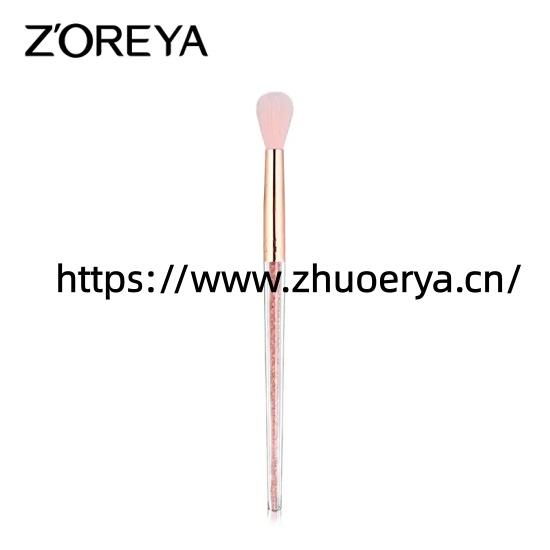
Eye Maquillage Makeup Brushes should be evaluated carefully before a beauty brand commits to a production order. A visually attractive sample is only one part of the decision. Buyers also need to consider fiber material, brush shape, density, handle construction, ferrule connection, customization, packaging, sample consistency, and production communication. These details can influence how the finished tool fits a brands product range and intended customer experience.
The first point to check is the fiber material. Synthetic fibers are widely used across cosmetic tools because they can be produced in different lengths, shapes, and levels of flexibility. Natural hair may also be considered for certain applications. The right choice depends on the cosmetic formula, desired application method, and positioning of the collection. Buyers should ask for material specifications instead of judging the fiber only from product photographs.
Brush shape deserves similar attention. A rounded blending head can serve a different purpose from a flat shader head, angled liner head, or small detail head. Current beauty discussions continue to focus on soft blending, simplified eye looks, and techniques adapted to different eye shapes. A brand planning a collection should therefore consider what applications each shape is intended to support.
Density is another practical factor. A tightly packed head can pick up and place cosmetic products differently from a looser head. Buyers can test how much product each sample collects, how easily color can be distributed, and whether the brush maintains its shape during use. These observations are more useful than relying only on appearance.
The connection between the head and handle should also be inspected. Check the ferrule for alignment, attachment, surface finish, and overall construction. Gently moving the handle and head can help identify obvious looseness during sample evaluation. A production partner should also have a defined inspection process for areas such as fiber shedding, softness, ferrule strength, appearance, and packaging. These are common checkpoints used by manufacturers serving private label beauty projects.
Handle design can influence both appearance and comfort. Brands may consider wood, bamboo, plastic, or other available materials depending on their design direction. Length, diameter, surface treatment, color, and grip should be confirmed during sampling. If a collection includes several pieces, maintaining a consistent visual language across handles and ferrules can make the range feel more coordinated.
Customization should be discussed in specific terms. Buyers may request different head shapes, fiber types, handle colors, ferrule finishes, logo methods, or packaging formats. Manufacturers serving private label customers commonly provide combinations of these options, so it is useful to establish exactly which elements can be modified and what effect each change may have on production quantities and costs.
Sampling is an important stage before bulk production. Ask for samples that reflect the actual specifications planned for the order. Compare fiber softness, shape, density, handle finish, logo placement, and overall dimensions. If changes are needed, record them clearly before approving the final version. This gives both sides a practical reference for later inspection.
Order quantity and production planning should also be discussed early. Different designs may have different minimum quantities, sampling arrangements, packaging requirements, and production schedules. A smaller beauty brand may need a flexible starting quantity, while an established retailer may require regular replenishment. Having these details confirmed in advance can make the purchasing process easier to manage.
Packaging should not be treated as an afterthought. Individual sleeves, boxes, sets, printed inserts, and other formats can be considered according to the sales channel. Buyers should check packaging dimensions, material, printing, labeling, and protection during transportation. A carefully planned package can also help a brush collection fit naturally into an existing cosmetics range.
Zhuoerya focuses on providing beauty tool options that can be considered for different brand requirements, including product structure, appearance, customization, and packaging coordination. Buyers can begin with samples, compare specifications, and refine details before moving toward a larger order. This approach gives brands room to make practical decisions based on their own market plans.
For a beauty brand, choosing a production partner is not simply about selecting a brush from a catalog. It is about checking whether the materials, construction, customization process, communication, and production planning match the intended product direction. Taking time to review these areas can help buyers establish clearer expectations before placing an order. Brands interested in reviewing available product options can visit https://www.zhuoerya.cn/ and consider which designs fit their upcoming beauty collection.

 English
 Arabic
 French
 Spanish
 Portuguese
 Deutsch
 Turkish
 Italiano
 Russian
 Romaian
 Portuguese (Brazil)
 Greek
Greek