


Is Traditional SEO Dead or Evolving Under Zero-Click Search?
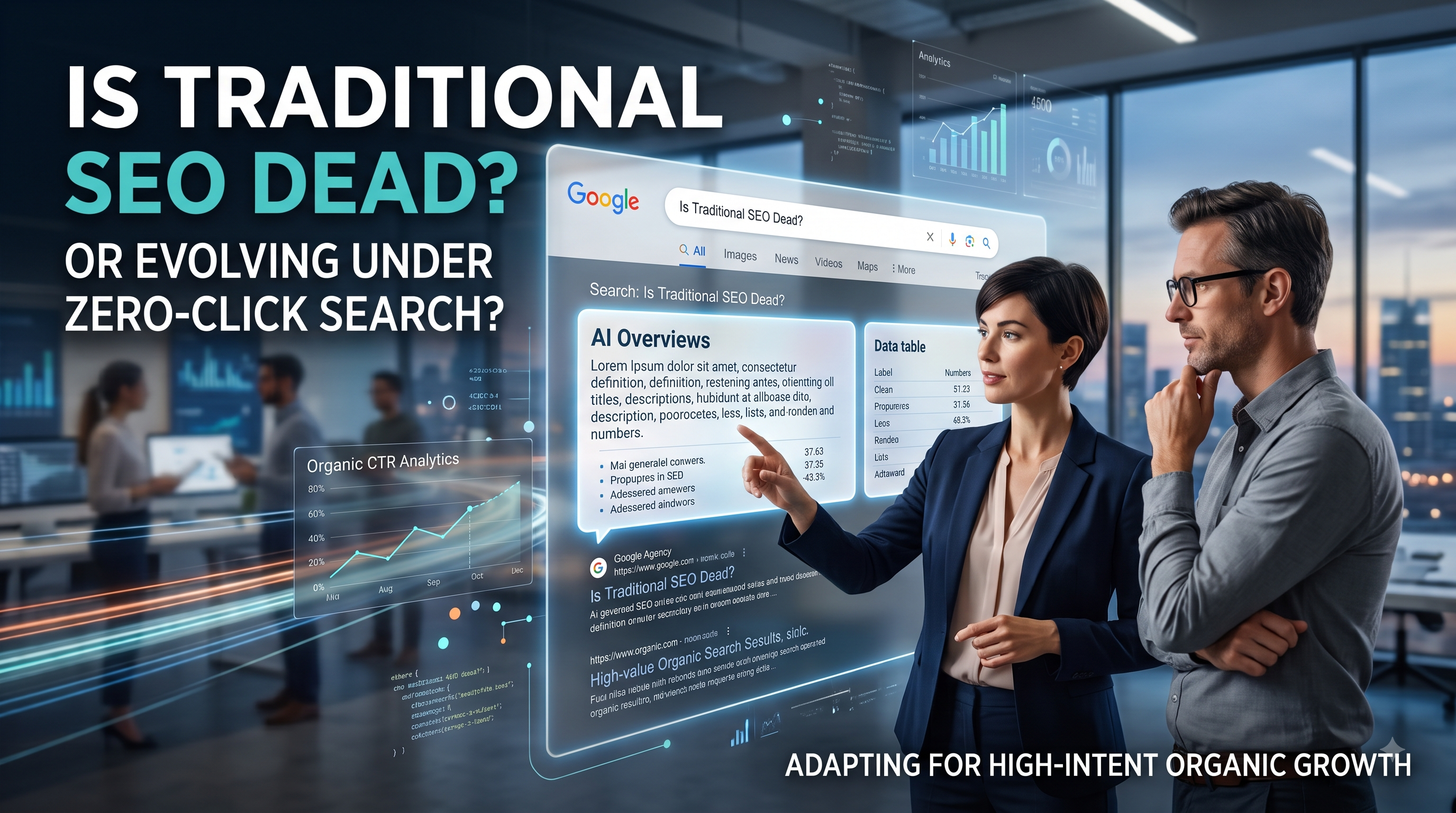
Every few years, the digital marketing industry sounds the alarm that search engine optimization is officially dead. The current wave of concern centers on zero-click search, a phenomenon where search engines answer user queries directly on the results page using AI overviews, featured snippets, and knowledge panels. When users get immediate answers without clicking a single link, traditional metrics like organic click-through rates naturally drop. This reality leads agency leaders and small business owners to ask a critical question about whether traditional search optimization is obsolete, or if we are watching the discipline evolve into something far more sophisticated. The short answer is that optimization is far from dead, but the tactics used five years ago to drive quick traffic are no longer sufficient on their own.
Understanding the Shift to Zero-Click Search
To navigate this landscape, it helps to understand why search engine result pages have changed so dramatically over recent years. Search engines now aim to resolve user intent as quickly as possible. Simple informational queries, such as checking a measurement, looking up business hours, or finding a basic definition, rarely require a user to visit an external website anymore.
This structural shift means top-of-funnel impression volume on search engines no longer translates directly into website visits. For businesses accustomed to relying on high-volume informational blog posts for bulk web traffic, this drop in click-through rate can feel like a direct hit to their top line.
Yet, this shift does not mean search marketing has lost its value. While top-of-funnel clicks are harder to capture, the traffic that does click through today carries significantly higher commercial intent. Users who read an instant AI summary and still choose to click a source link are searching for depth, specialized expertise, or direct commercial solutions rather than surface-level definitions.
Why SEO Isn't Dead: It's Moving to Authority Capture
Traditional optimization used to focus almost entirely on basic keyword placement and backlink counts. Today, search engines evaluate overall topical authority, technical site infrastructure, and genuine user value to decide which sources to highlight.
In a zero-click ecosystem, brand presence inside search engine features matters just as much as getting the direct click. Being cited as the primary source inside an AI Overview or featured snippet establishes immediate brand trust. When prospective clients eventually transition from research to decision-making, that accumulated brand authority heavily influences their final purchasing choice.
Adapting to this environment requires a much stronger focus on design presentation, page experience, and web infrastructure. For instance, digital agencies that build client sites using optimized WordPress themes for digital marketing agency setups often find that clean code and structured data help search crawlers extract, summarize, and cite their content more effectively.
How Digital Agencies Must Adapt Their Strategy
Succeeding in modern search requires moving away from shallow content creation and shifting toward deep, specialized content that search engines cannot easily replicate in a quick text summary.
Modern content strategies should prioritize queries with high commercial or transactional intent. Informational queries like basic industry definitions are largely resolved on the search results page today. Content creators must focus on strategic decision frameworks, detailed case studies, and specialized industry insights that require a reader to visit the actual platform to gain full value.
Search engines favor websites that deliver fast loading speeds, seamless mobile responsiveness, and clean layout structures. Content layout plays a massive role in how both human users and search algorithms interpret information. Utilizing the best themes for small business sites ensures your technical foundation, from Schema markup readiness to mobile optimization, supports modern visibility standards.
Zero-click search rewards clean, explicit formatting. Structure complex topics using direct definitions, expert insights, and precise explanations right below section headings. When your content provides unambiguous facts and clear authority, search algorithms are far more likely to pull your data into primary search features and conversational AI answers.
Conclusion
The legacy mindset of targeting broad keywords simply to capture low-intent web clicks is certainly fading, but organic search as a strategic growth channel is very much alive. By adapting to the realities of zero-click search, focusing on commercial search intent, and maintaining a high-performance site built with reliable WordPress themes for digital marketing agency standards, businesses can continue to build lasting online authority and attract highly qualified clients. Modern optimization isn't about fighting how search engines present information but about becoming the trusted source they choose to cite.

 English
 Arabic
 Spanish
 Portuguese
 Deutsch
 Turkish
 Dutch
Dutch
 Italiano
 Russian
 Romaian
 Portuguese (Brazil)
 Greek
Greek