


Digital Printing on Fabric: Process, Benefits, and Uses
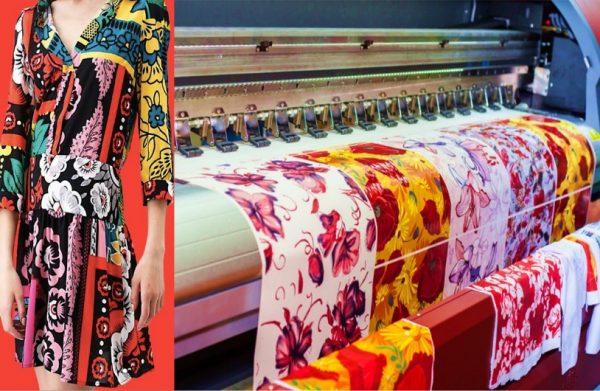
Digital printing on fabric is a textile printing technique that transfers digital artwork directly onto fabric through specialized inkjet printers. Instead of preparing separate screens or engraved rollers for a design, digital textile printers use computer-controlled print heads to place very small droplets of ink exactly where they are needed. This makes it possible to reproduce photographs, detailed illustrations, logos, gradients, and complex patterns with considerable precision.
The growth of Digital printing on fabric has changed how many textile businesses approach design and production. It is widely used for clothing, home furnishings, sportswear, flags, banners, interior decoration, and personalized products. The process is especially useful for samples, short production runs, and customized designs. However, achieving a professional result requires careful selection of fabric, ink, pretreatment, color settings, fixation method, and finishing process.
What Is Digital Printing on Fabric?
Fabric printing is an inkjet-based process designed to print directly onto textile materials. The artwork is first prepared as a digital file and then processed through specialized textile printing software. The software controls the printer's print heads and determines where and how much ink should be deposited.
Traditional screen printing normally requires a physical screen for each color or design layer. Digital printing removes much of this physical preparation because the complete design is sent electronically to the printer.
This approach is particularly effective for artwork containing many colors, photographs, fine lines, shadows, and smooth gradients. However, there is no single ink system suitable for every fabric. Cotton, polyester, silk, nylon, viscose, and blended fabrics require different approaches because their fibers absorb and interact with inks differently.
How Does Digital Fabric Printing Work?
1. Preparing the Design
The process begins with a digital artwork file. The design might be a photograph, illustration, logo, repeating pattern, or custom graphic.
Before printing, the artwork should be checked for resolution, dimensions, color settings, and pattern alignment. Low-resolution images can produce poor results, particularly when enlarged. Repeating patterns must also be designed carefully so that adjacent sections connect without visible breaks.
Color management is another important part of preparation. Colors displayed on a computer monitor do not always appear identical when printed on fabric. Professional production may use calibrated monitors, appropriate color profiles, printer calibration, and physical test samples to improve color consistency.
2. Preparing the Fabric
The fabric must be prepared according to the selected ink technology. Some digital textile printing systems require chemical pretreatment before the fabric enters the printer.
Pretreatment affects how ink spreads and interacts with the fibers. Proper treatment can improve color strength, print sharpness, and durability. Uneven treatment can produce inconsistent shades or blurred details.
The textile should also be clean and free from excessive moisture, dust, wrinkles, and other contamination.
3. Printing the Artwork
The prepared fabric passes through a digital textile printer. Print heads release microscopic droplets of ink onto specific areas according to the digital artwork.
The machine controls the placement and volume of the droplets, allowing it to reproduce fine details and gradual color changes. Because the artwork is stored digitally, modifications can be made without producing new screens or printing plates.
4. Fixing the Print
After printing, many ink systems require a fixation or curing process.
Reactive dyes used on cellulosic fabrics commonly require steaming. Disperse dyes used on polyester are generally fixed using controlled heat. Pigment inks usually require heat curing to activate the binder that holds pigment particles to the textile.
Depending on the technology, the fabric may also require washing to remove unfixed dye and processing chemicals. It can then be dried and finished according to the intended use.
Types of Inks Used in Digital Textile Printing
Reactive Inks
Reactive inks are commonly used for cotton, linen, viscose, and other cellulosic materials. The dye reacts chemically with the fiber during fixation. Properly processed prints can provide strong colors and good resistance to washing.
Acid Inks
Acid inks are used with suitable materials such as silk, wool, and nylon. They can produce bright colors and detailed prints, making them useful for selected fashion fabrics, scarves, accessories, and premium textiles.
Disperse Inks
Disperse inks are primarily used for polyester and similar synthetic fabrics. Heat allows the dye to penetrate the fiber. This system is commonly used for sportswear, polyester garments, flags, banners, and display fabrics.
Pigment Inks
Pigment inks use colored particles held to the textile by a binder. They can work with various fabrics and may reduce the need for some wet processing steps. Print softness and durability depend on the formulation, binder, fabric, and curing conditions.
Benefits of Digital Printing on Fabric
Detailed Designs
Digital printing can reproduce photographs, fine lines, gradients, shadows, and complicated patterns. A design can contain numerous colors without requiring a separate physical screen for every color.
This gives designers considerable freedom when developing fashion patterns, artistic textiles, and decorative fabrics.
Short Production Runs
Digital printing is well suited to small orders because it reduces several setup requirements associated with conventional printing.
For example, a designer can produce a limited number of scarves with a new pattern without ordering a large quantity of printed material.
Customization
Digital technology makes it easier to produce personalized textiles. Names, numbers, photographs, logos, and individual graphics can be incorporated into separate products.
This is particularly useful for sports uniforms, customized clothing, promotional merchandise, and made-to-order products.
Faster Design Changes
A digital design can be edited and sent to the printer without changing physical screens or plates. This allows businesses to test multiple color variations or artwork versions more efficiently.
Reduced Stock Requirements
Printing according to demand can reduce the need to store large quantities of pre-printed fabric. This can be useful for seasonal designs, limited collections, and customized products.
Applications of Digital Printing on Fabric
Fashion and Clothing
Digitally printed fabrics are used for dresses, shirts, skirts, jackets, scarves, sportswear, and accessories. Designers can create detailed artwork and limited collections without committing to very large production quantities.
Home Furnishings
Digital printing is used for curtains, cushion covers, bedding, table linens, upholstery materials, and decorative textiles. Custom artwork can be created to match particular interior design projects.
Sportswear
Polyester is widely used in sportswear, making disperse digital printing particularly useful for team uniforms and performance garments. Logos, numbers, names, patterns, and full-surface graphics can be incorporated into the design.
Advertising and Events
Fabric banners, flags, exhibition displays, promotional backdrops, and event decorations can be produced with customized artwork. Digital printing is useful when graphics need to be changed frequently for different campaigns.
Art and Photography
Photographers and artists can transfer their work onto textiles for wall displays, installations, clothing, accessories, and decorative products. The process can reproduce complex visual details that may be difficult to achieve through some conventional techniques.
Practical Benefits and Key Insights
One of the most useful practices in digital textile production is making a physical sample before starting a large order. A sample allows the manufacturer to check color, pattern scale, image sharpness, fabric feel, and overall appearance.
Testing becomes even more important when a new fabric or ink system is introduced. Different fabrics can absorb the same ink differently, so settings should not automatically be transferred from one material to another.
Digital printing can also support on-demand manufacturing. Instead of storing large quantities of finished printed fabric, businesses can produce material when it is needed. This approach can improve flexibility and reduce the risk of storing designs that may no longer sell.
Another important consideration is the complete production workflow. A sophisticated printer cannot overcome poor fabric preparation, incorrect color management, unsuitable ink, or inadequate fixation.
Common Challenges and Considerations
Initial Investment
Industrial textile printers can be expensive. Businesses must also consider costs for inks, software, maintenance, pretreatment, curing, washing, energy, and skilled workers.
Production Speed
Digital printing provides flexibility but is not automatically the fastest option for every job. Very large orders with simple repeating patterns may be more economical with rotary screen printing or another conventional process.
Color Matching
Consistent color requires control over several variables. Fabric batches, printer calibration, ink formulation, pretreatment, temperature, humidity, and finishing can all influence the final shade.
Durability
Print durability depends on the ink and fabric combination as well as fixation and finishing. Clothing may require strong wash and rubbing resistance, while outdoor materials may need resistance to sunlight and weather.
Fabric Compatibility
Using the wrong ink for a fabric can lead to weak colors, bleeding, poor adhesion, or reduced durability. Testing the proposed fabric and ink combination before production can prevent expensive mistakes.
Frequently Asked Questions
1. What is digital printing on fabric?
It is a process in which digital artwork is printed directly onto textile material using specialized inkjet printers and textile-compatible inks.
2. Can digital printing be used on cotton?
Yes. Cotton can be printed using suitable reactive or pigment ink systems. The required pretreatment and finishing process depends on the technology used.
3. Is digital fabric printing good for small orders?
Yes. It is particularly useful for samples, prototypes, personalized products, limited collections, and short production runs.
4. How long does digital fabric printing last?
The durability depends on the fabric, ink, pretreatment, fixation, and finishing process. Correctly processed prints can provide good resistance to washing and normal use.
5. Is digital printing cheaper than screen printing?
There is no universal answer. Digital printing can be cost-effective for short runs and customized products because it has lower setup requirements. Screen printing may be more economical for some large-volume orders.
Conclusion
Digital printing on fabric provides textile manufacturers and designers with a flexible way to produce detailed, customized, and visually complex designs. Its ability to print directly from digital artwork makes it especially useful for short runs, samples, personalized products, and designs containing many colors.
Successful production requires more than advanced printing equipment. Fabric selection, ink compatibility, pretreatment, color management, fixation, and finishing all play important roles in determining the final quality.
For businesses considering this technology, the most practical approach is to test the complete fabric and ink combination before large-scale production. When the process is properly controlled, digital textile printing can provide high-quality results while giving designers greater freedom to experiment with patterns, colors, and customized artwork.

 Arabic
 French
 Spanish
 Portuguese
 Deutsch
 Turkish
 Dutch
Dutch
 Italiano
 Russian
 Romaian
 Portuguese (Brazil)
 Greek
Greek