


Why Is vacuumpumpfactory Oil Free Rotary Vane Vacuum Pump Different?
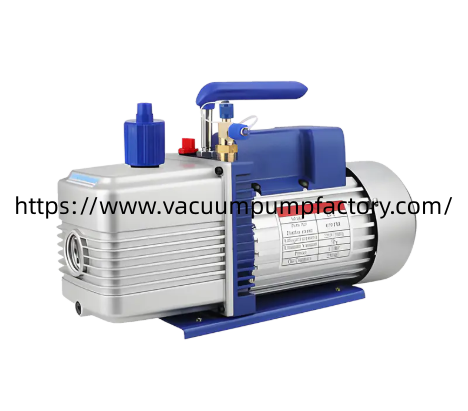
Oil Free Rotary Vane Vacuum Pump technology uses the familiar rotary vane principle while changing one important part of the design: there is no lubricating oil inside the pumping chamber. For buyers comparing vacuum equipment, this difference affects the way the pump handles contamination, maintenance, heat, materials, and certain applications. Understanding the construction behind the technology makes it easier to decide when an oil-free design is appropriate.
The Rotary Vane Principle Remains Familiar
A rotary vane pump creates vacuum through a rotor positioned eccentrically inside a cylindrical housing. As the rotor turns, vanes move in and out of their slots and form changing chambers. These chambers draw gas into the pump, compress it, and discharge it.
The operating principle is similar to an oil-lubricated rotary vane design. The major difference is what happens between the moving components.
In an oil-lubricated model, oil helps seal the spaces between the vanes and housing, while also providing lubrication and helping transfer heat. An oil-free design cannot depend on an oil film, so the materials, clearances, and cooling arrangement have to be designed around dry operation.
That engineering difference is what gives dry vane pumps their particular operating characteristics.
Why Remove Oil From the Pumping Chamber?
The main reason is to create a vacuum environment without oil entering the pumped gas.
In applications where oil contamination is undesirable, this can be an important consideration. Medical equipment, laboratory instruments, food packaging machinery, electronics-related equipment, and certain handling systems may benefit from an oil-free air path.
An oil-free configuration also removes the routine task of monitoring, replacing, and disposing of pump oil. That can simplify maintenance procedures for users who prefer not to manage lubricating oil as part of their vacuum system.
However, oil-free does not mean maintenance-free. Dry-running vanes are wear components, and their condition should still be checked according to the manufacturer's recommendations.
What Replaces Oil?
This is where the construction becomes particularly interesting.
Oil-free rotary vane pumps commonly use self-lubricating vane materials, such as carbon or graphite-based materials. These vanes are designed to slide against the pump housing during operation without relying on a liquid lubricant.
Because there is no oil filling the internal clearances, manufacturing precision also becomes important. The rotor, vanes, and cylinder need appropriate clearances to limit internal leakage.
This means an oil-free pump is not simply an oil-lubricated pump with the oil removed. The materials and internal geometry have to be considered as part of the complete design.
What About Heat?
Heat management is another point buyers should consider.
In an oil-lubricated pump, oil performs several functions, including helping transfer heat away from internal components. A dry-running pump cannot use oil in the same way, so designers generally rely on air cooling, housing geometry, cooling fans, and heat-dissipating materials.
Operating temperature can therefore depend on ambient conditions, duty cycle, vacuum level, airflow, and pump configuration.
This is especially relevant for customers planning frequent or extended operation. The manufacturer's operating recommendations should be reviewed before using the pump under demanding conditions.
Where Does This Design Make Sense?
The application should determine whether an oil-free configuration is appropriate.
For example, laboratory users may prefer a pump that does not introduce oil vapor into their vacuum system. Medical and dental systems can also have reasons to use oil-free vacuum generation. Food packaging and certain electronics applications may likewise place value on a clean pumping environment.
Light industrial equipment is another potential application. Vacuum lifting, pick-and-place machinery, packaging equipment, printing systems, and automated production equipment can use dry vane technology when the required vacuum level and flow conditions match the pump's capabilities.
The key point is that the application still needs to be evaluated carefully. Oil-free technology is not intended to replace every type of vacuum pump.
What Are the Tradeoffs?
Every pump design involves tradeoffs.
One consideration is ultimate vacuum. Depending on the specific construction, oil-free rotary vane pumps may not reach the same pressure range as certain oil-lubricated rotary vane pumps. Recent technical information on dry vane designs notes that single-stage and two-stage configurations can have different vacuum capabilities, with deeper vacuum applications requiring careful model selection.
Vapor handling is another consideration. Condensable moisture can be challenging for dry-running equipment because there is no oil to absorb or carry away the vapor. Users should therefore check the manufacturer's recommendations when the application involves substantial moisture or process vapor.
This is why choosing based only on the phrase oil-free can lead to an incomplete purchasing decision.
What Should Buyers Check Before Ordering?
A practical evaluation can begin with several questions:
What vacuum level is required?
What pumping speed is needed at the working pressure?
Will the pump encounter moisture or process vapors?
How frequently will it operate?
What ambient temperature will surround the equipment?
What inlet connection is required?
Is filtration needed at the pump inlet?
How often should the vanes be inspected?
What replacement components are available?
Is a single-stage or two-stage configuration appropriate?
These questions help connect the pump specification with the actual working environment.
Maintenance Still Matters
Although oil changes are removed from the routine maintenance schedule, other service tasks remain.
The vanes gradually wear as they operate against the pump housing. Inlet filters also need attention because dust and particles can accelerate wear. Shaft seals and bearings should be monitored according to the manufacturer's maintenance recommendations.
For users operating equipment in clean environments, maintenance may be relatively straightforward. In dusty workshops or applications involving vapor, however, filtration and operating procedures deserve additional attention.
A Practical Choice for Clean Vacuum Applications
At vacuumpumpfactory, oil-free rotary vane vacuum pump solutions are designed around applications where clean operation and reduced oil management are important considerations. Buyers can compare pump configuration, vacuum requirements, pumping capacity, motor specifications, and operating conditions before selecting a suitable model.
The real difference is therefore not simply the absence of oil. It is the complete engineering approach behind dry operation, including vane materials, internal clearances, cooling, filtration, and maintenance.
For customers considering an oil-free solution, the right question is not whether oil-free technology is suitable for every application. Instead, it is whether the application's vacuum requirements, cleanliness expectations, vapor conditions, and operating schedule match the characteristics of this pump design.
For product specifications and available vacuum pump solutions, visit https://www.vacuumpumpfactory.com/

 English
 Arabic
 French
 Spanish
 Portuguese
 Deutsch
 Turkish
 Dutch
Dutch
 Russian
 Romaian
 Portuguese (Brazil)
 Greek
Greek