


Trust Funds vs Wills and Trusts: Key Estate Planning Insights for 2026
Estate planning is becoming more important as families manage increasingly diverse financial portfolios and prepare for changing circumstances. In 2026, individuals are looking beyond traditional approaches to understand how different planning tools can protect assets, provide for loved ones, and create greater financial clarity.
Two questions frequently arise when people begin researching estate planning: what is a trust fund and how does a will compare with a trust? Understanding these concepts can help individuals have more productive conversations with qualified professionals and make informed decisions about their financial futures.
Why Estate Planning Matters in 2026
Modern families may own homes, retirement accounts, investment portfolios, businesses, insurance policies, and digital assets. Each type of property can create different planning considerations.
Family structures have also become more diverse. Blended families, second marriages, business partnerships, charitable goals, and multigenerational households can make straightforward asset distribution more complicated.
Rather than waiting until later in life, many individuals are now approaching estate planning as an ongoing financial responsibility. Reviewing plans after major life events can help ensure that documents and beneficiary designations continue to reflect current intentions.
Understanding the Purpose of a Will
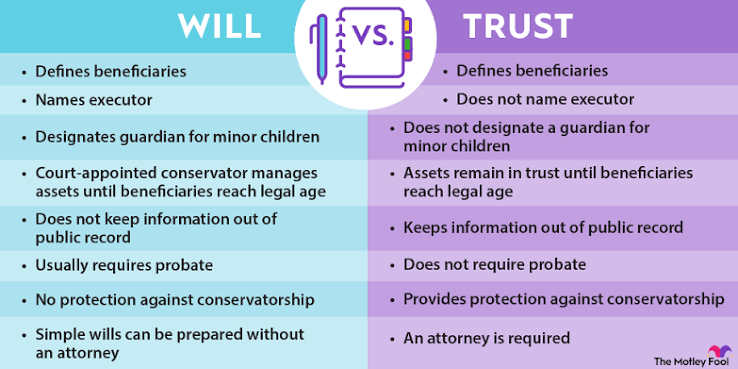
A will is a legal document that generally communicates how a person's property should be distributed after death. It can also address other important matters, such as naming an executor and, where applicable, identifying guardians for minor children.
One important consideration is that assets passing under a will may generally be subject to probate. Probate is the court-supervised process used to validate a will and administer an estate.
The probate process varies by jurisdiction, so families should understand how local rules may affect their particular circumstances.
A will can be an important foundation for an estate plan, but it may not address every financial or family objective on its own.
Understanding How Trusts Work
A trust is a legal arrangement in which property is held and managed by a trustee for designated beneficiaries according to established terms.
Trusts can be structured in different ways. Some are designed to be changeable during the creator's lifetime, while others may become more restrictive or operate under specific conditions.
Depending on its structure and purpose, a trust may help address asset management, beneficiary support, privacy, or the administration of property after death.
Because trusts can involve detailed legal and financial requirements, their usefulness depends heavily on how they are designed and funded.
What Does a Trust Fund Mean?
The phrase what is a trust fund often leads people to assume that a trust fund is a particular type of account. In practice, the term generally refers to assets placed into a trust and managed for beneficiaries according to the trust's terms.
The assets involved could include cash, investments, real estate, business interests, or other property.
For example, parents might establish a trust to hold assets for children and specify when or how beneficiaries may receive distributions. Another arrangement could provide ongoing financial support for a family member while giving a trustee responsibility for managing the property.
The specific rules depend on the trust document and applicable law.
What Is a Will vs Trust?
When comparing what is a will vs trust, it is important to recognize that these tools serve different purposes and may work together rather than functioning as direct alternatives.
A will generally takes effect after death, while certain trusts can operate during a person's lifetime and continue afterward. A will may direct property through probate, whereas properly structured assets held in a trust may be administered outside the probate process, depending on local law.
A will can also address guardianship for minor children, making it particularly important for parents.
A trust, meanwhile, can provide instructions for managing assets and distributing them under specific circumstances.
The appropriate choice depends on an individual's assets, family circumstances, financial objectives, and applicable laws.
Digital Assets Add a New Layer
Estate planning now needs to account for digital property that previous generations rarely considered.
Cryptocurrency, online businesses, websites, digital investment accounts, intellectual property, and other online assets may have significant financial value.
Families should consider how these assets will be identified, documented, and managed. Secure records can make it easier for authorized individuals to locate important accounts while protecting sensitive information.
Digital asset planning is increasingly becoming part of broader estate management as technology continues to influence personal wealth.
Regular Reviews Can Prevent Problems
Creating estate documents is only the beginning. Financial plans should be reviewed whenever significant circumstances change.
Marriage, divorce, the birth of a child, retirement, relocation, business ownership, inheritance, or major changes in wealth can all justify a review.
Beneficiary designations should also be checked periodically. An outdated designation on an insurance policy or retirement account can produce results that do not align with a person's current intentions.
Keeping records organized and reviewing plans regularly can reduce unnecessary complications for loved ones.
Choosing the Right Approach
There is no universal estate planning solution. A simple estate may require a different approach from one involving multiple properties, business interests, significant investments, or complex family relationships.
Understanding the differences between wills and trusts is an important first step, but professional guidance can help individuals determine how different tools may fit together.
The most effective plans are generally those that reflect the person's actual circumstances rather than relying on a generic template.
Conclusion
Estate planning gives individuals an opportunity to make important decisions before circumstances make those decisions for them. Wills and trusts can each play valuable roles, but their purposes and legal effects are different.
As financial portfolios become more diverse in 2026, taking time to understand these planning concepts can help families prepare more thoughtfully. Keeping documents current, organizing digital and traditional assets, and reviewing plans after major life changes can provide greater clarity and help create a more secure financial legacy for future generations.

 Arabic
 French
 Spanish
 Portuguese
 Deutsch
 Turkish
 Dutch
Dutch
 Italiano
 Russian
 Romaian
 Portuguese (Brazil)
 Greek
Greek