


Importance of Orthopedic Instruments in Modern Healthcare
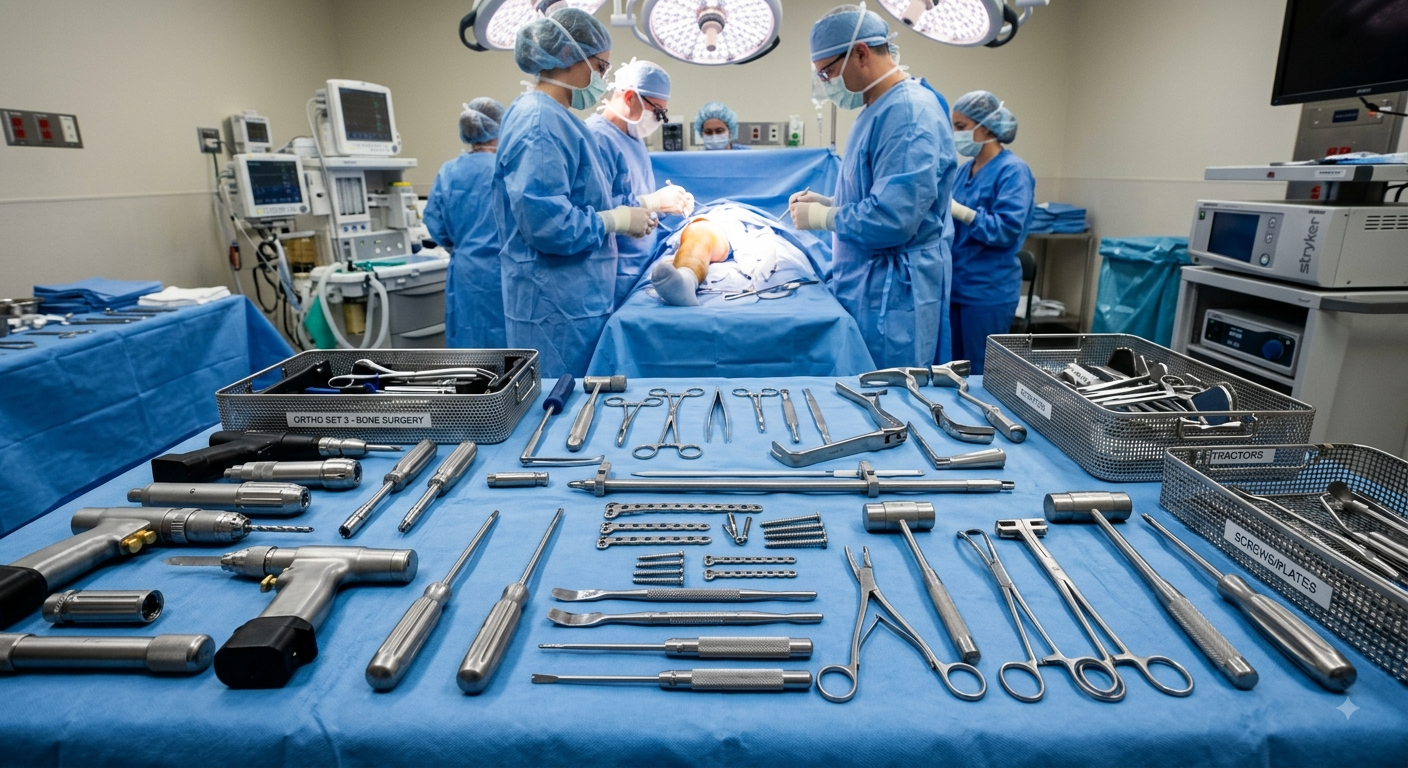
Orthopedic care plays an important role in treating problems related to bones, joints, muscles, ligaments, and other parts of the body that support movement. From fractures to joint damage, many conditions require careful treatment and, in some cases, surgery. During these procedures, doctors and surgeons depend on specialized tools to perform different tasks with accuracy and control. Orthopedic Instruments are designed to meet these needs and are an important part of modern orthopedic care.
The quality and design of a medical instrument can affect how easily a procedure is performed. The right tools help surgeons handle bones and tissues properly, prepare the treatment area, and complete specific surgical tasks. For this reason, hospitals and clinics need reliable orthopedic tools that are suitable for different procedures.
What Are Orthopedic Instruments?
Orthopedic instruments are medical tools made for procedures involving bones, joints, and related tissues. They help surgeons perform tasks such as cutting, holding, gripping, drilling, shaping, separating, and positioning. Different procedures require different tools, so orthopedic sets usually contain many types of instruments.
These tools are designed with strength and precision in mind. Bones are hard structures, and some orthopedic procedures require instruments that can handle pressure while still giving the surgeon good control. Other tools are made for more delicate work around muscles, ligaments, and soft tissues.
Importance in Fracture Treatment
Fractures are among the most common orthopedic problems. A broken bone may need to be moved back into its proper position and secured so it can heal correctly. During this process, surgeons use specialized instruments to hold, move, cut, and prepare bone.
Reliable tools make it easier for the surgical team to manage the treatment area. Bone-holding instruments can help maintain the position of bone fragments, while cutting and shaping tools may be used when needed. The right instrument allows the surgeon to work with better control and can support a more organized procedure.
Support for Joint Surgery
Joint surgery is another major area where orthopedic tools are important. Procedures involving the knee, hip, shoulder, elbow, and other joints may require careful preparation and accurate handling. Surgeons may need to remove damaged areas, prepare bone surfaces, or position components during treatment.
Specialized instruments are designed to support these tasks. Their shape, size, and working ends allow medical professionals to work in areas where accuracy is important. Using suitable tools can help the surgical team maintain a clear and controlled working process.
Better Surgical Precision
Precision is one of the main reasons orthopedic tools are important. Small differences in position or movement can matter during a surgical procedure. Surgeons need instruments that respond properly and allow them to apply the required amount of pressure.
Well-designed instruments provide a secure grip and stable handling. This can make it easier for a surgeon to complete a specific task without unnecessary movement. Precision also helps the surgical team follow the planned procedure more effectively.
Improving Surgical Efficiency
Time and organization are important in any surgical setting. Having the correct instruments ready before a procedure can help the surgical team work more efficiently. When instruments are well arranged and easy to identify, staff can quickly provide the tool required for each stage of the operation.
Orthopedic procedures can involve several steps, and each step may require a different tool. A properly prepared instrument set reduces unnecessary delays and supports a smooth workflow. This is especially useful in busy hospitals and surgical centers where many procedures are performed.
Connection With Surgical Instruments
Orthopedic tools are part of the wider category of Surgical Instruments. General surgical tools such as forceps, scissors, clamps, and retractors may be used in orthopedic procedures, while specialty orthopedic tools are made for tasks involving bone and joints.
The combination of general and specialty tools gives surgeons access to the equipment they need during different stages of treatment. For example, a procedure may require general tools for handling soft tissue along with stronger orthopedic instruments for working with bone.
This connection shows why hospitals need both general surgical equipment and specialty tools. Each instrument has a role, and the correct combination can support a more organized procedure.
Importance of Instrument Quality
Instrument quality is directly linked to performance. Medical tools are used repeatedly and must go through cleaning and sterilization after use. Poor-quality instruments may become damaged, lose their function, or develop problems over time.
High-quality orthopedic tools are usually made from durable materials that can handle regular use and sterilization. Stainless steel is widely used for many medical instruments because it provides strength and resistance to corrosion. A strong instrument can offer reliable performance when it is properly used and maintained.
Healthcare providers should consider more than price when selecting instruments. Material, design, durability, performance, and supplier reliability should all be considered before purchasing.
Role of Proper Design
The design of an orthopedic instrument can have a major effect on how it is used. Handles should provide a secure grip, while the working end should be designed for its intended task. A gripping instrument needs a different shape from a cutting or drilling tool.
Good design helps surgeons maintain control during procedures. It can also reduce difficulty when working in small or difficult-to-reach areas. Manufacturers continue to improve instrument designs to meet the changing needs of orthopedic surgery.
Importance of Sterilization and Maintenance
Orthopedic instruments must be cleaned and sterilized correctly before they are used again. Proper cleaning removes blood, tissue, and other material from the instrument. Sterilization then helps prepare the tool for safe medical use according to healthcare standards.
Regular inspection is also important. Instruments should be checked for corrosion, damage, loose parts, or changes in performance. Proper storage can protect instruments from unnecessary damage and help maintain their condition.
Good maintenance can extend the useful life of medical tools. It can also help healthcare facilities avoid problems caused by damaged or poorly maintained equipment.
Importance in Specialized Orthopedic Procedures
Orthopedic medicine includes many different procedures, and each may have its own instrument needs. Trauma surgery, joint replacement, bone repair, sports injury treatment, and reconstructive procedures can all require different tools.
Specialized instruments allow surgeons to select equipment based on the specific procedure. This makes it easier to handle different types of bone and tissue. Having a suitable range of instruments can also help hospitals support a wider variety of orthopedic treatments.
Relationship With Dental Instruments
Orthopedic and dental procedures are different, but both require accurate and reliable medical tools. Dental Instruments are made for procedures involving teeth, gums, and other oral structures, while orthopedic instruments are designed mainly for bones, joints, and related tissues.
Both categories require proper design, quality materials, cleaning, sterilization, and careful handling. The difference is mainly in the type of procedure and the part of the body being treated. This highlights the importance of using instruments that are made for a specific medical purpose.
Choosing Reliable Orthopedic Instruments
Healthcare facilities should choose orthopedic instruments based on their actual surgical needs. Factors such as material, strength, design, size, durability, and ease of cleaning should be considered. The reputation and reliability of the supplier are also important.
A trusted supplier can provide consistent products and help healthcare facilities maintain suitable instrument sets. Buying the right tools can support better organization and reduce the need to replace instruments frequently because of poor quality.
Conclusion
Orthopedic instruments are an essential part of modern orthopedic care. They help surgeons perform tasks related to cutting, holding, shaping, drilling, positioning, and handling bones and tissues. Their importance comes from the precision, control, strength, and efficiency they provide during medical procedures.
Quality instruments, combined with proper cleaning, sterilization, maintenance, and storage, can support reliable surgical work. As orthopedic treatments continue to develop, the need for well-designed and dependable instruments will remain important. Hospitals and clinics can benefit by choosing tools that match their procedures and meet the needs of trained healthcare professionals.

 English
 Arabic
 French
 Spanish
 Deutsch
 Turkish
 Dutch
Dutch
 Italiano
 Russian
 Romaian
 Portuguese (Brazil)
 Greek
Greek