


SOC Managed Services Providers: Safer Healthcare in India
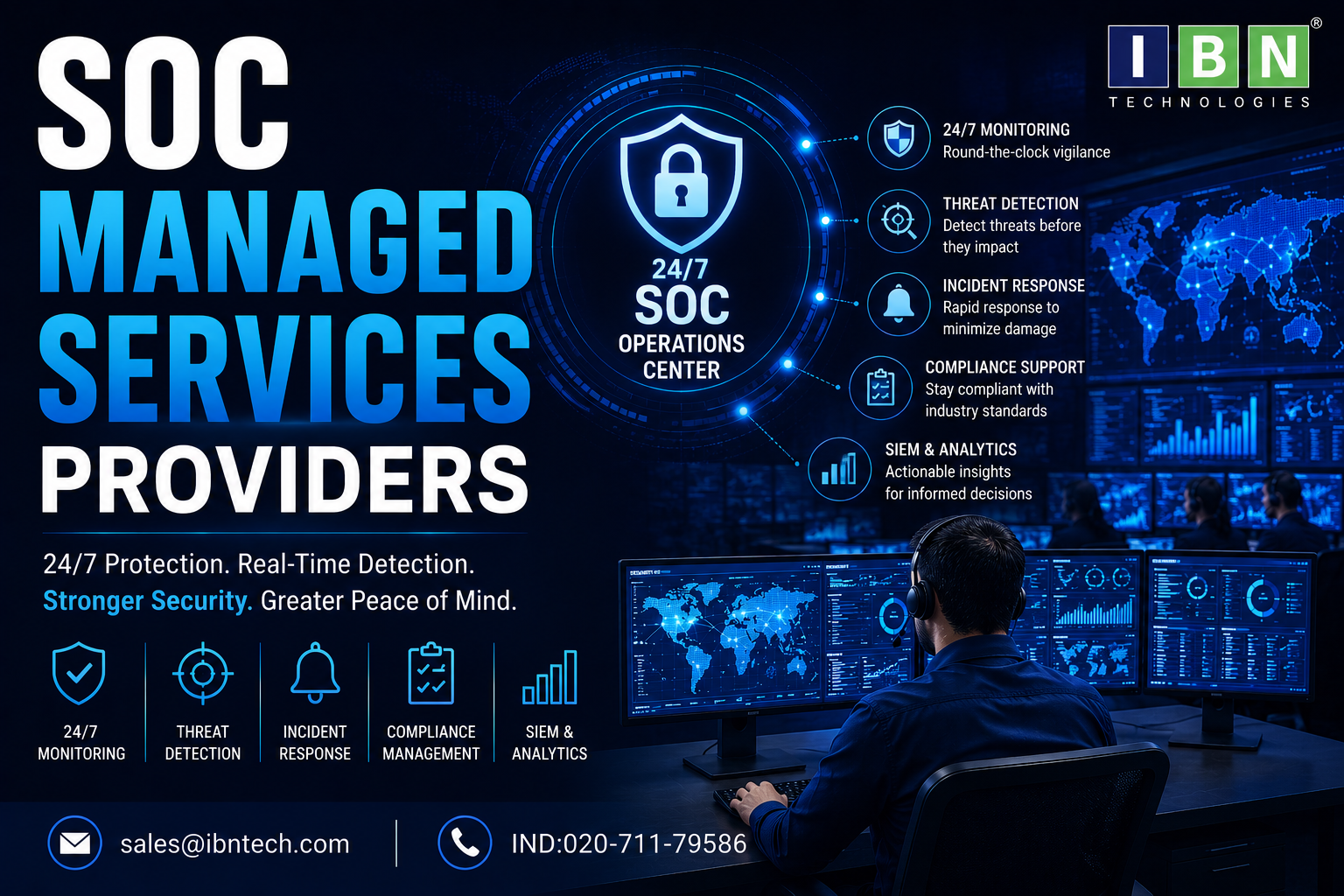
How SOC Managed Services Strengthen Healthcare Security in India
A modern healthcare organization depends on technology for much more than administrative work. Patient records, clinical applications, digital payments, appointment systems, diagnostic platforms, employee accounts, cloud services, and connected devices can all form part of the operating environment.
That connectivity creates a difficult security challenge. Healthcare providers need to protect sensitive information while keeping essential systems available for patients and staff. For organizations dealing with increasingly complex environments, soc managed services providers can provide continuous security monitoring and specialist expertise without requiring every security capability to be built internally.
The strongest approach connects security monitoring with incident response, governance, vulnerability management, and healthcare specific compliance requirements.
What Are SOC Managed Services Providers in Healthcare?
SOC managed services providers deliver outsourced security operations that continuously monitor an organization's technology environment for suspicious activity and potential threats.
A managed SOC combines security monitoring technologies with security analysts, investigation processes, threat intelligence, incident escalation, and reporting.
In healthcare, this model can help create a dedicated security operations function around critical systems while internal teams remain focused on clinical technology, infrastructure, applications, and patient services.
Why SOC Managed Services Providers Matter for Healthcare
Healthcare organizations handle information that requires careful protection. A security incident involving patient information can create privacy, operational, financial, and reputational consequences.
Healthcare environments can also contain a mixture of modern and legacy technologies. Clinical systems may operate alongside cloud applications, workstations, medical platforms, identity systems, network infrastructure, and third party services.
Monitoring such an environment requires visibility across multiple technology layers.
A managed SOC can provide a structured way to monitor security activity and investigate potential threats without placing every responsibility on the organization's internal IT team.
The Security Reality Facing Indian Healthcare
Healthcare organizations in India are undergoing rapid digital change. Hospitals and healthcare providers are adopting cloud applications, digital patient services, electronic records, online communication, and connected technology.
This creates new opportunities for better healthcare delivery, but it also expands the potential attack surface.
A compromised account can provide access to important systems. Malicious software can disrupt operations. Unauthorized access can expose sensitive information. Poorly secured legacy environments can introduce additional risk.
Security teams therefore need visibility that extends beyond individual devices or applications.
The goal is to understand what is happening across the environment and identify activity that may indicate a developing security incident.
Where Traditional Monitoring Creates Problems
Many healthcare organizations rely on internal IT teams to manage both technology operations and security.
This approach can work when the environment is manageable and appropriate expertise is available. However, security monitoring becomes harder as systems and data sources multiply.
Internal teams may need to respond to application issues, infrastructure problems, user requests, cloud operations, and security alerts at the same time.
Continuous security monitoring can then become difficult to maintain.
Another challenge is alert interpretation. Security tools can generate large amounts of information, but determining which activity represents a genuine threat requires context and experience.
A managed SOC can provide dedicated monitoring and investigation capabilities while allowing the internal healthcare team to remain involved in decisions that affect clinical and business operations.
What a Healthcare SOC Should Monitor
A healthcare security operation should be aligned with the organization's most important systems and data.
Relevant monitoring sources may include endpoints, servers, networks, identity systems, cloud workloads, applications, and other security technologies used within the environment.
The purpose is not to collect every possible event without a clear objective.
Monitoring should focus on activity that can help identify unauthorized access, malicious behavior, suspicious account activity, potential data exposure, ransomware indicators, and other threats relevant to the organization's risk profile.
Security analysts can then investigate unusual activity and determine whether escalation is appropriate.
IBN Technologies provides SOC and SIEM services with continuous monitoring, threat detection, incident response, threat intelligence, security device monitoring, and compliance reporting.
What Healthcare Leaders Should Evaluate
Healthcare CIOs and CISOs should begin with visibility requirements.
The provider should be able to explain what systems can be monitored and how new technologies can be incorporated as the environment changes.
Incident response is equally important. Healthcare leaders should understand how serious events are investigated and escalated and how responsibilities are divided between the provider and internal teams.
Data governance should receive careful attention because security monitoring can involve sensitive information.
Integration is another key consideration. The managed SOC should work with existing security infrastructure where possible rather than requiring unnecessary technology replacement.
Reporting should be understandable to both technical and executive stakeholders.
Finally, the provider should demonstrate an understanding of healthcare security requirements and the importance of maintaining operational continuity.
A Healthcare Security Scenario
Consider an Indian healthcare group operating hospitals, clinics, and digital patient services.
As the organization expands, its technology environment becomes increasingly distributed. Employees use multiple applications, patients interact through digital platforms, and different facilities depend on shared infrastructure.
The internal IT team is responsible for keeping these systems operational while also responding to security concerns.
A managed SOC can provide continuous monitoring across relevant systems and help security analysts investigate suspicious activity.
If an unusual login pattern or other potentially harmful activity is identified, the provider can investigate and escalate according to the agreed response process.
This gives the healthcare organization a structured security monitoring capability without requiring internal employees to investigate every event themselves.
A Practical Security Operations Checklist
Identify critical patient and business systems.
Determine which applications and infrastructure would have the greatest operational or privacy impact if compromised.
Map sensitive data environments.
Understand where patient information and other confidential information are stored, processed, and transmitted.
Define monitoring priorities.
Select the security events and systems that are most relevant to the organization's risk profile.
Establish escalation procedures.
Document how suspected ransomware, unauthorized access, compromised accounts, and other serious incidents should be communicated.
Clarify provider responsibilities.
Define what the managed SOC can investigate or respond to and when internal approval is required.
Review access controls.
Ensure security monitoring systems and information are accessible only to authorized personnel.
Connect monitoring with response.
Detection should lead to an established process for investigation, containment, recovery, and communication.
Review security operations regularly.
Monitoring requirements should evolve as the healthcare environment, technology, and threat landscape change.
Healthcare Compliance and Security Operations
Healthcare organizations need to consider privacy and security obligations alongside their operational responsibilities.
Depending on their activities, location, customers, and international relationships, healthcare providers may need to consider requirements such as the Digital Personal Data Protection Act, HIPAA, ISO 27001, SOC 2, GDPR, and PCI DSS.
A managed SOC can support these requirements through continuous monitoring, incident records, security reporting, and compliance oriented processes.
However, security operations should not be confused with compliance certification.
Effective compliance requires a broader framework that can include risk management, access controls, vulnerability assessments, employee awareness, security policies, incident response, and governance.
IBN Technologies provides healthcare cybersecurity and compliance services, including SOC and SIEM monitoring, HIPAA focused VAPT services, and compliance management. Its stated healthcare certifications and compliance areas include ISO 27001, SOC 2 Type II, and HIPAA.
Building Healthcare Security Around Continuous Monitoring
Healthcare cybersecurity needs to support both data protection and operational resilience. Organizations cannot rely solely on occasional assessments or manual review of security alerts when their technology environments are constantly active.
A managed security operations model can provide the monitoring discipline and specialist expertise required to identify suspicious activity and support timely investigation.
The right soc managed services providers can help Indian healthcare organizations strengthen visibility while reducing the operational burden on internal IT teams. IBN Technologies can be considered by healthcare leaders looking to connect managed SOC and SIEM capabilities with vulnerability assessment, incident response, and compliance requirements as part of a broader security program.
Contact Us:
IND- 02067680404
IBN Technologies Ltd.
E-mail: - sales@ibntech.com

 English
 Arabic
 Spanish
 Portuguese
 Deutsch
 Turkish
 Dutch
Dutch
 Italiano
 Russian
 Romaian
 Portuguese (Brazil)
 Greek
Greek