


Can Root Canal Treatment Fix Deep Tooth Decay?
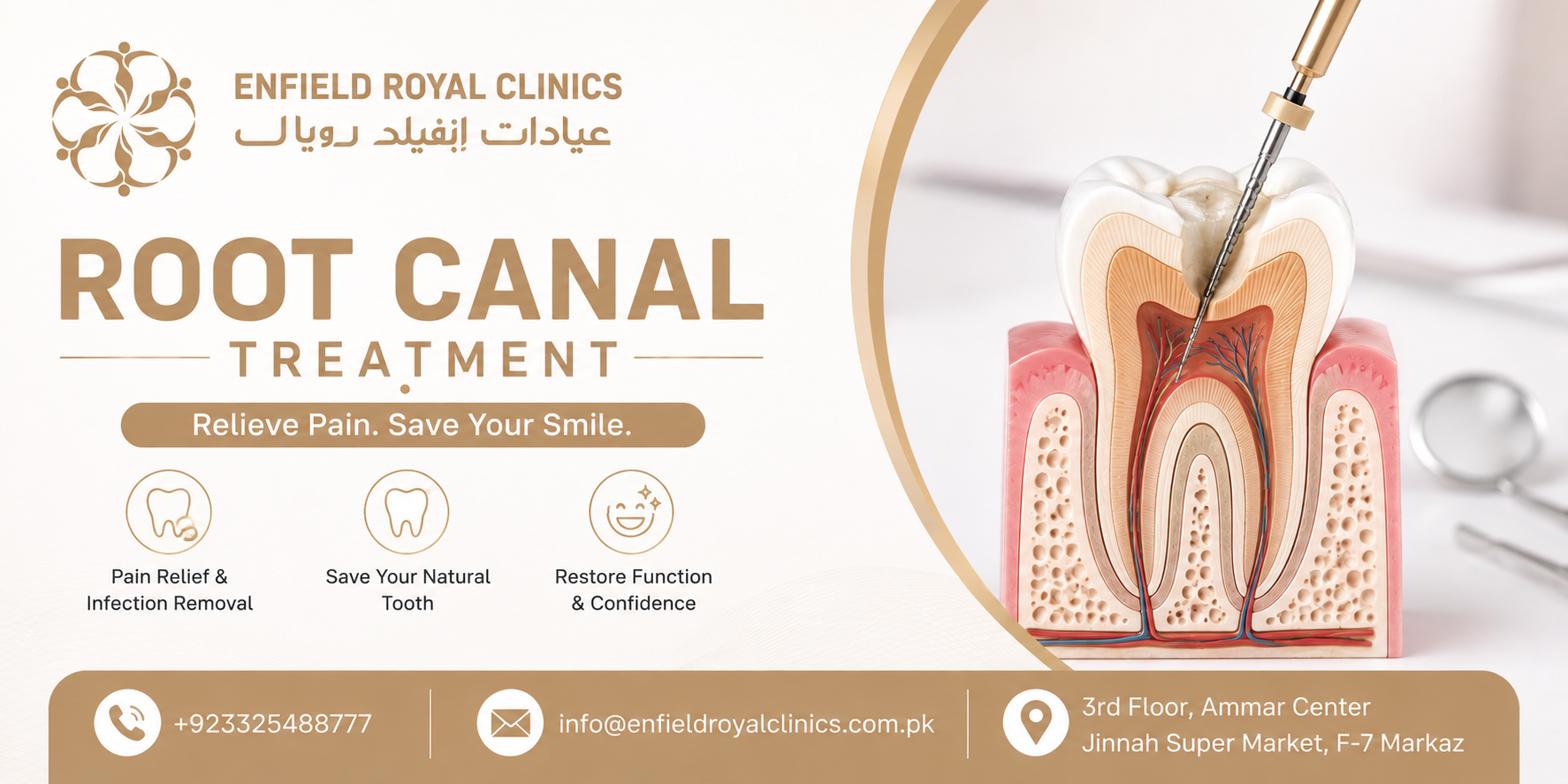
Deep tooth decay can become much more serious than a simple cavity. When decay progresses through the outer layers of a tooth and reaches the soft tissue inside, the tooth may become infected or severely inflamed. At this stage, a regular filling may no longer be enough.
Root Canal Treatment can often treat a tooth affected by deep decay by removing the damaged pulp, cleaning the internal canals, and sealing the tooth. The goal is to control infection while preserving the natural tooth whenever it remains suitable for restoration.
How Does Deep Tooth Decay Develop?
Tooth decay generally starts when bacteria in the mouth produce acids that gradually weaken the enamel. Frequent sugary foods and drinks, poor oral hygiene, and inadequate dental care can increase the risk.
At an early stage, decay may affect only the enamel and cause no noticeable symptoms. As it progresses into the dentin beneath the enamel, the tooth may become sensitive or painful.
If decay continues moving deeper, it can eventually reach the pulp. Once bacteria enter this inner area, inflammation or infection can develop and require more advanced treatment.
What Happens When Decay Reaches the Pulp?
The pulp contains nerves, blood vessels, and connective tissue. When deep decay reaches this area, bacteria can cause significant irritation and infection.
Patients may experience persistent toothache, sensitivity to hot or cold, pain while chewing, swelling, or an unpleasant taste. However, some teeth may develop serious pulp damage with relatively few symptoms.
Once the pulp is irreversibly inflamed or infected, it cannot simply be repaired with a normal filling. The damaged tissue generally needs to be removed to control the problem.
Can a Filling Still Fix the Tooth?
A filling is often an effective solution for early or moderate cavities. It removes the decayed portion and replaces it with restorative material.
However, if decay has reached the pulp, placing a filling over the cavity does not remove the infected tissue inside the tooth. The infection may continue developing beneath the restoration.
In such circumstances, the dentist may recommend internal treatment instead of trying to repair the tooth with a filling alone. The exact choice depends on the condition of the pulp and remaining tooth structure.
How Does Treatment Manage Deep Decay?
The procedure focuses on the part of the tooth affected by the infection. After the tooth is examined and numbed, the dentist creates a small opening to access the pulp chamber.
The damaged tissue is removed, and the internal canals are cleaned and shaped. Specialized instruments and disinfecting solutions help reduce bacteria and remove debris from these narrow spaces.
The canals are then filled and sealed to reduce the chance of bacteria entering again. The tooth is subsequently restored to provide strength and function.
What Happens to the Tooth Afterward?
Once the internal problem has been treated, the remaining tooth structure needs to be protected. The type of restoration depends on how much healthy structure remains.
A permanent filling may be appropriate for some teeth, especially when sufficient structure remains. A crown may be recommended when extensive decay has weakened the tooth significantly.
Back teeth often require greater protection because they experience substantial chewing pressure. A properly fitted crown can help reduce the risk of fracture and restore the tooth's shape.
Can Deep Decay Be Treated Without Extraction?
In many cases, yes. If enough healthy structure remains and the roots and surrounding tissues are suitable, Root Canal Treatment may allow the natural tooth to be preserved.
Keeping the natural tooth can help maintain normal chewing and reduce the need for replacement options such as bridges or implants.
However, not every severely decayed tooth can be saved. If decay has destroyed most of the tooth, or if there is a serious root fracture or inadequate supporting tissue, extraction may provide a more predictable result.
What Are the Signs That Decay Has Become Severe?
Deep decay can produce several warning signs. Common symptoms include prolonged sensitivity to hot or cold, spontaneous toothache, pain while chewing, swelling around the tooth, tenderness, and visible dark or damaged areas.
A persistent bad taste or a small swelling on the gum can sometimes indicate an infection.
Sudden relief from severe pain does not always mean that the tooth has healed. In some cases, the pulp may have lost its vitality while infection continues developing around the root.
How Does a Dentist Confirm the Problem?
A dentist usually begins by reviewing your symptoms and examining the affected tooth. Dental X-rays are often useful for evaluating the depth of decay, the roots, and the surrounding bone.
Additional tests may be used to determine how the pulp responds to temperature or pressure. The dentist also considers whether enough healthy tooth structure remains for a successful restoration.
These findings help distinguish deep decay requiring internal treatment from problems that can still be managed with a filling or other conservative procedure.
What Happens If Deep Decay Is Ignored?
Ignoring severe decay can allow bacteria to spread beyond the tooth. Infection may reach the tissues around the root and lead to an abscess, swelling, or bone damage.
As the tooth continues to lose structure, it can become more fragile and susceptible to cracking. This may eventually make restoration difficult or impossible.
Early treatment can often preserve more healthy tooth structure and improve the chance of keeping the natural tooth.
Is Treatment Painful?
Modern dental treatment uses local anesthesia to numb the affected area. During the procedure, patients may feel pressure or vibration, but significant sharp pain should not normally occur.
Some tenderness may occur afterward because the tissues surrounding the root can remain irritated while healing. This usually improves over time.
If severe or worsening pain develops after treatment, the dentist should be contacted for further assessment.
Can Deep Decay Be Prevented?
Preventing advanced decay is easier than treating it after it reaches the pulp. Brush twice daily with fluoride toothpaste and clean between your teeth regularly.
Limiting frequent sugary snacks and drinks can also reduce the repeated acid attacks that contribute to decay. Regular dental examinations allow small cavities to be detected before they become deep.
Treating damaged fillings, cracks, or early cavities promptly can further reduce the risk of serious infection.
Final Thoughts
Yes, Root Canal Treatment can fix the internal effects of deep tooth decay when the decay has reached the pulp and caused irreversible inflammation or infection. The procedure removes the damaged tissue, cleans the canals, and seals the tooth so it can be restored.
However, treatment cannot rebuild tooth structure that has already been completely destroyed. The success of saving the tooth depends on the remaining healthy structure, root condition, supporting tissues, and quality of the final restoration.
Seeking dental care when decay or sensitivity first appears can help prevent a small cavity from becoming a complex problem and may give the natural tooth a much better chance of lasting for years.
For more information visit Enfield royal clinic in islamabad

 English
 Arabic
 French
 Spanish
 Portuguese
 Deutsch
 Turkish
 Dutch
Dutch
 Russian
 Romaian
 Portuguese (Brazil)
 Greek
Greek