


How to Choose the Right Stock Market Data API for Your Business
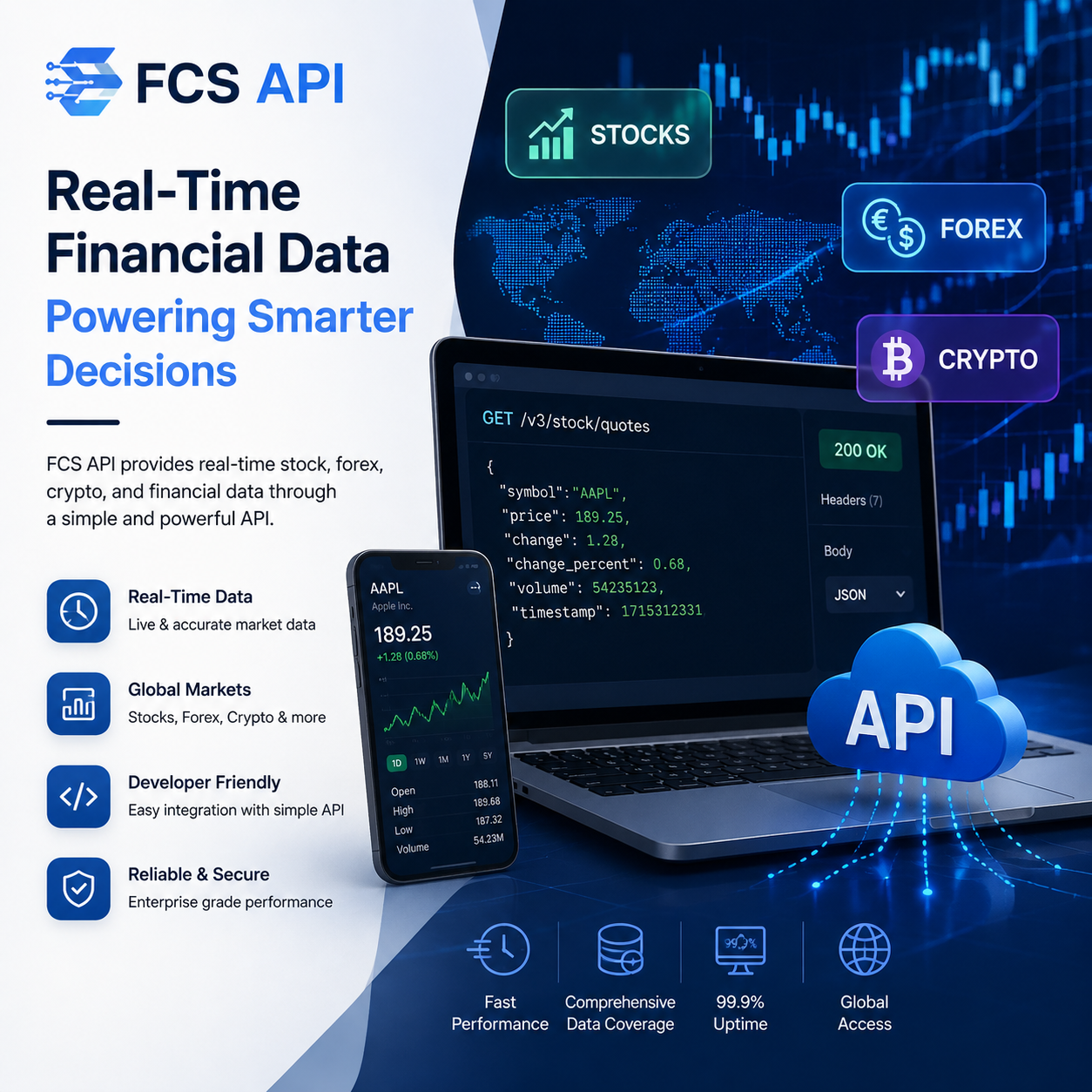
Financial data is an important part of many modern businesses. Trading platforms, financial websites, investment applications, stock screeners, and market research tools all depend on accurate information. When users visit a financial platform, they expect to see reliable prices, market trends, historical data, and other information without unnecessary delays.
A stock market data api can help businesses provide this information through their websites and applications. Instead of collecting financial data manually, developers can connect their products to an API and retrieve market information automatically.
However, choosing the right API is not always simple. Different providers offer different markets, data types, features, pricing plans, and usage limits. A Stock Exchange Data API that works well for one business may not be the best option for another.
This guide explains the main factors businesses should consider when choosing a stock market data API.
What Is a Stock Market Data API?
A stock market data API is a software interface that allows applications to access financial market information from a data provider. It creates a connection between the provider's data and a business's website, application, or financial platform.
How Does a Stock Market Data API Work?
When an application needs financial information, it sends a request to the API. The API processes the request and returns the requested information in a structured format.
For example, a stock analysis website may request information about a specific company. The API can return information such as its current or latest available price, daily high and low, opening price, previous close, trading volume, and historical prices.
The website can then use this information to create tables, charts, dashboards, screeners, or other financial tools.
Why Businesses Use Financial APIs
Building a complete market data system internally can require significant time and technical resources. Businesses may need to collect information from different sources, process it, update it, and maintain the infrastructure.
An API can simplify this process. Developers can connect their applications to a financial data provider and focus more on building useful features for their users.
What Should You Look for in a Stock Exchange Data API?
There are several factors to consider before choosing a provider. The right option should match your business requirements rather than simply offering the largest number of features.
Check Market Coverage
The first thing to consider is which markets the API covers.
Some businesses only need stock information, while others may want data for multiple asset classes. Depending on the provider, financial APIs can cover:
-
Stocks
-
Stock exchanges
-
Indices
-
ETFs
-
Forex
-
Cryptocurrencies
-
Commodities
If your business plans to expand in the future, choosing an API with broader market coverage can make that expansion easier.
Check the Available Data
Not every API provides the same type of information. Before choosing a provider, determine exactly what your application needs.
You may need current prices, historical prices, trading volume, company information, exchange rates, market news, or other financial data.
A good Stock Exchange Data API should provide the information required by your application's features.
Evaluate Data Accuracy and Reliability
Financial applications depend on trustworthy information. If users notice incorrect or inconsistent market information, they may lose confidence in the platform.
Why Data Accuracy Matters
Investors and traders often use market information for research and decision-making. Incorrect prices or outdated information can make an application less useful.
For this reason, businesses should evaluate the reliability of a provider before integrating its data into an important product.
Consider Data Availability
Businesses should also consider how consistently the API provides data. Downtime or frequent service interruptions can affect applications that depend on financial information.
Look for information about the provider's reliability, service availability, and technical infrastructure before making a decision.
Consider Real-Time and Historical Data
Different applications have different data requirements. A trading-related platform may require frequently updated information, while a research website may rely more heavily on historical data.
Real-Time or Frequently Updated Data
Applications that track active market movements may need data that is updated frequently. This can help users follow price changes and market conditions more effectively.
Before selecting an API, determine whether you need real-time, delayed, or periodically updated data.
Historical Market Data
Historical information is useful for research, charts, comparisons, and market analysis.
For example, a business may want its users to view the historical performance of a stock over several months or years. In this case, the API should provide enough historical information to support those features.
A reliable stock market data api should make it practical for developers to access the historical data their applications require.
Review API Documentation and Developer Experience
Even a powerful API can become difficult to use if its documentation is unclear.
Look for Clear Documentation
Good documentation should explain how developers can authenticate their requests, select endpoints, send parameters, and understand API responses.
Clear examples can make integration much easier, especially for developers who are using the service for the first time.
Check Available Support
Technical problems can occur during integration. Businesses should consider whether the provider offers useful documentation, support resources, or assistance for developers.
Good technical support can reduce the time needed to solve integration issues.
Compare Pricing and Usage Limits
Cost is another important factor when choosing a financial API.
Understand the Pricing Model
Different providers may use different pricing models. Some may offer free access with limitations, while others provide paid plans based on features, requests, markets, or usage.
Businesses should calculate their expected API usage before selecting a plan.
Check API Request Limits
An application with a small number of users may require fewer requests than a large financial platform.
Check the provider's request limits and make sure they are suitable for your expected traffic. If your business grows, you should also understand whether the API can support higher usage.
Consider Scalability
Your API requirements may change as your business grows.
Planning for Future Growth
A small financial website may initially need only basic stock prices. Later, it may add charts, screeners, historical analysis, forex data, cryptocurrency information, or additional markets.
Choosing a flexible Stock Exchange Data API can make it easier to add new features as your business develops.
Supporting More Users
As user traffic increases, your application may make more API requests. Before choosing a provider, consider whether its plans and infrastructure can support your expected growth.
A provider that meets your needs today should ideally also offer options for larger usage in the future.
Look at API Performance
Performance can directly affect the user experience of a financial application.
Response Speed
If an application takes too long to retrieve market information, users may find it frustrating. Businesses should consider how quickly the API can respond to requests and whether its performance matches their application's needs.
Consistent Performance
Speed is useful, but consistency is also important. An API that performs well sometimes but experiences frequent slowdowns may create problems for a financial platform.
Businesses should evaluate performance based on their specific requirements and expected traffic.
Check Security and Authentication
Financial applications should also take security seriously.
Secure API Access
Businesses should understand how the API handles authentication and access credentials. API keys and other credentials should be managed carefully within the application's infrastructure.
Protecting Business Systems
Developers should follow secure practices when integrating third-party APIs. API credentials should not be unnecessarily exposed in public-facing applications or source code.
Security should be considered alongside pricing, data coverage, and performance when selecting a provider.
Why FCS API Can Be an Option for Businesses
FCS API is a financial information platform that provides market data, news, and analysis for global financial markets.
Coverage Across Multiple Markets
FCS API covers stocks, cryptocurrencies, forex, commodities, ETFs, and indices. This broad range can be useful for businesses that want to build financial applications covering multiple asset classes.
Market Data and Analysis Tools
The platform provides financial information that can be used to track prices and market trends. Businesses can use this type of information when developing dashboards, charts, analysis tools, and other financial features.
Additional Financial Resources
Along with market information, FCS API offers charts, economic updates, and educational content. These resources can help financial platforms provide users with a broader market research experience.
Questions to Ask Before Choosing an API
Before making a final decision, businesses should create a list of their requirements.
Questions About Data
Ask:
-
Which markets do we need?
-
Do we need real-time or delayed information?
-
How much historical data do we require?
-
Do we need stock, forex, cryptocurrency, commodity, ETF, or index data?
-
Which financial metrics are important for our application?
Questions About Technology
Also consider:
-
Is the API easy to integrate?
-
Is the documentation clear?
-
Are there usage limits?
-
Can the API support future growth?
-
What happens if the service becomes unavailable?
-
Is technical support available?
Answering these questions can help businesses compare providers more effectively.
Conclusion
Choosing the right stock market data api is an important decision for any business that depends on financial information. The cheapest or most feature-rich API is not necessarily the best choice. The right provider should match your application's actual requirements.
Businesses should evaluate market coverage, data accuracy, real-time and historical information, documentation, pricing, usage limits, performance, security, and scalability before making a decision.
A reliable Stock Exchange Data API can make it easier to build financial websites, trading tools, dashboards, screeners, and analytical applications. It can also reduce the need for businesses to create their own market data infrastructure.
As financial technology continues to grow, having dependable access to market information will remain important. By carefully comparing API providers and choosing one that fits both current and future requirements, businesses can build stronger financial products and provide users with a more useful market analysis experience.

 English
 Arabic
 French
 Portuguese
 Deutsch
 Turkish
 Dutch
Dutch
 Italiano
 Russian
 Romaian
 Portuguese (Brazil)
 Greek
Greek