


soc services: Essential Cybersecurity Protection for Indian Healthcare
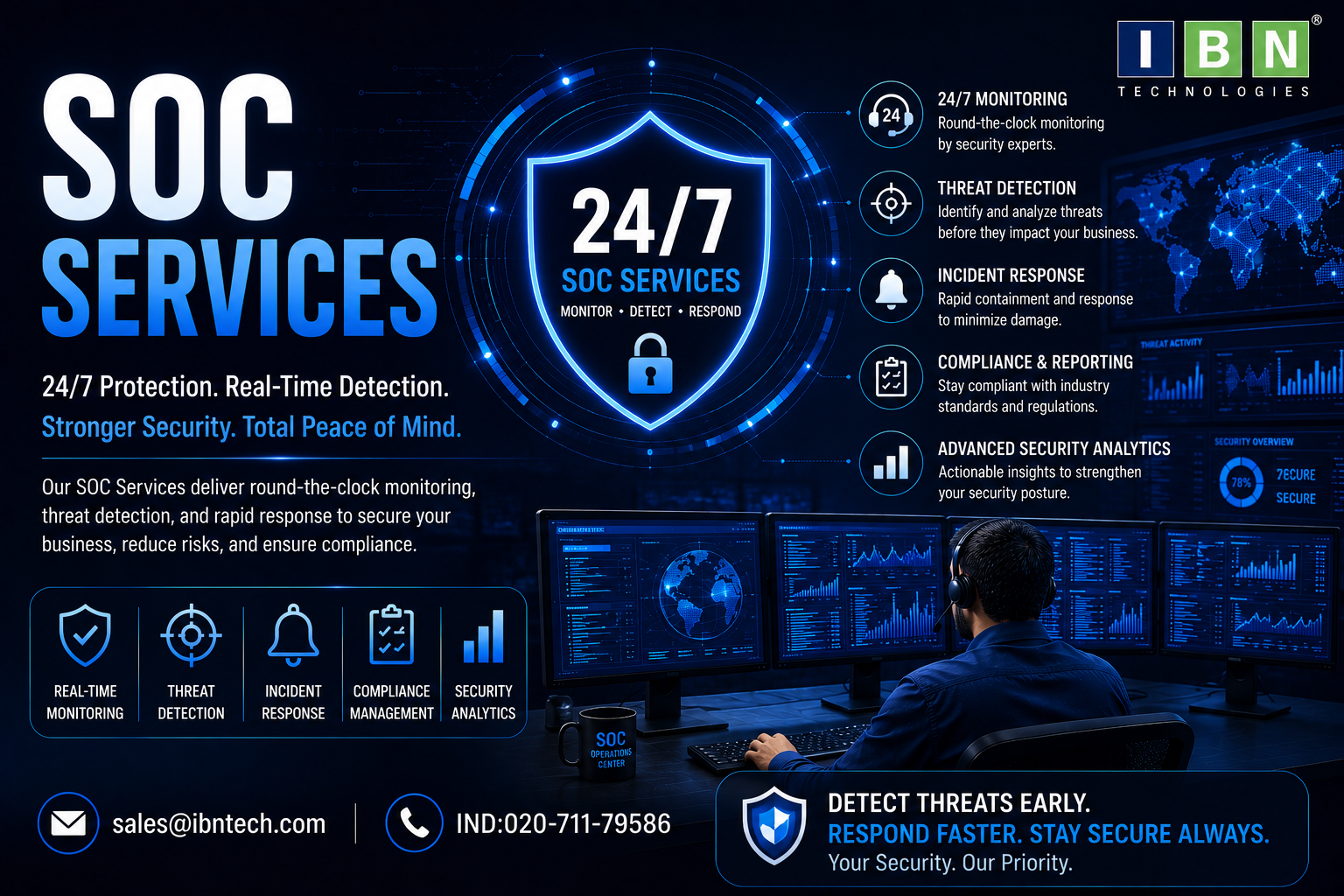
Why soc services deserve a healthcare-specific approach
soc services provide continuous monitoring and security operations designed to identify, investigate, and respond to suspicious activity across an organisation's technology environment. In healthcare, their importance extends beyond protecting corporate systems because clinical applications, patient information, connected platforms, and administrative workflows may all depend on the same digital infrastructure.
Indian healthcare organisations are rapidly expanding digital services. Hospitals, clinics, healthtech businesses, and other providers may operate electronic records, patient portals, practice-management platforms, cloud applications, diagnostic systems, and external integrations simultaneously.
That complexity changes what effective security monitoring needs to accomplish.
Patient care changes the risk calculation
A security incident in healthcare can have consequences beyond data exposure. If a critical application becomes unavailable, staff may face disruption to administrative or clinical workflows, depending on the systems affected.
Patient information also carries significant sensitivity. Unauthorised access to health records, billing information, identity data, or other protected information can create privacy, regulatory, financial, and reputational concerns.
Healthcare cybersecurity monitoring therefore needs to account for operational context. A security team should understand which systems are important, what normal activity looks like, and which events require immediate escalation.
The limitations of periodic security reviews
Vulnerability assessments and periodic security reviews remain useful, but they provide a different type of visibility from continuous monitoring. A point-in-time assessment may identify weaknesses without detecting what is happening across the environment between assessments.
The same limitation can affect teams that rely heavily on manual log reviews. Healthcare technology environments generate events across many systems, and an internal team may not have the time or specialist capacity to investigate every meaningful signal.
Security products alone do not solve this problem. A SIEM can centralise and correlate data, but effective operations still require defined monitoring, investigation, escalation, and response processes.
What healthcare cybersecurity monitoring should cover
The right monitoring scope starts with the organisation's technology map. Security leaders should identify clinical systems, patient-facing applications, identity platforms, endpoints, cloud workloads, network infrastructure, and important third-party connections.
The next question is visibility. Relevant security events need to reach the monitoring function in a form that can be analysed and correlated.
Identity deserves particular attention. Healthcare environments can involve clinicians, administrators, contractors, technology teams, and external service providers, each with different access requirements. Unusual authentication activity, privileged-account behaviour, or unexpected access patterns may warrant investigation.
Where soc services fit into healthcare operations
A managed security model can provide continuous oversight without requiring every healthcare organisation to establish a fully staffed security operations function internally.
IBN Technologies provides SOC and SIEM services with continuous monitoring, threat intelligence, incident response, and audit-ready reporting. Its healthcare offering also describes 24/7 SOC and SIEM monitoring, VAPT services, and security and compliance support for hospitals, clinics, healthtech organisations, and healthcare providers.
The appropriate operating model should reflect the organisation's size, internal expertise, technology landscape, and risk tolerance. Some organisations may benefit from extensive managed coverage, while others may use external monitoring to supplement an internal security team.
How an effective monitoring model works
Implementation should begin with discovery rather than immediately switching on every possible alert. The organisation and service provider need to determine which systems are in scope, what telemetry is available, and what types of events should trigger investigation.
Alert rules and detection logic should then be tuned to reduce unnecessary noise. An excessive number of low-value alerts can make it harder for analysts to recognise events that deserve urgent attention.
When suspicious activity is identified, the response process should be unambiguous. The monitoring team needs to know who receives the escalation, what information must accompany it, which containment actions are authorised, and when healthcare leadership or other stakeholders need to be involved.
Reporting closes the operational loop. Useful reports should help security and management teams understand significant incidents, recurring risks, unresolved issues, and trends in the environment.
Why healthcare organisations benefit from a managed approach
A managed model can provide additional security capacity without requiring the healthcare organisation to recruit and retain every specialist function internally. This can be particularly relevant where technology teams are already responsible for infrastructure, applications, support, compliance, and digital transformation.
Continuous visibility can also improve the connection between detection and remediation. If recurring alerts point to an outdated system, weak access control, or a configuration issue, the security team can use those findings to drive corrective action rather than treating each alert as an isolated event.
The benefit is therefore not simply round-the-clock observation. It is the creation of a repeatable security process that connects technology signals with human decisions.
A realistic healthcare scenario
Imagine a growing healthcare provider operating several facilities with a mixture of established clinical systems and newer cloud-based applications. Different teams manage different technologies, and security logs are available but not consistently reviewed through a central process.
The organisation experiences an unusual authentication event involving an account with access to an important application. Without continuous monitoring, the event could remain buried among routine activity until a later review.
Under a structured monitoring model, the event is correlated with related activity and escalated for investigation. The internal team can then determine whether the account activity was legitimate, compromised, or associated with an operational change.
This scenario illustrates why visibility needs to be connected with response. Detection has value only when the organisation has a defined path for deciding what happens next.
Best-practice checklist for healthcare security leaders
Map clinical and administrative systems requiring security visibility
Identify repositories containing sensitive patient or business information
Review privileged and third-party access regularly
Prioritise identity-related security events
Centralise relevant logs where technically appropriate
Define incident escalation roles before an incident occurs
Separate monitoring responsibilities from business decision authority
Test response procedures against realistic healthcare scenarios
Connect recurring alerts with vulnerability remediation
Maintain clear records for security and compliance reporting
Review monitoring scope whenever new digital services are introduced
Compliance considerations for Indian healthcare
Security monitoring should support, not replace, the organisation's broader privacy and compliance programme. Healthcare organisations may need to consider Indian data protection requirements, contractual obligations, healthcare-specific expectations, and international frameworks where their services or customers make those relevant.
IBN Technologies' healthcare security offering references HIPAA, HITECH, ISO 27001, SOC 2, GDPR and other compliance considerations, alongside Indian requirements such as DPDPA. The organisation's actual compliance scope should be determined from its business model, data flows, customer commitments, and applicable legal obligations.
Audit-ready reporting can be particularly useful because it creates a record of security activities and incidents. However, evidence should reflect real operational practices rather than being assembled only when an assessment or customer questionnaire arrives.
Selecting the right healthcare security partner
Healthcare leaders should evaluate whether a provider understands the operational sensitivity of clinical environments. The discussion should cover monitoring scope, escalation processes, integration with existing technology, reporting, incident response, and how the service handles changes to the environment.
It is also worth asking how the provider distinguishes meaningful threats from routine activity. A service that generates large volumes of alerts without effective prioritisation can increase workload rather than reduce it.
Healthcare organisations should additionally establish ownership boundaries. The provider may monitor and investigate events, but the healthcare organisation still needs clear authority for decisions involving patient operations, system changes, communications, and business continuity.
The most useful security programme is one that works alongside healthcare operations rather than competing with them. For Indian providers managing increasingly connected clinical and administrative environments, soc services can provide the continuous visibility needed to detect abnormal activity, support timely response, and strengthen the evidence behind a broader security and compliance programme.
Contact Us:
IND- 02067680404
IBN Technologies Ltd.
E-mail: - sales@ibntech.com

 Arabic
 French
 Spanish
 Portuguese
 Deutsch
 Turkish
 Dutch
Dutch
 Italiano
 Russian
 Romaian
 Portuguese (Brazil)
 Greek
Greek