


Which Air Compressor Machine Factors Increase Energy Consumption at jinglitools
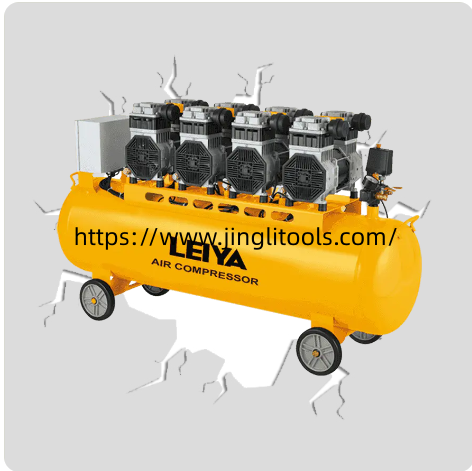
Air Compressor Machine energy consumption can become a concern when electricity costs rise without an obvious change in production. Several factors may contribute to higher power use, including pressure settings, equipment capacity, maintenance conditions, leakage, operating schedules, and changing production requirements. Looking at the complete compressed gas system can help manufacturers identify unnecessary consumption and make more informed equipment decisions.
Start With Actual Production Demand
One common reason for increased energy use is a mismatch between equipment capacity and actual production requirements. A unit selected for occasional peak demand may operate for extended periods at a much lower workload. This operating pattern can result in unnecessary power consumption.
Before replacing equipment, manufacturers can record production schedules, required pressure, flow demand, operating hours, and periods of low activity. Comparing these figures with electricity consumption can provide useful information about how the system behaves throughout the working day.
Production demand may also change between shifts, seasons, or different manufacturing processes. A configuration that fits one production stage may not be suitable when requirements change significantly. Regular monitoring can therefore support better purchasing and operating decisions.
Check for Leakage
Leakage is another factor that deserves attention. Connections, hoses, valves, fittings, seals, and joints can gradually develop problems through normal use. Multiple small leakage points may create continuous demand and cause equipment to operate longer than necessary.
Manufacturers can establish routine inspection procedures for connections and other components. Unusual sounds, pressure changes, and unexpected operating periods may provide useful clues. Professional detection equipment can also help locate leakage points that are difficult to identify during normal production.
Reducing unnecessary losses does not always require major equipment changes. In some facilities, repairing damaged connections and improving inspection routines can help control operating expenses.
Review Pressure Requirements
Operating pressure should match actual production needs. Increasing pressure simply to create additional capacity may increase power consumption without providing a practical benefit.
Manufacturers should identify the pressure range required by connected production equipment. Components throughout the distribution system should also be inspected for pressure losses. Filters, dryers, valves, pipes, and fittings can all influence the pressure available at the point of use.
If pressure decreases significantly between the equipment outlet and production area, operators may increase the main setting to compensate. Investigating the source of the pressure loss can be more practical than continuously raising the operating setting.
A suitable pressure strategy should consider production requirements, equipment specifications, distribution conditions, and expected future demand.
Keep Maintenance Consistent
Equipment condition can have a direct influence on power consumption. Blocked filters, restricted passages, worn components, lubrication issues, motor problems, and inadequate cooling may affect operating conditions.
A structured maintenance schedule should cover filters, lubrication, condensate drainage, electrical components, motors, belts where applicable, connections, and cooling areas.
Manufacturers can also maintain records covering operating hours, service dates, unusual sounds, temperature changes, and electricity consumption. Reviewing these records over time can make gradual changes easier to identify.
Maintenance should therefore be treated as part of operational management rather than simply a repair activity. Consistent inspections may help manufacturers identify potential issues before they affect production schedules or operating costs.
Consider Changing Production Loads
Industrial production rarely maintains the same demand throughout an entire day. Startup periods, shift changes, breaks, product changes, and different processing stages can create significant variations.
Control strategies can help equipment respond more appropriately to changing requirements. Variable speed technology may also be considered for applications where demand changes frequently.
However, the appropriate configuration depends on duty cycle, pressure range, flow requirements, motor characteristics, installation conditions, expected operating hours, and maintenance plans.
Manufacturers should therefore evaluate the complete production profile before selecting a configuration. Looking at actual usage patterns can provide a more practical basis for equipment selection than relying on a single specification.
Select Equipment According to Application Needs
When purchasing new equipment, manufacturers should begin with clearly defined operating requirements. Important factors may include required flow, working pressure, operating hours, power supply, installation space, cooling conditions, ambient temperature, maintenance requirements, and future production plans.
Equipment that is significantly larger than the actual requirement may increase operating expenses. Equipment with insufficient capacity, meanwhile, may create operational challenges. A suitable configuration should reflect the intended application while allowing for realistic changes in production demand.
jinglitools provides industrial equipment options that can be evaluated according to different application requirements. Manufacturers, distributors, and industrial buyers can review technical specifications and consider how different configurations correspond with their working conditions.
Build a Practical Energy Management Routine
Unexpected electricity consumption is easier to investigate when manufacturers review multiple factors instead of focusing on one component. Monitoring production demand, checking leakage, reviewing pressure settings, maintaining equipment, and evaluating control strategies can provide useful information for managing operating costs.
Energy management should also be treated as an ongoing process. Production requirements may change over time, and equipment settings that were appropriate several years ago may no longer match current workloads.
For businesses planning a new installation, equipment replacement, or production upgrade, jinglitools offers product options for different industrial applications. To review available products and compare configurations according to your requirements, visit https://www.jinglitools.com/

 English
 Arabic
 French
 Spanish
 Portuguese
 Deutsch
 Turkish
 Dutch
Dutch
 Italiano
 Russian
 Romaian
 Greek
Greek