


What are the benefits of choosing professional Modular Ophthalmic OT Manufacturers?
INTRODUCTION
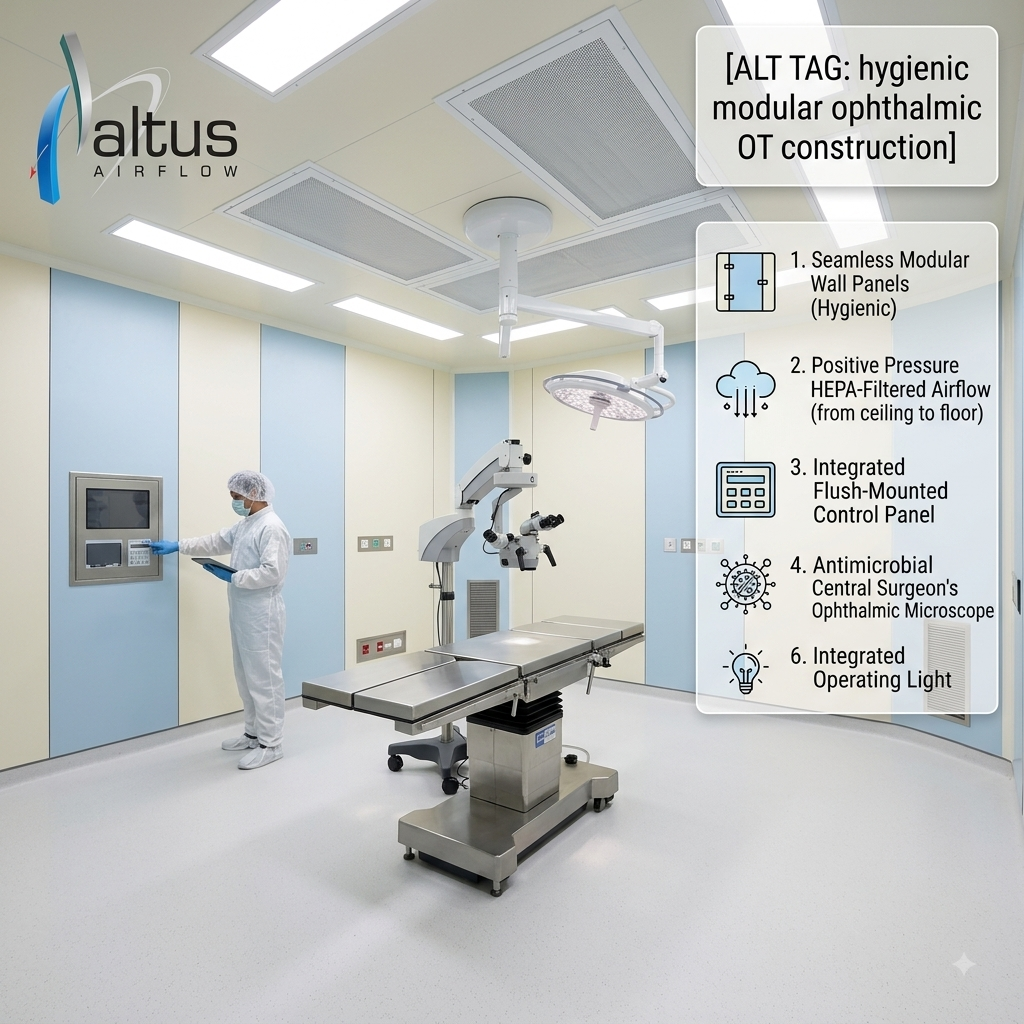
Choosing professional Modular Ophthalmic OT Manufacturers is an important decision for hospitals, eye-care centers, and specialty clinics planning a modern ophthalmic operation theatre. A professional manufacturer combines modular construction with healthcare engineering disciplines such as HVAC, HEPA filtration, controlled airflow, electrical systems, medical gases, hygienic interiors, equipment integration, testing, and commissioning. Instead of treating the OT as a conventional construction project, an experienced manufacturer can develop an environment around the specific requirements of ophthalmic surgery, clinical workflow, infection-control practices, and future operational needs.
A professionally designed modular ophthalmic OT can provide a controlled, efficient, and maintainable environment while allowing greater flexibility than many conventional construction approaches. However, the benefits depend on appropriate design, quality materials, correct installation, proper testing, and ongoing maintenance. Healthcare facilities should therefore evaluate manufacturers based on technical capability and project experience rather than focusing only on initial cost.
What Is a Modular Ophthalmic Operation Theatre?
A modular ophthalmic operation theatre is a specialized surgical environment constructed using engineered modular components and integrated building services.
A typical project may include:
- Modular wall and ceiling panels
- Hygienic flooring
- Hermetically sealed doors
- HVAC systems
- HEPA filtration
- Controlled airflow
- Medical gas systems
- Electrical infrastructure
- Surgical lighting
- Equipment integration
- Environmental monitoring
- Testing and commissioning
The exact configuration depends on the clinical procedures, available space, equipment requirements, and engineering specifications of the facility.
Why Professional Manufacturers Matter
Ophthalmic surgery requires precision. The OT therefore needs more than attractive interiors or basic air conditioning.
A professional manufacturer understands the relationship between:
- Room design
- Airflow
- Filtration
- Surgical equipment
- Staff movement
- Patient movement
- Utilities
- Cleaning
- Maintenance
This integrated approach can help create a more functional surgical environment.
1. Specialized Ophthalmic Experience
One of the most important benefits is specialized experience.
Professional manufacturers may understand requirements associated with:
- Cataract surgery
- Vitreoretinal procedures
- Glaucoma surgery
- Corneal procedures
- Oculoplastic surgery
- Other ophthalmic interventions
This knowledge helps ensure that the room layout and engineering systems are designed around actual surgical workflows.
2. Customized OT Design
Every healthcare facility has different requirements.
Professional manufacturers can develop customized designs based on:
- Available floor area
- Ceiling height
- Surgical procedures
- Number of operating rooms
- Equipment
- Staff workflow
- Storage requirements
- Utility availability
- Future expansion
Customization prevents the facility from being restricted to an unsuitable standard layout.
3. Efficient Space Utilization
A well-planned modular OT can make better use of available space.
Designers can coordinate the positioning of:
- Operating tables
- Microscopes
- Surgical lights
- Equipment towers
- Monitors
- Storage units
- Medical gas outlets
- Electrical outlets
Good spatial planning reduces unnecessary movement and supports smoother surgical workflows.
4. Better Airflow Management
Airflow is a critical component of an ophthalmic OT.
Professional manufacturers can engineer systems involving:
- Air distribution
- HEPA filtration
- HVAC integration
- Pressure management
- Fresh-air supply
- Return-air systems
- Airflow monitoring
The objective is to establish controlled environmental conditions appropriate to the project's requirements.
5. HEPA Filtration Integration
High-efficiency filtration can contribute to airborne particulate control.
Professional manufacturers can coordinate:
- HEPA filter selection
- Filter housings
- Sealing systems
- Airflow requirements
- Filter access
- Integrity testing
- Maintenance planning
Proper installation is just as important as filter selection because leakage around the filter can reduce overall system performance.
6. Hygienic Interior Construction
OT surfaces need to support routine cleaning and maintenance.
Modular systems may use materials and finishes designed around:
- Smooth surfaces
- Sealed joints
- Easy cleaning
- Durability
- Chemical resistance
- Reduced dust accumulation
Professional manufacturers can select materials according to the operational requirements of the facility.
7. Integrated HVAC Engineering
An ophthalmic OT requires environmental conditions appropriate to its use.
HVAC engineering may address:
- Temperature
- Humidity
- Air changes
- Filtration
- Pressure relationships
- Fresh air
- Air distribution
Professional engineering helps ensure that the HVAC system is coordinated with the modular room rather than treated as an independent installation.
8. Better Equipment Integration
Ophthalmic OTs contain specialized surgical equipment.
Common equipment may include:
- Operating microscopes
- Phacoemulsification systems
- Vitrectomy systems
- Patient monitors
- Surgical lights
- Surgical tables
- Visualization systems
Professional manufacturers can coordinate equipment locations with electrical, structural, HVAC, and medical-gas requirements.
9. Improved Workflow
An effective OT layout should support movement between different activities.
Workflow planning can consider:
- Patient entry
- Surgical preparation
- Equipment positioning
- Surgeon movement
- Nurse movement
- Instrument access
- Waste handling
- Patient transfer
Reducing unnecessary movement can help improve operational efficiency.
10. Reliable Electrical Infrastructure
Modern ophthalmic equipment depends on reliable electrical services.
A modular OT project may include:
- Dedicated electrical outlets
- Emergency power
- UPS connections
- Proper earthing
- Equipment circuits
- Data connections
- Control systems
Professional engineering coordinates electrical requirements with the overall OT design.
11. Medical Gas Integration
Depending on the clinical requirements, the OT may require:
- Oxygen
- Medical air
- Vacuum
Outlet locations should be planned according to equipment and staff workflow.
Professional installation also includes appropriate testing and documentation.
12. Improved Infection-Control Support
A professionally designed OT can support the hospital's infection-control strategy through engineering measures such as:
- Controlled airflow
- High-efficiency filtration
- Hygienic surfaces
- Appropriate pressure relationships
- Easy-to-clean construction
- Controlled access
These engineering measures complement, rather than replace, clinical infection-control protocols.
13. Faster and More Organized Installation
Modular construction can make installation more systematic than conventional site-built construction.
Factory-prepared components may help with:
- Dimensional consistency
- Material quality
- Installation planning
- Reduced on-site fabrication
- Better project coordination
The actual project duration still depends on room preparation, HVAC, utilities, equipment integration, and site conditions.
14. Better Quality Control
Professional manufacturers can implement quality checks during manufacturing and installation.
Quality control may cover:
- Panel dimensions
- Surface finishes
- Joint sealing
- Door installation
- Filter installation
- HVAC connections
- Electrical systems
- Medical gas systems
Quality inspections at multiple stages can reduce installation defects.
15. Testing and Commissioning
A professional project should not end when construction is complete.
Commissioning may involve:
- Airflow measurements
- HEPA filter integrity testing
- Particle measurements
- Pressure differential testing
- Temperature verification
- Humidity verification
- HVAC performance checks
- Electrical testing
- Medical gas testing
Testing confirms whether installed systems meet the project's defined acceptance criteria.
16. Better Documentation
Healthcare facilities need documentation for operation and maintenance.
A professional manufacturer may provide:
- Approved drawings
- As-built drawings
- Equipment manuals
- Filter information
- Test reports
- Commissioning records
- Maintenance instructions
- Warranty documentation
Complete documentation simplifies future maintenance and troubleshooting.
17. Greater Maintenance Accessibility
OT systems require regular maintenance.
Professional modular designs can incorporate access arrangements for:
- Filters
- Electrical systems
- HVAC components
- Control panels
- Service connections
- Ceiling-mounted equipment
Maintenance access should be considered during the design stage rather than added later.
18. Preventive Maintenance Support
Professional manufacturers may provide ongoing maintenance services.
These can include:
- HVAC inspection
- Airflow testing
- HEPA filter replacement
- Pressure monitoring
- Electrical inspection
- Door maintenance
- Panel inspection
- Environmental monitoring
Regular maintenance can help preserve system performance.
19. Long-Term Cost Efficiency
The cheapest initial quotation does not always represent the lowest overall cost.
A professional solution may provide better lifecycle value through:
- Durable materials
- Efficient HVAC systems
- Proper filtration
- Reduced maintenance problems
- Better equipment integration
- Planned servicing
- Improved reliability
Healthcare facilities should compare total ownership costs rather than only initial installation prices.
20. Future Expansion Flexibility
Healthcare facilities may expand their surgical departments over time.
Modular construction can support future changes such as:
- Additional equipment
- Technology upgrades
- Utility modifications
- Room expansion
- HVAC upgrades
- Monitoring improvements
Designing for future requirements can reduce the disruption associated with later renovations.
21. Better Project Coordination
An ophthalmic OT may involve multiple contractors and disciplines.
These can include:
- Modular construction
- HVAC
- Electrical
- Medical gases
- Fire safety
- IT
- Surgical equipment
A professional manufacturer capable of coordinating several disciplines can reduce communication gaps and interface problems.
22. Dedicated Project Management
Project management is particularly important in healthcare construction.
A dedicated project manager can coordinate:
- Design approvals
- Procurement
- Manufacturing
- Site preparation
- Installation
- Testing
- Commissioning
- Handover
This helps maintain accountability throughout the project.
23. Regulatory and Technical Awareness
Healthcare projects involve technical and regulatory considerations.
Professional manufacturers should understand applicable requirements relating to:
- Healthcare infrastructure
- HVAC
- Electrical safety
- Medical gases
- Fire safety
- Cleanroom principles
- Testing and commissioning
Facilities should always verify which specific standards and regulatory requirements apply to their project.
24. Better Energy Management
HVAC systems can represent a significant portion of OT energy consumption.
Professional engineering can incorporate:
- Efficient fans
- Variable-speed drives
- Proper insulation
- Optimized airflow
- Automated controls
- Environmental monitoring
Energy efficiency should be balanced with the required clinical and environmental performance.
25. Improved Patient and Staff Environment
A well-engineered OT can contribute to a controlled and organized environment for patients and healthcare professionals.
Benefits may include:
- Stable environmental conditions
- Better workflow
- Reduced clutter
- Improved equipment accessibility
- Easier cleaning
- Better serviceability
The objective is to support the clinical team without creating unnecessary operational complexity.
26. Professional After-Sales Support
Healthcare facilities depend on continuous OT availability.
After-sales services may include:
- Technical assistance
- Spare parts
- Filter replacement
- HVAC servicing
- Preventive maintenance
- Troubleshooting
- System upgrades
Reliable support can help reduce extended downtime.
27. How to Choose the Right Manufacturer
Healthcare facilities should evaluate potential manufacturers based on:
- Relevant healthcare experience
- Ophthalmic OT expertise
- Engineering capabilities
- Modular construction quality
- HVAC expertise
- HEPA filtration knowledge
- Equipment integration
- Testing capabilities
- Documentation
- Maintenance support
- Project references
A detailed technical comparison is more useful than comparing quotations alone.
28. Questions Healthcare Facilities Should Ask
Before selecting a manufacturer, hospitals can ask:
- How many ophthalmic OT projects have you completed?
- What modular materials do you use?
- How is the HVAC system engineered?
- What filtration system is proposed?
- How will airflow be tested?
- Is HEPA integrity testing included?
- Who coordinates medical gases and electrical systems?
- What commissioning documentation is provided?
- What maintenance services are available?
- Can the design accommodate future expansion?
These questions help identify the difference between a general contractor and a specialized OT manufacturer.
29. Benefits at a Glance
Professional modular ophthalmic OT manufacturers can offer:
- Specialized design
- Customized layouts
- Controlled airflow
- HEPA filtration integration
- Hygienic construction
- HVAC coordination
- Equipment integration
- Utility planning
- Testing and commissioning
- Maintenance support
- Future expansion
- Project management
The combination of these capabilities can provide greater value than a fragmented installation approach.
Conclusion
Choosing professional Modular Ophthalmic OT Manufacturers can provide healthcare facilities with specialized design, customized modular construction, controlled airflow, HEPA filtration, HVAC integration, equipment coordination, reliable utilities, hygienic surfaces, testing, commissioning, documentation, and long-term maintenance support. Professional expertise can also help hospitals optimize surgical workflow, improve space utilization, plan for future upgrades, and reduce lifecycle challenges. Facilities should assess manufacturers based on experience, engineering capability, quality control, validation procedures, project management, and after-sales service rather than selecting a provider solely on initial price. For hospitals and eye-care centers seeking integrated modular ophthalmic OT solutions, Altus Airflow offers specialized healthcare engineering and project execution focused on dependable, efficient, and future-ready surgical environments.
Frequently Asked Questions
1. What are the main benefits of choosing professional Modular Ophthalmic OT Manufacturers?
Professional Modular Ophthalmic OT Manufacturers can provide customized OT design, modular construction, HVAC integration, HEPA filtration, controlled airflow, equipment integration, hygienic finishes, testing, commissioning, and maintenance support.
2. Why should hospitals choose specialized manufacturers instead of general contractors?
Professional Modular Ophthalmic OT Manufacturers understand the specific relationship between ophthalmic surgical workflow, modular construction, HVAC, filtration, medical gases, electrical systems, and specialized surgical equipment.
3. Can Modular Ophthalmic OT Manufacturers customize the OT design?
Yes. Professional Modular Ophthalmic OT Manufacturers can customize layouts according to room dimensions, surgical procedures, equipment, utilities, workflow, and future expansion requirements.
4. Do Modular Ophthalmic OT Manufacturers provide HVAC systems?
Many professional Modular Ophthalmic OT Manufacturers can design or coordinate HVAC systems involving temperature, humidity, air changes, filtration, pressure relationships, and controlled airflow according to project requirements.
5. Is HEPA filtration included in modular ophthalmic OTs?
HEPA filtration can be incorporated into the airflow and HVAC design. Professional Modular Ophthalmic OT Manufacturers can select appropriate filtration systems and coordinate installation, sealing, access, and integrity testing.
Read Our Previous Blog------>How can healthcare facilities choose the best Ophthalmic Modular OT With Laminar Airflow solution?

 English
 Arabic
 French
 Spanish
 Portuguese
 Deutsch
 Dutch
Dutch
 Italiano
 Russian
 Romaian
 Portuguese (Brazil)
 Greek
Greek