


What Makes Leiya Power Tools Practical for Busy Workshop Tasks?
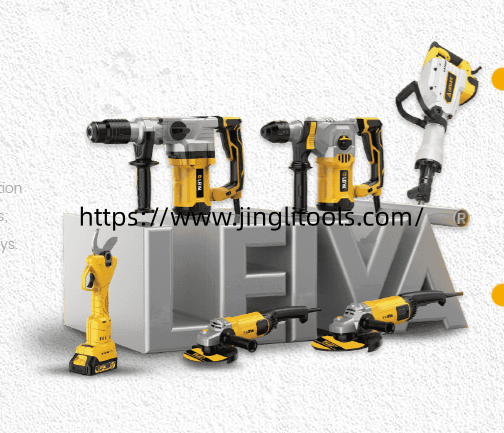
Leiya Power Tools provide options for workshops handling fastening, cutting, grinding, drilling, polishing, and other routine applications. For many businesses, selecting equipment is not simply about one specification. Operators may consider mobility, handling, battery compatibility, application requirements, maintenance, and how easily different products fit an existing workflow. A varied product range can give buyers more flexibility when organizing equipment around specific jobs.
Mobility Can Matter in Busy Work Areas
Workshops are not always arranged around convenient electrical outlets. Equipment may need to move between benches, vehicles, assembly areas, construction locations, or maintenance stations.
Battery-operated models can remove the need for a direct cable connection during many tasks. This can make repositioning easier when the work area changes.
For applications involving frequent movement, a cordless design can also reduce cable management. Buyers should still consider battery capacity, charging arrangements, expected runtime, and the number of devices that may operate during a work period.
Different Tasks Require Different Equipment
A workshop may handle several types of work during one day. Fastening may require an impact wrench, while surface preparation may call for an angle grinder. Cutting, polishing, drilling, and demolition can each involve different performance requirements.
The available product range includes cordless drills, impact wrenches, rotary hammers, circular saws, angle grinders, impact screwdrivers, car polishers, reciprocating saws, and other categories.
This variety allows buyers to select equipment according to individual applications rather than expecting one model to handle every job.
Battery Compatibility Can Simplify Planning
For businesses considering several cordless products, battery compatibility can become an important purchasing factor. A shared battery platform across suitable models may simplify charging arrangements and reduce the number of battery types needed in a workshop.
Before selecting a platform, users should check voltage, capacity, charger compatibility, expected runtime, and the specifications of each product they intend to purchase.
This approach can make expansion easier when a workshop gradually adds cordless equipment for different applications.
Motor Design Should Match the Application
Motor technology can influence how equipment responds under different workloads. Some cordless models use brushless motors, while specifications vary according to product design and intended use.
Rather than selecting equipment according to a motor label alone, buyers should consider the actual task. Required torque, material, operating frequency, accessory type, and expected load can all influence which configuration is appropriate.
For professional users, comparing these factors before purchase can help create an equipment collection suited to regular working conditions.
Ergonomics Can Influence Daily Handling
When equipment is used repeatedly, physical handling becomes an important consideration. Grip shape, overall weight, balance, controls, auxiliary handles, and vibration management can influence operator comfort during routine work.
Ergonomic handles and vibration-damping features may be useful considerations when comparing models for extended applications. However, the appropriate design depends on both the task and the operator.
A compact model may be convenient for confined spaces, while a larger model with an auxiliary handle may provide additional control during demanding operations.
Match Equipment With Real Workloads
Purchasing equipment based only on maximum specifications can create an unnecessary mismatch. A practical approach is to begin with the actual work being performed.
Consider the materials involved, task duration, required output, available workspace, operator preferences, electrical access, and accessory requirements. Then compare these factors with the specifications of suitable models.
A vehicle maintenance workshop, construction site, furniture workshop, and metalworking facility may all have different requirements. The same product configuration may therefore not suit every environment.
Product Variety Can Support Business Needs
A supplier offering multiple categories can make it easier for buyers to compare equipment within one product ecosystem. The manufacturer's catalog includes cordless and corded categories alongside garden equipment, compressors, and other workshop-related products.
For distributors and professional buyers, a broad catalog can also support different customer groups. Retailers may require compact products for general users, while commercial customers may seek configurations intended for heavier workloads.
The key consideration is to connect each model with a clearly defined application.
Manufacturing Support Matters for Buyers
For importers, distributors, and project purchasers, product specifications are only one part of supplier evaluation. Manufacturing capability, customization, product development, inspection procedures, and communication can also influence purchasing decisions.
According to the manufacturer's website, its operations include research, manufacturing, sales, and service. Its production capabilities cover areas such as molds, die casting, injection molding, machining, motor production, and assembly.
These capabilities can be relevant for buyers seeking particular configurations, packaging requirements, or branding arrangements.
Build a Collection Around Actual Jobs
A practical workshop collection does not need every available product. Businesses can begin with equipment used frequently and expand the range as new applications appear.
For example, a basic setup may include a cordless drill, impact wrench, angle grinder, saw, and suitable battery equipment. Additional models can then be selected according to production needs or customer demand.
This application-based approach can help businesses manage purchasing decisions while keeping equipment aligned with real working conditions.
Conclusion
Workshops may consider cordless equipment because mobility, application flexibility, battery compatibility, handling, and product variety can influence daily operations. However, the appropriate choice depends on materials, workload, operating environment, and the specific tasks involved.
For manufacturers, distributors, contractors, and workshop buyers, evaluating equipment according to actual applications can make purchasing decisions more practical. jinglitools provides equipment for different working requirements, with product categories and specifications available for comparison.
To review the available product range and manufacturer information, visit https://www.jinglitools.com/product/ and select equipment according to your intended applications, operating conditions, and purchasing requirements.

 English
 Arabic
 French
 Spanish
 Portuguese
 Deutsch
 Dutch
Dutch
 Italiano
 Russian
 Romaian
 Portuguese (Brazil)
 Greek
Greek